
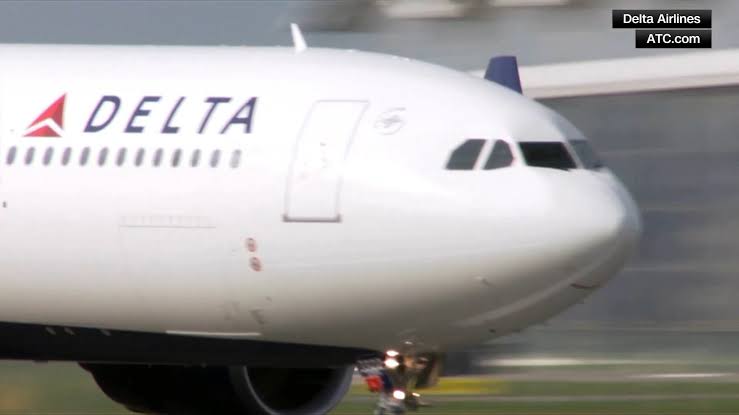
A routine Independence Day flight into Chicago ended with an unusual safety investigation after the crew of a Delta Air Lines aircraft reported that a firework appeared to strike the airplane during its final approach to Chicago Midway International Airport.
According to the Federal Aviation Administration, Delta Flight 1076, an Airbus A319 arriving from Atlanta on the evening of July 4, reported a loud impact while descending toward Midway. Air traffic control recordings captured the pilots telling controllers they believed a fireworks mortar may have hit the aircraft, although they continued the approach and landed safely. The FAA has opened an investigation into the incident.
Delta said the aircraft was carrying 52 passengers and six crew members. The airline said the airplane landed normally, taxied to the gate without declaring an emergency, and underwent a full inspection by maintenance personnel. According to Delta, mechanics found no damage to the aircraft.
Delta Air Lines Flight 1076 landed safely at Chicago Midway International Airport around 8:30 p.m. local time on Saturday, July 4, after the pilot reported that a fireworks mortar struck the aircraft just before landing. The flight departed from Hartsfield-Jackson Atlanta International Airport. The FAA will investigate. Please contact local authorities and the airline for additional information.
A rare but real aviation hazard
Commercial airliners spend most of their flights far above the altitude reached by fireworks. The greatest vulnerability comes during takeoff and landing, when aircraft operate only a few hundred feet above the ground and pass over populated neighborhoods.
Air traffic control audio from the incident indicates controllers had already warned arriving pilots that fireworks were being launched from neighborhoods beneath the approach path to Midway Airport. Shortly afterward, the crew of Delta Flight 1076 radioed that they had heard a “big bang” and believed a firework had hit or exploded beneath the aircraft.
Although modern commercial aircraft are designed to withstand impacts from hail, birds and other airborne objects, fireworks present a different type of hazard because they contain burning propellant and explosive charges. Even if they do not penetrate an aircraft, they can create loud impacts, distract flight crews or, in rare circumstances, damage exterior surfaces or engines.
Professional aerial fireworks can burst hundreds to more than a thousand feet above the ground, depending on the size of the shell, while consumer fireworks generally reach much lower altitudes. Aircraft on final approach may temporarily operate within those lower altitude ranges.
How common are fireworks strikes?
Verified reports of fireworks making contact with commercial airliners are extremely uncommon.
Unlike bird strikes, the FAA does not maintain a separate public database specifically tracking fireworks impacts on aircraft. As a result, there is no official nationwide count of such incidents. Individual cases are typically investigated separately when they occur.
By comparison, wildlife strikes are a routine challenge for aviation. The FAA receives tens of thousands of wildlife strike reports each year, the overwhelming majority involving birds. Those events occur daily across the United States, whereas reported fireworks encounters involving commercial passenger aircraft remain exceptional.
Fireworks restrictions near airports
The FAA routinely coordinates with local authorities before major fireworks displays to reduce risks to aircraft operations. Licensed professional displays are generally planned in advance and, where necessary, coordinated with nearby airports and air traffic control.
Problems are more likely to arise from unauthorized or illegal fireworks launched close to airport approach and departure corridors. Such activity can endanger commercial aircraft, emergency helicopters and general aviation flights operating at low altitude.
Investigation continues
Federal investigators will review air traffic control communications, maintenance inspections and other evidence to determine exactly what occurred during the flight’s final approach into Midway.
While the outcome could have been far more serious, the aircraft landed safely, no injuries were reported, and Delta said inspectors found no damage following the post-flight examination. Even so, the incident serves as a reminder that fireworks launched near airport flight paths can create unexpected hazards during one of the nation’s busiest travel holidays