
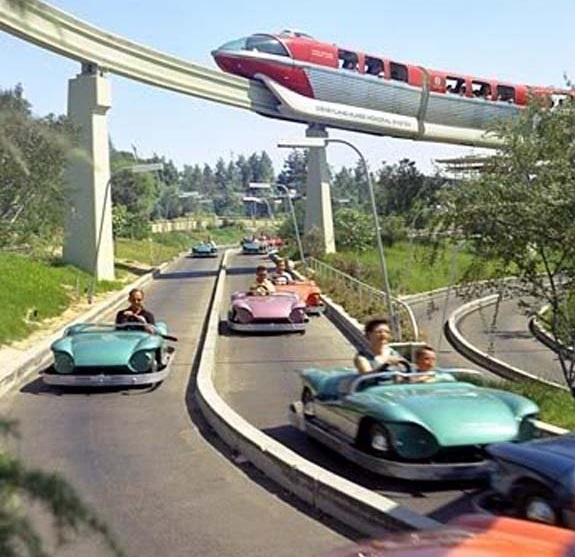
When the Walt Disney Company decided to set up shop in central Florida in the 1960s, conservation – of both animals and native vegetation – was a cornerstone of Disney’s plans.
And for the most part, Disney has been a strong advocate for the environment, even so far as to establish the Disney Wildlife Conservation Fund in 1995, which was created to protect wildlife, restore habitats and inspire people to take action for the planet.
But when Walt Disney World opened in 1971, there was one attraction that went totally against that environmental advocacy.
It was a ride that made many people wonder (me included) how Disney could support something that was clearly polluting the air in and around Tomorrowland.
The Grand Prix Raceway (now called the Tomorrowland Speedway) has always been a popular attraction, particularly for young kids who wanted to experience the thrill of driving a car.
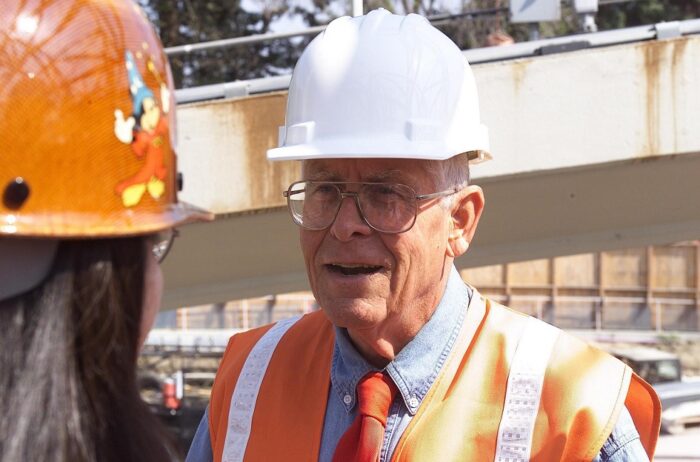
But there were huge problems. The cars that the young drivers are seated in spew foul-smelling fumes from their Briggs and Stratton gasoline engines. And with scores of cars motoring on the track, as well as idling in the loading and unloading areas, at any given time, that’s a lot of air pollution.
And did we mention that those mini-car engines are loud?
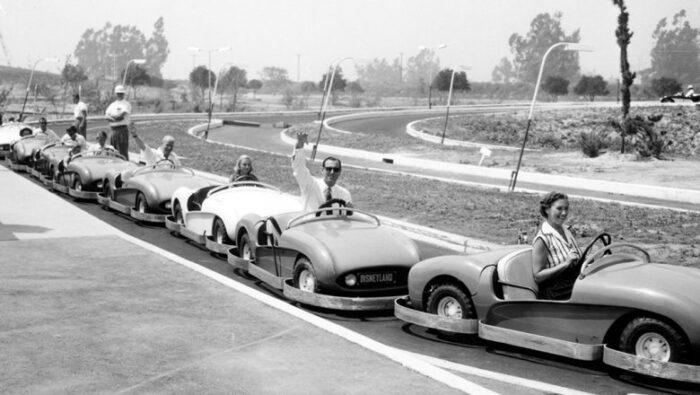
Tomorrowland Speedway cars are direct descendants of the Autopia cars, which have been a Disneyland staple since opening day in 1955.
The Autopia cars were perhaps the most popular attraction when Disneyland opened. They were primarily the handiwork of Bob Gurr, the man who proudly proclaims that “if it moves on wheels in Disneyland, I probably designed it.”
Gurr was a car stylist when he was hired to work on Autopia during its development stage. It seems Walt Disney wanted to have an attraction where guests – particularly young guests – could experience the thrill of highway driving.
Although Gurr wasn’t a mechanical guy, but he poured his heart and soul into the miniature cars, learning about the nuts-and-bolts aspects of the cars as he went along.
The Autopia cars that guests rode in during the first few weeks of Disneyland’s operation were extremely popular … and problematic.
The summer heat wreaked havoc on the engines. And the fact that there was no center guide rail allowed mischievous drivers to slam into other cars, as well as stray off the roadway onto grass medians. Head-on collisions were not uncommon.
The steering wheels weren’t padded, leading to more than a few broken teeth when frisky drivers decided to replicate carnival bumper cars.
In the years following Autopia’s debut, improvements were made to the vehicles, as well as to the track itself, as a center guide rail drastically cut down on collisions and “off-road” adventures.
But the gas engines remained. And with them, smelly gasoline fumes.
But like the Model T car, gas-powered Autopia cars will be a thing of the past.
“The no-gasoline Autopia is coming, probably in late 2027,” Gurr told me recently.
“Early last year, the Los Angeles Times carried a scathing story about the awful gas Autopia attraction, written by green-journalist Sammy Roth. Disney followed up with an announcement that CARB (California’s government smog agency) and Disney were in agreement to eliminate the use of gasoline on Autopia.”
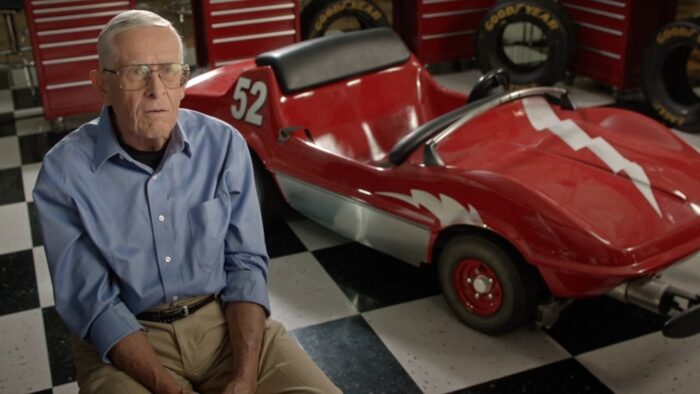
Like many of the Autopia upgrades over the past few decades, Disney’s creative staff sought out Gurr’s input.
“A number of months back, a team from Disneyland met with me to share all the details of the ‘new’ Autopia,” he said. “Unfortunately, I’m embargoed to silence. Rest assured, it is to be very different and have a lot of ‘showbiz’ aspects of the marvels of electric power when it opens.
“Kids are going to love the future clean Autopia.”
Disney spokesperson Jessica Good said that “since opening with Disneyland park in 1955, Autopia has remained a guest-favorite, most popular with young kids experiencing driving for the first time.
“As the industry moves toward alternative fuel sources, we have developed a roadmap to electrify this attraction and are evaluating technology that will enable us to convert from gas engines in the next few years.”
One would assume that if the move away from what Gurr called “those God-awful gasoline fumes” to a clean-energy attraction is successful in California, Walt Disney World’s Tomorrowland Speedway will follow suit.
Chuck Schmidt is an award-winning journalist and retired Disney cast member who has covered all things Disney since 1984 in both print and on-line. He has authored or co-authored eight books on Disney, including his On the Disney Beat and The Beat Goes On, as well as his latest, Marty, Mickey and Me, all for Theme Park Press. He has written a regular blog for AllEars.Net, called Still Goofy About Disney, since 2015.