
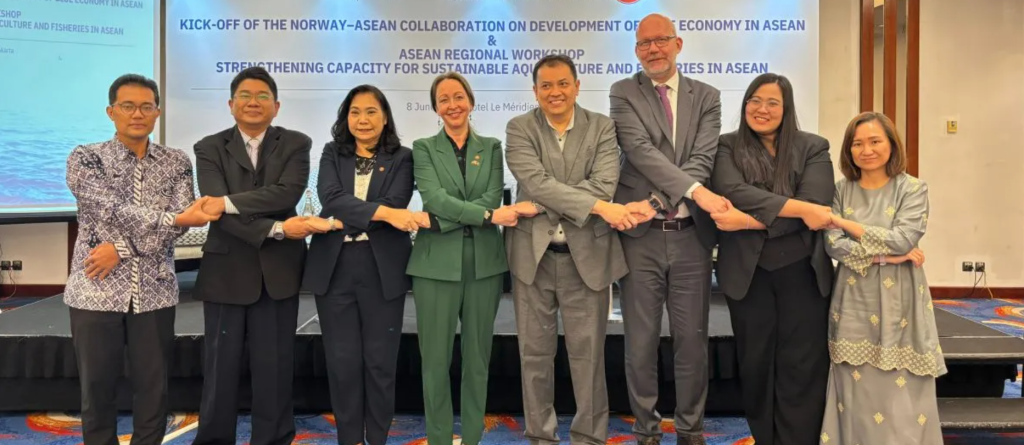
A new regional partnership between Norway and ASEAN aims to reshape how Southeast Asia uses its oceans, with a focus on fishing, food production and long-term sustainability, Antara News reports.
The initiative, launched in Jakarta on Monday, brings together governments and experts to strengthen what is known as the “blue economy” – the economic use of ocean resources in a more sustainable way.
“For Norway, sustainable ocean management and the development of a resilient blue economy are key priorities in our development policies,” said Mariann Ruud Hagen, Ambassador of Norway to ASEAN.
“As a nation with a long maritime tradition, we firmly believe that long-term economic prosperity from the ocean must go hand in hand with ecosystem protection,” she added.
ASEAN officials say the region’s seas are not only environmentally important, but also a key driver of economic growth and food security.
“The Blue Economy is both an engine of growth and a foundation for resilience in ASEAN,” said Kanchana Wanichkorn, Director of Sectoral Development at the ASEAN Economic Community Department.
She described sustainable fisheries and aquaculture as “key priority sectors within ASEAN’s Blue Economy agenda.”
Indonesia, the region’s largest aquaculture producer, is expected to play a central role in the programme.
“As the largest aquaculture producer in ASEAN and the second-largest globally, Indonesia recognizes the importance of strengthening regional cooperation,” said Arisman, Executive Director of the Center for Southeast Asian Studies in Indonesia.
“Through this collaboration, we aim to support knowledge sharing, promote sustainable aquaculture practices, and contribute to a more inclusive and sustainable blue economy.”
Norway’s expertise in marine research will also be part of the two-year programme running from 2025 to 2027, which aims to improve cooperation, innovation and policy development across ASEAN’s fisheries and aquaculture sectors.