
The right ice
At a Social’s in Hauz Khas, the bar manager, Rohan Pandey, is more particular about his ice than most people are about their spirits. “We source separately — tube ice, crystal-clear, no cloudiness,” he says. “Industrial block ice is fine for cooling a bucket, but for a cocktail that is going to sit in front of a guest for twenty minutes, it has to be slow-melting and clean. Dilution is everything.”
His bar goes through close to 40 kg on a busy Friday, sourced from a specialist supplier in Okhla who produces food-grade product using double-filtered water and slow-freeze technology. The price, he notes wryly, is three times what Chaudhary’s ice would cost. “People don’t pay for the ice,” he says. “They pay for what it doesn’t do to the drink.”
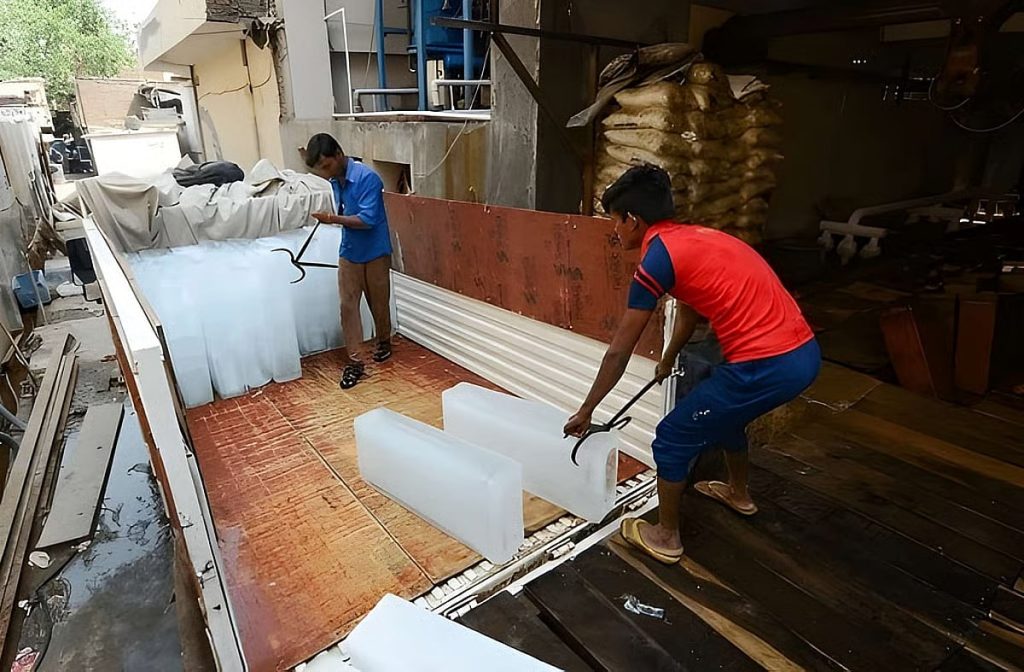
Back in Inderlok, the last of the morning’s consignment is being weighed and loaded onto smaller carriers. The hazards of the trade are straightforward and serious: slip-and-fall injuries on wet, icy floors; the sheer physical demand of moving sixty-kilogram blocks each morning; a chronic shortage of skilled labourers who know how to use the pakad without putting themselves on the ground.
“They leave after two, three days,” Chaudhary says of new hires. “It needs strength, and it needs skill. Not everyone can hold this.” He mimes the grip – two hands, angled low, knees bent – the posture of a man who learned the trade before he learned to drive.
By 9 am, the warehouse is empty and the city is waking up. The kulfi man is at his corner. The juice bar shutter is rolling up. Somewhere in a Connaught Place bylane, Jadhav is arranging his cart. None of it would be cold without the men who moved ice before any of them arrived. That is the supply chain Delhi runs on: invisible, exhausting, and quietly essential.
(Written by S. Keerthivas)