
Haunting and uncertainty in Ponorogo
Baca versi Bh. Indonesia
The first time I met the ghosts of Ponorogo, I wasn’t awake. It was late September, a night thick with a heaviness I couldn’t explain. In my dream, a group of soldiers marched through a dim, misty landscape. Their movements were synchronised, their rifles slung neatly over their shoulders. But something was wrong: some of them had no heads. Yet they marched, steady and unbothered. When I jolted awake, my heart racing, I felt the dream wasn’t just mine; it belonged to the place I was living.
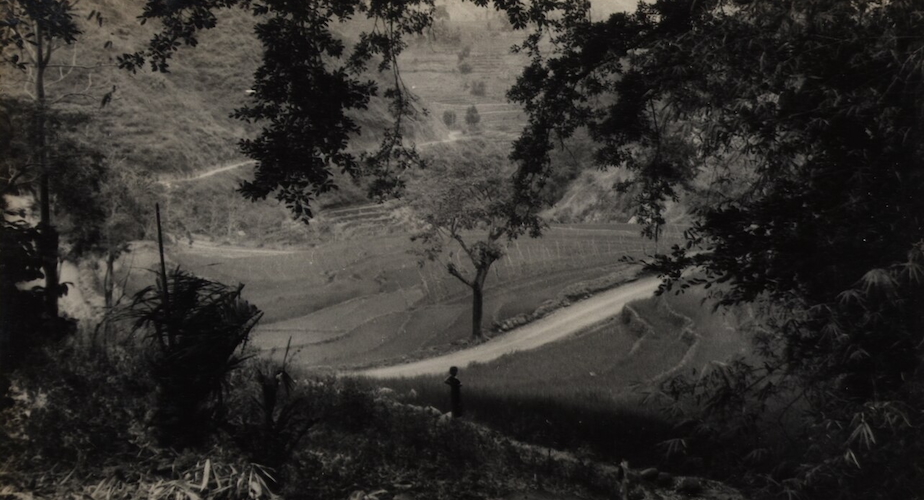
Ponorogo, a regency in East Java, looks peaceful at first glance. Rolling hills, quiet rivers, and roads lined with trees make it feel like any other calm rural town. But beneath that surface lies a history that the earth seems unable to bury completely. In the 1960s, the region was one of many sites where mass killings took place during the anti-communist purges. People still speak quietly about rivers, forests, and hills that witnessed a violence that never received proper mourning.
Ghost stories thrive easily here. They circulate through conversations like background noise — never fully acknowledged, yet never gone. They are passed down by teachers, whispered by seniors, and woven into the community’s sense of place. These stories are not just about spirits; they also serve as indirect ways of discussing a history that remains too heavy, too dangerous, or too uncertain to speak about openly.
Even teachers sometimes allude to these histories. During a discussion about local traditions, one lecturer paused and jokingly said, ‘Di Ponorogo ini banyak tempat angker. Kadang bukan karena setannya, tapi karena ceritanya.’ Many places in Ponorogo are said to be haunted, he explained. Sometimes it is not the ghosts that make them unsettling, but the stories behind them. The remark lingered long after the class ended.
One of the first stories I heard came from a senior in my dorm. He pointed casually toward the river behind our building. ‘Dulu, mayat-mayat PKI dibuang di situ.’ Back then, bodies of accused communists were thrown into that river, he said. His tone was offhand, as if he were commenting on the weather. But from that moment on, the river changed for me. Every time I stepped on its edge, I found myself glancing at the water a little longer, wondering what might be beneath the surface.
The river became, in my imagination, a quiet keeper of stories. Not a place haunted by ghosts in white dresses, but a place where memories collect and settle. The uncanny feeling didn’t come from the supernatural. It came from not knowing exactly what happened, how many bodies there were, or who remembered the truth. The uncertainty itself felt like a haunting.
A similar atmosphere surrounded a hilly road that lies between the Ponorogo and Trenggalek regencies. It cut neatly through a slope, forming an ordinary shortcut between two towns. But locals told me that when the road was constructed, workers found human bones embedded in the soil. According to the stories, construction paused as workers tried to make sense of what they had uncovered. The hill, it seemed, had held its secret for decades.
Even though I never saw the bones myself, the story stayed with me. Riding through that road at sunset, I often felt a strange heaviness in the air. My engine’s echo sounded different, as if the hill were somehow hollow or listening. Of course, nothing visible changed. But the place felt different after knowing its possible past.
And then there was September 30th.
Every year on that date — the anniversary of the 1965 coup attempt — the air in Ponorogo feels charged. Across Indonesia, the date carries political meaning, but here, it feels personal. People speak more softly. Nighttime feels unusually still. Even without any formal ritual, the atmosphere shifts in ways that are hard to explain unless you have lived through it.
It was on one of those nights that I had the dream of the headless soldiers. Their uniforms resembled the images often shown in documentaries from the era — disciplined bodies, rifles resting on their shoulders. But the missing heads made them anonymous. They marched without faces, without voices, without recognition.
When I woke, the dream did not feel entirely unfamiliar. It seemed assembled from the fragments that surrounded daily life: the river behind the dormitory, the road through the hill, the uneasy quietness of certain conversations.
Living in Ponorogo gradually changed how I understood ghost stories. Rarely did people describe clear apparitions or dramatic encounters. Instead, haunting appeared with the atmosphere. It is a part of it.
In her 2008 book Ghostly Matters, the sociologist Avery F. Gordon describes haunting as what happens when buried violence refuses to stay buried. Haunting, she argues, is a social experience: one that emerges when something important has been left unresolved. In Ponorogo, the ghosts are not just souls of the dead; they are reminders of stories that have never been fully acknowledged. They appear in the gaps between what people say and what they avoid saying.
Ghost stories here are not simply entertainment or superstition. They serve a purpose. They let people talk indirectly about the violence of 1965–66, about missing relatives, about fear that still lingers. They allow memory to survive without confrontation. They keep history alive without challenging the silence that still surrounds it.
In this way, haunting becomes a form of knowledge. It teaches people where not to walk alone, which rivers to respect, which days feel different, and which family stories are safer left incomplete. It creates a map of emotional and historical truths that don’t depend on written records or official accounts.
Over time, I stopped trying to separate the ‘real’ from the ‘unreal’. The river is real, and so is the rumour. The road is real, and so are the bones I never saw. The September 30th atmosphere is real, though intangible. And the headless soldiers are real—not as literal apparitions, but as expressions of a past that has not fully surfaced.
When I remember Ponorogo now, I think of how history inhabits its ordinary spaces. Rivers move quietly past dormitories. Roads cut through green hills. Conversations drift through classrooms and roadside stalls.
The ghosts are there, but they do not exist to frighten. They exist because something remains unfinished. They march through dreams, linger in stories, and live quietly beneath the surface of rivers and roads—waiting, perhaps, not for revenge, but simply for recognition.
Muhammad Afdillah is a faculty member, Department for the Comparative Study of Religion, State Islamic University of Sunan Ampel, Surabaya, Indonesia.