
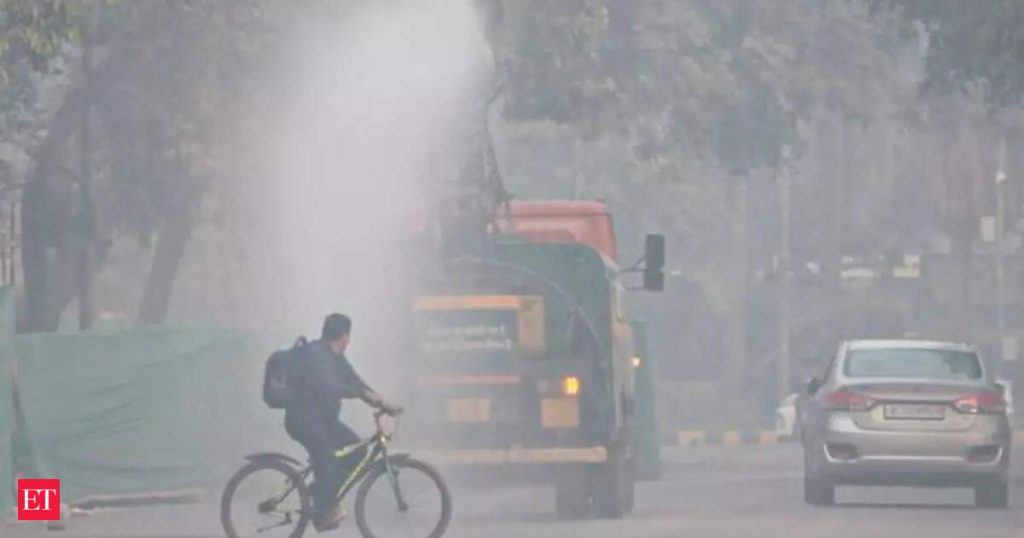
Issued under the Environment (Protection) Act, 1986, the framework consolidates previous winter pollution orders into a single set of annual rules. It mandates compulsory Pollution Under Control (PUC) compliance, restrictions on older vehicles, work-from-home norms, construction curbs, higher parking charges, anti-smog systems for large buildings and strict action against open waste burning. The government said stricter measures under the Graded Response Action Plan (GRAP) will continue to override these directions whenever they are invoked.
Fuel only for vehicles with valid PUC
Under the new rules, petrol pumps across Delhi will supply fuel only to vehicles with a valid PUC certificate. Compliance will be monitored through Automatic Number Plate Recognition (ANPR) and electronic verification systems, with violators facing penalties. The measure is aimed at reducing vehicular emissions, one of the biggest contributors to winter pollution.
Non-BS VI vehicles barred from entering Delhi
From November 1 to January 31, non-Delhi registered vehicles that do not meet BS-VI emission norms will not be allowed to enter the national capital. The restriction will not apply to CNG and electric vehicles, as well as emergency vehicles.
Parking charges to double
Parking fees at all authorised parking facilities across Delhi will be doubled during the winter season to discourage the use of private vehicles and encourage commuters to shift to public transport.

50% work from home for offices
Government and private offices will operate with only 50% of employees physically present, while the remaining staff will work from home. Offices will also have to adopt staggered working hours to reduce traffic congestion during peak hours.
For government offices, the notification states:
“All administrative secretaries and heads of departments shall attend office regularly with not more than 50% staff physically present in office. The remaining 50% shall work from home, provided the administrative secretaries and heads of departments can call officers/officials to office, as required to ensure uninterrupted delivery of essential and emergency public services.”
Construction restrictions during peak pollution season
Construction and demolition activities that generate dust will remain prohibited from November 1 to January 31. Most construction work will be completely suspended between December 10 and January 20, except for essential public infrastructure and emergency projects.
Vehicles transporting construction material will also be barred from entering Delhi during this period.
Anti-smog systems mandatory
Commercial high-rise buildings with an area exceeding 3,000 square metres must install anti-smog guns or mist systems by August 15. Construction sites larger than 1,000 square metres will also be required to install mist systems to control dust pollution.
Strict action against waste burning
Resident Welfare Associations (RWAs), housing societies, educational institutions and other establishments will be responsible for preventing the open burning of waste, biomass, leaves and garbage.
Violations will attract environmental compensation, prosecution and, in some cases, sealing of the premises.
Schools not covered under the notification
The notification clarifies that it does not prescribe any measures for schools. Decisions on school operations will continue to be governed by the provisions of the Graded Response Action Plan (GRAP) whenever it is implemented.
The Delhi government said the permanent winter framework is intended to reduce seasonal air pollution while ensuring essential services continue without disruption and protecting public health during the city’s most polluted months.