
TOKYO – China’s “deflation-is-over” narrative is getting louder, but the foundations are still shaky.
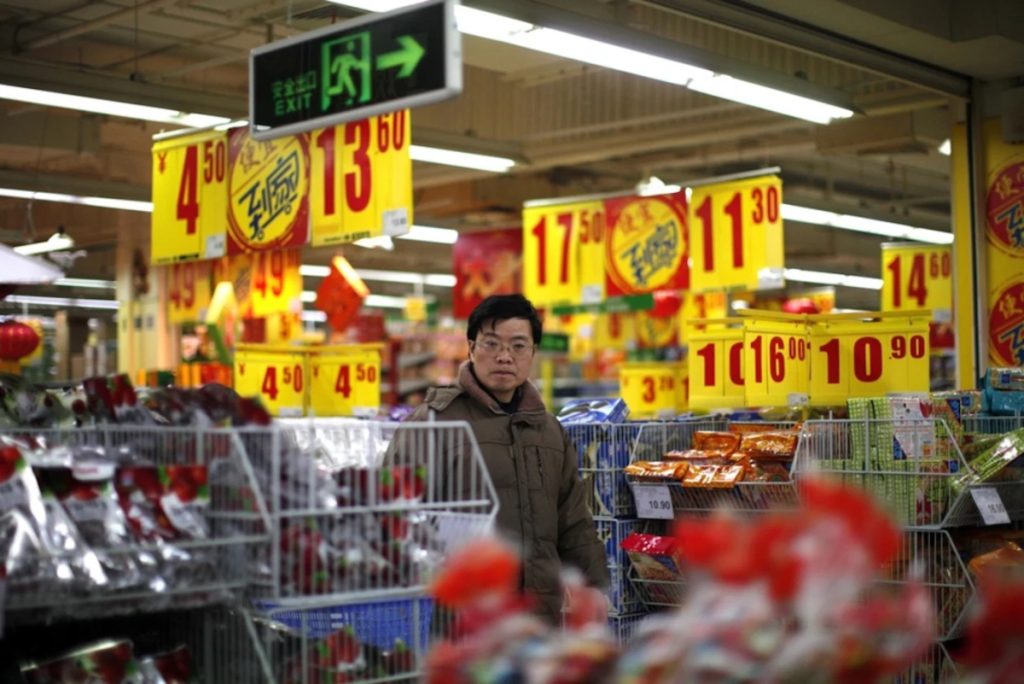
Consumer prices rose 1.2% year-on-year in May, while producer prices jumped 3.9%, lifted by higher costs for energy, semiconductors and metals. To many economists, this is the clearest sign yet that the 2025 deflation scare is giving way to reflation.
But Japan’s long struggle shows how stubborn deflationary psychology can be. And it’s far from clear that Beijing is delivering the structural reforms needed to ensure China’s weak‑price era is truly ending.
Two reforms stand out — and neither is being pursued with urgency. First, resolving the deep housing crisis, which increasingly resembles Japan’s 1990s bad‑loan spiral. Second, building a real social safety net so 1.4 billion citizens feel confident enough to spend rather than hoard savings.
These priorities are tightly linked. With roughly 70% of household wealth tied to property, stabilizing the real‑estate market across China’s 70 largest cities is essential for reviving consumption and sustaining 4.5%- 5% growth.
But the longer Xi’s government acknowledges these pressures while avoiding decisive action, the more a deflationary mindset takes hold — and the harder it becomes to shake.
Japan is the cautionary tale. Even as the Bank of Japan prepares to lift rates to 1% next week — the farthest from zero in more than three decades — deflationary undercurrents still run through the economy.
On paper, Japan looks like it has finally escaped its low‑price trap. The BOJ expects inflation to reach 2.8% this year, suggesting reflation is taking hold. But beneath the headline, real wages remain negative, with pay packets consistently trailing price gains and domestic demand weakening as a result.
The result is a slow‑burn form of stagflation, and Tokyo has yet to deliver the structural reforms needed to close the gap between rising prices and stagnant household incomes.
“For the Japanese economy to fully break free from its long-standing deflationary mindset,” says Toshihiro Nagahama, economist at the Dai-ichi Life Research Institute, “it’s imperative for the government and the central bank to align, articulate their risk assessments, maintain honest and transparent dialogue with financial markets, and resolutely execute bold, long-term growth investments.”
Nagahama argues that today’s global economy is being shaped by an unusually dense intersection of forces — the war in Ukraine, volatility across the Middle East, and a series of historic turning points in central‑bank policy. The common thread is unmistakable: geopolitics is now driving economic outcomes, not the other way around.
With the Iran war on an uncertain path, he warns that governments can’t anchor their strategies to hopeful scenarios. They must instead plan around worst‑case risks, including the possibility of a multi‑year disruption in the Strait of Hormuz, a chokepoint that would reshape global energy flows and inflation dynamics.
“While these shifts present a formidable trial for Japan, they also represent a historic opportunity,” Nagahama notes. “As the country sheds its decades-long deflationary mindset and restores nominal growth, these external shocks serve as a critical test for fully escaping the paradigm of contracting equilibrium.”
Japan may not get the policy rethink it needs. Prime Minister Sanae Takaichi’s economic playbook still leans heavily on ultralow rates and a weak yen — the same formula Tokyo has relied on for nearly three decades. That’s why next week’s expected BOJ rate hike to 1% is already irritating a political establishment that prefers monetary comfort to structural change.
The timing is awkward. The June 16 meeting will proceed without Governor Kazuo Ueda, hospitalized with a liver infection. Yet, as Nomura economist Mari Iwashita notes, his absence is unlikely to alter the decision.
Even so, Takaichi’s camp is pressing the BOJ to ease off. Last year, she dismissed even the idea of rate hikes as “stupid,” despite mounting evidence that Japan’s 27‑year experiment with zero rates has backfired. Her government is the 14th since the late 1990s to double down on a weak‑yen strategy meant to lift exports and juice GDP.
Instead of reviving Japan’s animal spirits, the approach dulled them. Decades of near‑free money reduced the urgency for policymakers to boost competitiveness and for CEOs to innovate, restructure, and take risks. That complacency now shows: Japan Inc. is watching uneasily as BYD reshapes the global electric vehicle market and DeepSeek jolts the AI landscape — the kind of disruption Japanese firms once delivered in the 1980s.
Since taking office in October, Takaichi has shown little inclination to break from this script. “Sanaenomics” is essentially a continuation of Shinzo Abe’s playbook, built on the same reliance on ultralow rates and a deliberately weak yen.
The problem is that Japan’s current bout of inflation isn’t the healthy, demand‑driven kind policymakers once hoped for. It’s being fueled by high import costs for energy, food, and other essentials — classic cost‑push inflation, not the “demand‑pull” gains that signal rising confidence. In short, it’s bad inflation.
A similar dynamic is now confronting China. The gap between surging producer prices and muted consumer prices is the widest since June 2022. That divergence suggests manufacturers are struggling to pass higher input costs on to consumers, leaving profit margins under pressure.
If that squeeze persists, it could have serious implications for wages across a $20 trillion economy, undermining household spending and complicating Beijing’s reflation narrative.
This trajectory explains why Eurasia Group CEO Ian Bremmer entered 2026 warning that “China’s deflation trap” wouldn’t go away as easily as many hope.
The problem, Bremmer says, is that Xi continues to “prioritize political control and technological supremacy over the consumption stimulus and structural reforms that could break the cycle. Beijing has the means to prevent a crisis, but living standards will deteriorate, the fallout will spread abroad, and the world’s second-largest economy will remain stuck in a trap of its own making.”
Home prices falling for five years mean “household wealth destruction on par with America’s 2008 crash, except it’s still accelerating,” Bremmer adds. “Consumer confidence, investment, and domestic demand have cratered with it. Beijing bet big that high-tech manufacturing would fill the gap left by property. Instead, state-driven investment has created overcapacity, and weak domestic demand means there aren’t enough buyers to absorb it.”
One clear result of Xi’s “involution” policy is that too many Chinese firms are chasing too little demand, slashing prices to survive. “Margins collapse, forcing even well-run firms to cut wages and jobs to stay afloat,” Bremmer notes.
“Workers spend less. Demand weakens further, so firms cut prices again. Meanwhile, debts grow harder to service with each turn of the cycle. Banks and local governments keep zombie firms alive — rolling over loans, protecting local champions — which keeps overcapacity entrenched,” he adds.
It means, Bremmer concludes, that “the debt-deflation spiral feeds on itself. Donald Trump’s tariffs last year made the situation worse, closing off a critical export market and confronting Chinese firms with a grim choice: slash prices to find buyers outside the United States, or transship goods through third countries to reach America anyway. Either path squeezes margins further. Over a quarter of listed Chinese companies are now unprofitable, the highest share in 25 years.”
The bottom line is that deflationary pressures can persist long after headline inflation turns positive, quietly eroding confidence. That’s why markets are buzzing about the possibility of PBOC easing in the months ahead — a move that could weaken the yuan and widen China’s trade surplus.
As economist Brad Setser of the Council on Foreign Relations puts it: “Of course, no one explicitly says they would welcome a bigger surplus. But if an international institution’s policy advice is monetary easing — to fight deflation — and fiscal consolidation because of off‑balance‑sheet risks, plus more exchange‑rate flexibility, it is effectively advocating for the country to export its way out of its domestic troubles.”
Beijing, however, has been reluctant to let the yuan slide. A stable or appreciating currency serves three strategic purposes for Xi’s leadership. It reduces the risk of offshore defaults among heavily indebted property developers.
It supports Xi’s ambition to elevate the yuan as a credible reserve currency. And it helps manage tensions with the Trump White House, which remains acutely sensitive to any sign that Beijing is tilting the playing field in favor of its exporters.
However 2026 shakes out, hopes Xi’s team is successfully deflating China’s deflation could be in for a rude awakening. Japan’s example shows that even if headline data suggest that reflation is afoot, the deflationary mindset is very hard to change.
Follow William Pesek on X at @WilliamPesek