
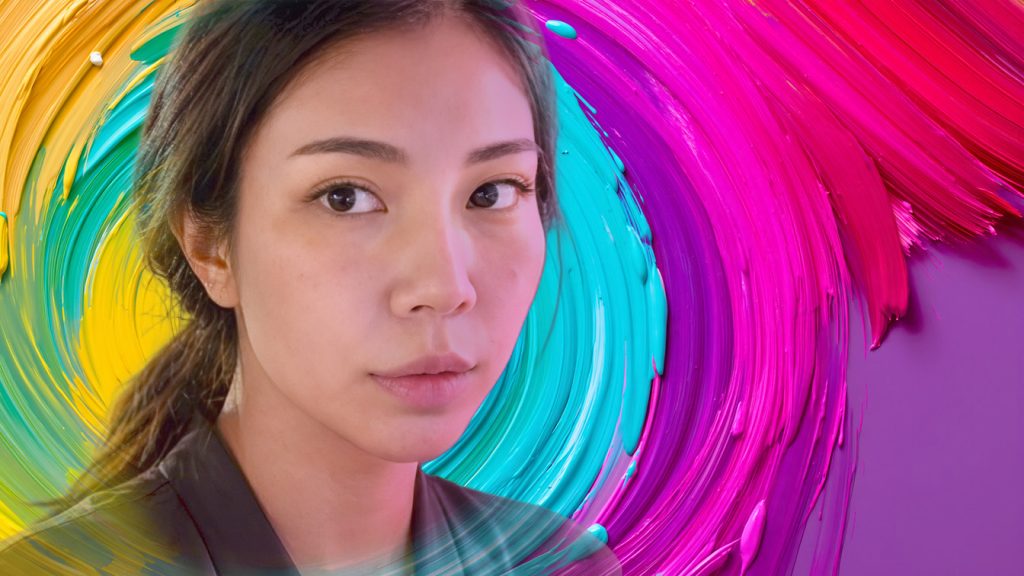
In Episode 6 of the m25 Global Producers Series, Voodoo Hack Sound Bangkok’s Fai Thiti W. reflects on an advertising career that began as a “happy accident” but evolved into a passion for bringing creative ideas to life.
As we travel the region connecting great companies with great projects, we’re fortunate to meet some remarkable people. Fai is one of them. From securing her first major role with the line, “You’re investing in what I can become,” to navigating the balance between creativity and production, she shares insights on the craft, the magic of Thai advertising, and why being memorable matters.
Can you share a little about your journey into producing? What first drew you to this path, and were there influences or experiences early in your life that shaped your interest in production? Was it difficult to break into the industry in Thailand, and what were some of the biggest challenges you faced in establishing yourself as a producer?
My journey was a happy accident. I didn’t dream of being a producer; I fell into it as a post producer, having grown up watching my mum work in TV creative production.
I was expected to become a director, but I’m a perfectionist – a polite way of saying control freak. Directing meant handing over my creative work to be reshaped by others, which didn’t suit me. Producing, however, gave me clear boundaries: a brief to meet, a deadline to hit, a problem to solve. It keeps me close to the creative in a way that fits how my brain works.
The industry break-in was cinematic. After travelling until I was broke, I took a regional post producer role at The Post Bangkok with almost zero knowledge. In the interview for the ridiculous salary I requested, I was asked, “Why are we paying you this amount when you have no experience?” I simply said, “You’re investing in what I can become.” I got hired.
In Thailand, getting in isn’t the hardest part. The real game is being taken seriously and trusted. For me, success means striking a balance: understanding and delivering for the client while making it very clear to my team that I stand with them.
As a producer, you’re often the one holding everything together between agency, client and director. How do you define your role on a project, and what do you see as the most important qualities of a great producer?
If we’re looking at the big picture, I think my job is to (try my best to…) manage people, time and money, while keeping everyone moderately sane, including myself.
The most important quality in a great producer, for me, is simply “care”. That’s really the heart of it.
the biggest misconception: probably that producers don’t care about the creative side and only care about saving cost and pressing the budget. For me a good producer should know how to balance both.
Every project brings together strong creative voices, from agency creatives to directors with their own vision. How do you balance those perspectives while keeping the production on track?
I usually listen and support whatever still answers the brief and stays true to the original concept, or at least what we first agreed on. If not, then we question the treatment. As long as things are still on track, I don’t see the point in panicking every time a new comment shows up.
The trick is to keep everyone’s ambition alive without lying about what it costs. Sometimes at Voodoo Hack Sound, we just make a separate director’s version. Honestly, life can be easier that way.
Producers often sit at the intersection of creative and business. How do you manage client expectations while protecting the creative integrity of a project?
By understanding them and translating their wants into visual communication that actually sells for them.
Q: What makes Thailand a unique production hub compared to other markets in Asia?
Firstly, it’s the crews. Thai crews are known for adapting well under pressure. The level of craft and speed here is something I don’t often see in many other countries. I literally saw a mean-looking traffic pole light being built from scratch out of the back of an art van, completely out of the original brief and somehow made within a few hours. To this day, I still believe that the art director went to Hogwarts. Then there are the locations. Thailand has almost everything, or at least knows how to create almost everything, except maybe a desert, but Vietnam is one stop away.
The strength of Thailand is not that it’s “cheap.” The strength is that it can deliver a very high standard of work with serious production depth and value. There’s a reason global brands keep coming back. I think maybe in the past, brands were surprised to discover Thailand, but now that it’s 2026, if you still haven’t tried Thailand, you might be missing out.
Is there one commercial you’ve produced that stands out for its complexity or cultural impact?
Most VFX-heavy work comes with all kinds of complexity, but when it comes to cultural impact, one project always comes to mind.
It was a brand heritage film for Lux’s 99th anniversary. The concept was “Untamable Beauty,” where we followed one main woman from 1920 to 2019 as a reflection of women in each period. As the story moved forward, she became more confident in her own way and brave enough to make the kind of untamed choices that pushed each new moment forward.
That project really taught me what a real women’s game looks like. I’d heard the cliché so many times before, but this one had a 98% female HOD team and wow… we were untamed. Hahaha. It was such a blessing for the final result. Truly the right team for the right project. I can’t thank my EP Yoshi enough for trusting me and giving me that shot, and huge credit to Maow, the director, who made every single thing count.
In short, it reminded me that sometimes it’s better to be a little lethal and remembered than soft and forgotten.
How did you go from being a post producer to partner and producer in a music/audio company?
The shift wasn’t a clean break from post-production. It was less a pivot and more a natural evolution of my existing workflow. I was happily juggling freelance projects when Ben, seeking to establish Voodoo Hack Sound in the APAC market, reached out. The introduction was audacious: he simply got a tip from Davis Koh: ‘Find the producer named Fai.’ Initially, it was just quoting work I processed maybe five requests back in the pre-AI days. Then came the proposition: he wanted to fly over to Thailand to meet. Flying over? That was commitment. I thought, I shall meet him. He landed in Bangkok, but I was tied up shooting in Phuket. I flew back that evening and found him waiting at a bar near my flat. By 9 pm, we’d sealed the deal with a handshake, and I was in with Voodoo Hack. Ben’s talent was undeniable, but his sincerity was the clincher. I made it clear I wouldn’t commit to a full-time role I needed to keep my freelance gigs, and I’d focus on bringing in clients. That suited him fine. What really changed was my own internal wiring. When my name is on the masthead, I can’t operate half-heartedly. A simple collaboration soon deepened into a genuine partnership. With a talent like Ben, there was no way I was going to let that caliber of composer walk away to another producer.
With new tools like virtual production and AI entering the industry, how are you seeing technology change the way commercials are produced in Thailand? Follow‑up: How do you ensure technology supports the storytelling rather than distracting from it?
Tools and technology will always change. Personally, I think a good storyteller starts with the story they want to tell and the message they want to share, not with a new tool they want to try. So the tool itself should never be the distraction. It should just help you express the idea better, cleaner, and easier.
I once spoke to a composer who, for a moment, felt like AI was stealing his music. I told him this: true music is communication. It’s a message. No one can take that away from you. AI can make something sound-alike, yes, and sometimes even make it sound “better”, but creating the core message? I don’t think so.
What advice would you give to young producers or production managers starting out in Thailand?
Don’t forget to balance your life. Don’t let work become 100% of who you are. Being a good producer also means knowing how to manage your personal life properly. That said, I’m saying this as the person who skipped her workout yesterday.
As for essential skills and mindsets, I can’t encourage people enough to learn how to focus properly. A lot of people get things wrong simply because they misunderstand the brief or can’t communicate the right message clearly. I think part of the problem is that people don’t really know how to stay focused anymore. Sometimes it’s funny to me how easily people will follow a ridiculous plan just because it sounds like a plan, instead of stopping for a second to ask whether it’s even answering the right question.
As you look toward 2026–2027, what trends or shifts do you see shaping commercial production in Thailand and Southeast Asia?
As we move into 2026–2027, I think the biggest shift is the pressure to do more with less. Budgets are tighter, timelines are faster, and clients still expect work to feel tailored. That means adaptability matters more than ever.
For Voodoo Hack, staying relevant is about meeting that reality without lowering the creative standard. Not every project can afford full custom composition now, so we’ve been building more flexible options, like an in-house track package where clients can start from one of our existing library tracks, then still have it tailored further through editing, re-arrangement, and adaptation to fit the film properly. It gives clients a more budget-friendly option without losing the feeling that the music was built for the work. For me, that balance between efficiency and creative relevance is exactly where the market is heading.