

WHEN THE LIFT DOORS OPEN to the 10th-floor lobby of Park Hyatt Bangkok, the first thing I see isn’t a check-in desk. It’s a sculpture. Namely, Zhan Wang’s Scholar’s Rock, a giant stylised version of the weathered stones ancient Chinese scholars used to collect to aid meditation and provide creative inspiration. It sits at the centre of the space like a question posed in burnished steel. I set down my bag and circle it twice—until I remember I haven’t checked in yet.
That instinct to stop and look happens more than once to me here, becoming the defining rhythm of my stay at the hotel, where art isn’t just decoration but a way into the city.
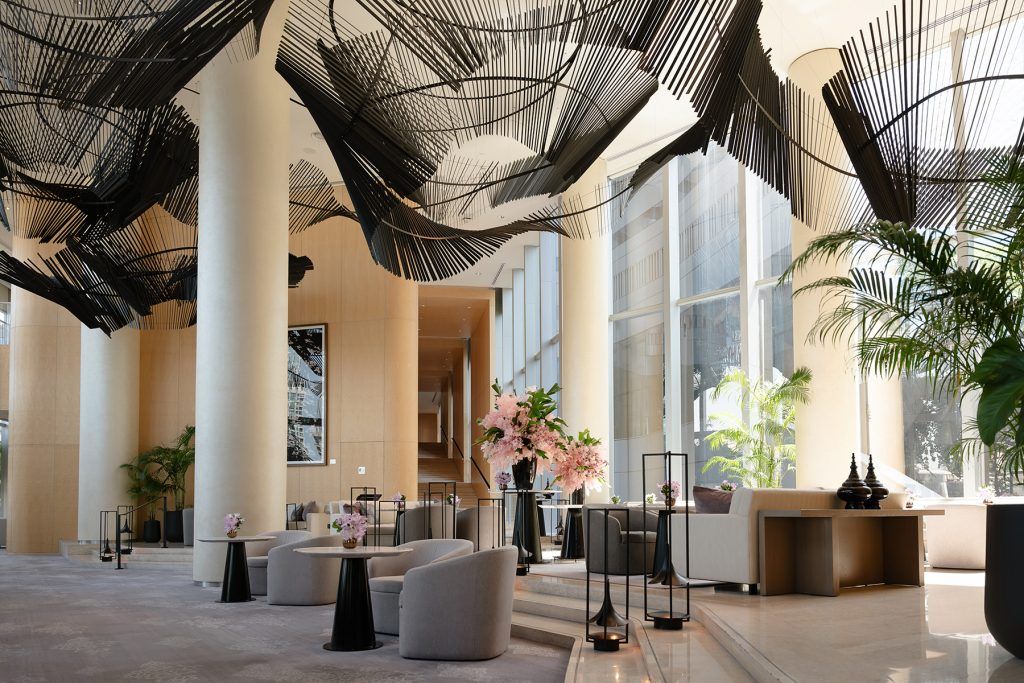
Situated on the upper floors of Central Embassy in Phloen Chit and directly connected to the BTS skytrain line below, Park Hyatt Bangkok rests at the heart of the city’s most desired addresses, even as it keeps the hubbub at arm’s length. What makes it much more distinct from other luxury destinations in the Thai capital, however, isn’t the location—it’s the incredible assemblage of contemporary art from the owners’ personal collection. Curated over decades and spanning continents, the selection includes hundreds of paintings, sculptures, photographs and mixed-media pieces, and rivals many cutting-edge galleries or museums in town.
Art Everywhere
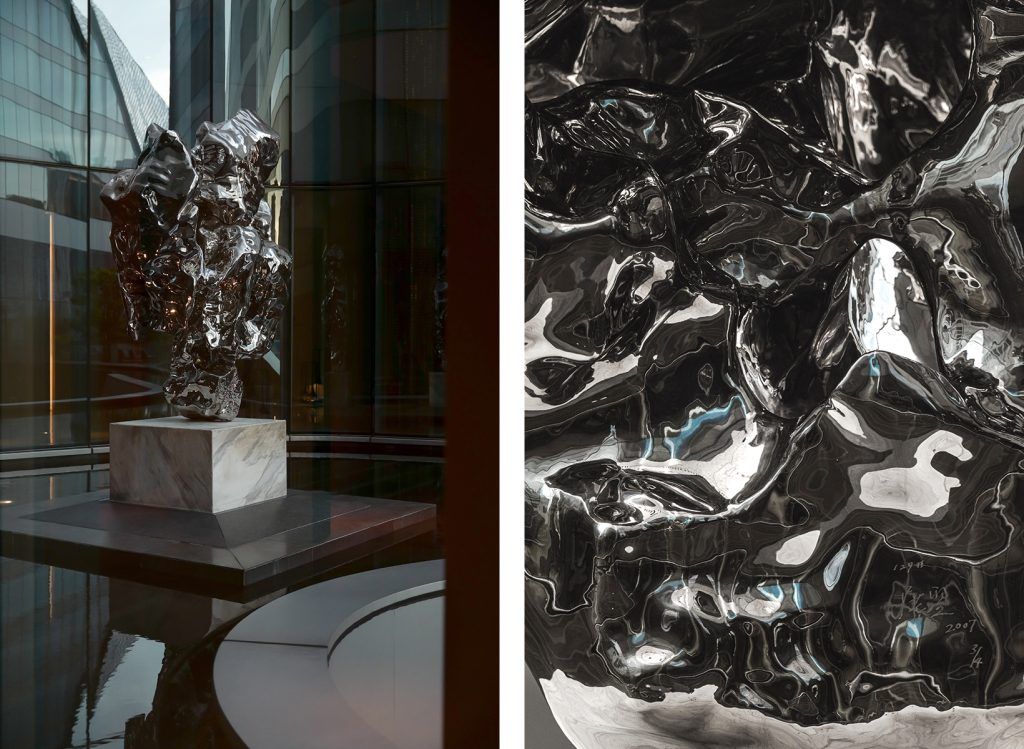
Scholar’s Rock (2010) is a good place to start any art adventure here. Wang—a close family friend of the owners and one of China’s foremost contemporary sculptors—recreated a traditional scholar’s rock by moulding sheets of stainless steel around the rock’s original surface, then welding and finishing them until the joins vanished. The work asks how tradition sustains itself by evolving. Standing in front of its dark beauty, I feel both hopeful and melancholic about the answer.
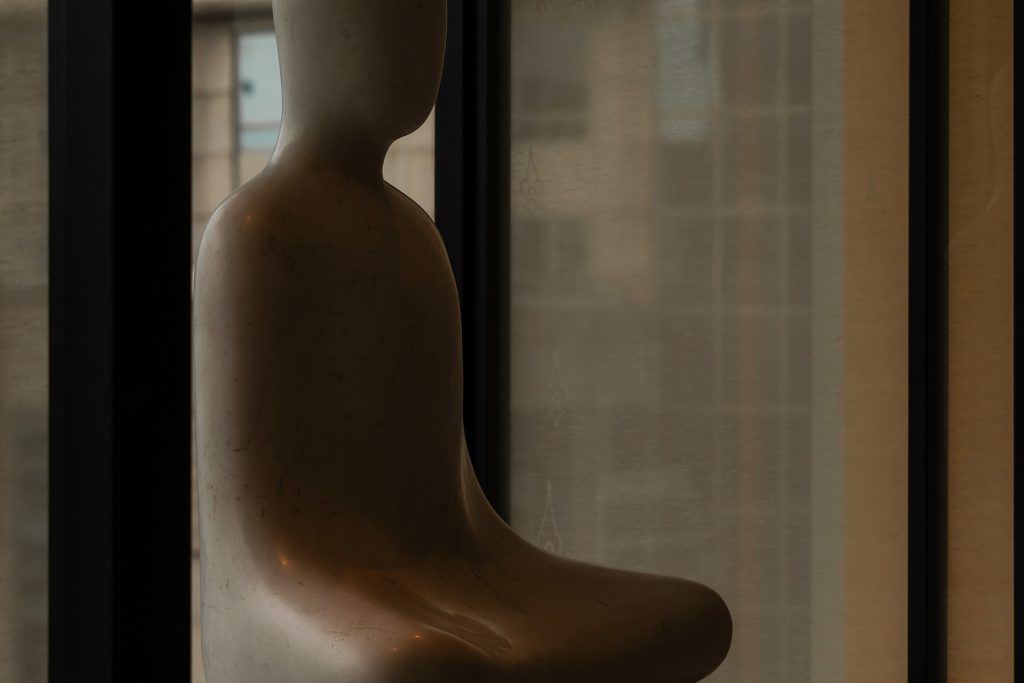
On the same floor are two large-scale works by Thai contemporary artist Chatchai Puipia—known for his flower and butterfly motifs that are often incorporated into his paintings in unexpected ways—created expressly for the hotel’s lobby. Understanding that they would mainly be seen by travellers, he designed them in bright colours to uplift spirits far from home. Elsewhere is a seated Buddha, minimalistically rendered by the late great sculptor Nonthivathn Chandhanaphalin, that combines traditional Thai iconography with contemporary aesthetics in a work reflecting nearly 50 years of artistic practice.
The art extends to even the most intimate spaces of the hotel. The bathrooms in each suite, for example, feature lotus flowers delicately carved into the cream stone walls by waterjets—a charming detail.
The Suite Life
-
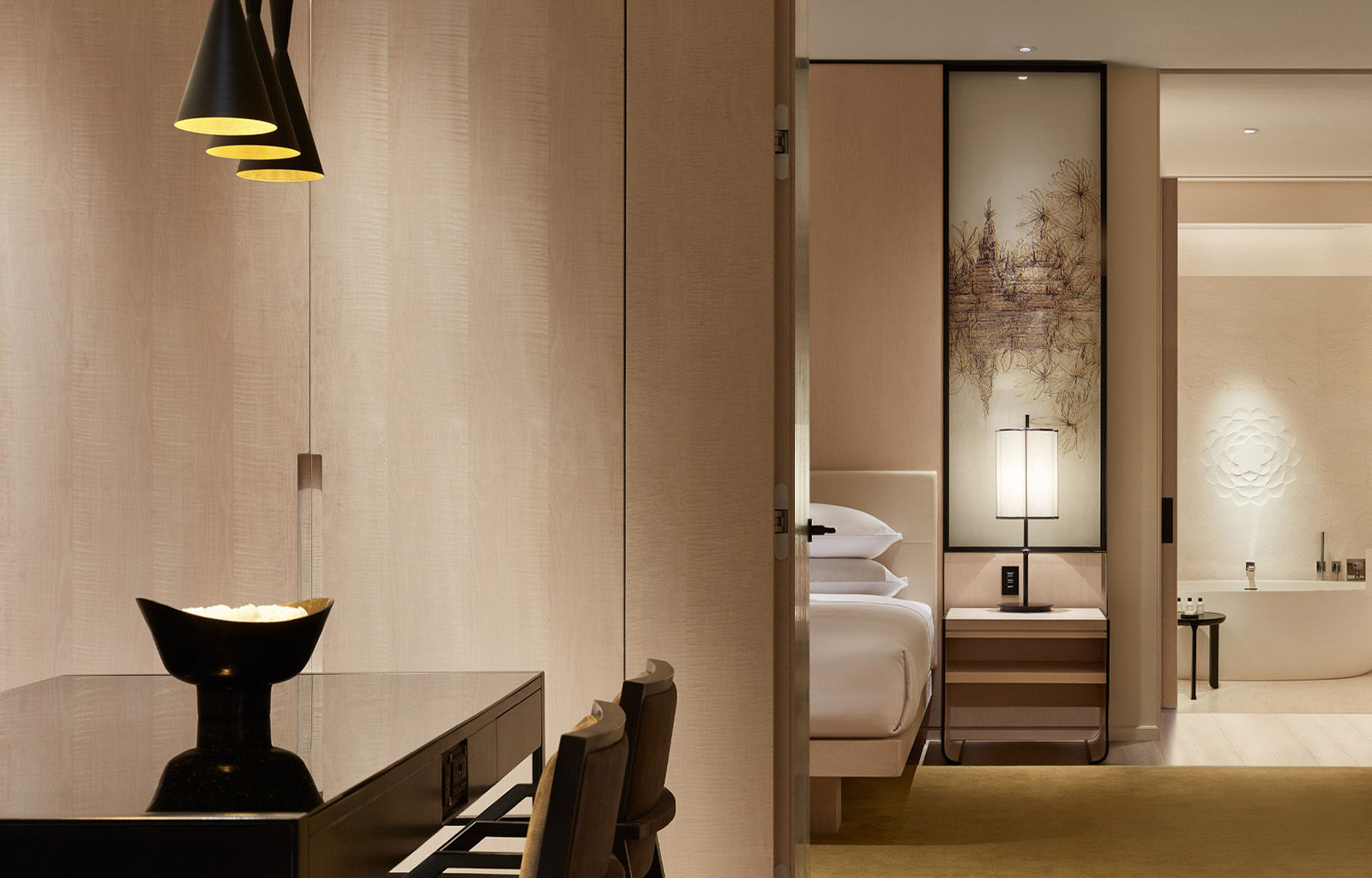
Park Executive Suite
-
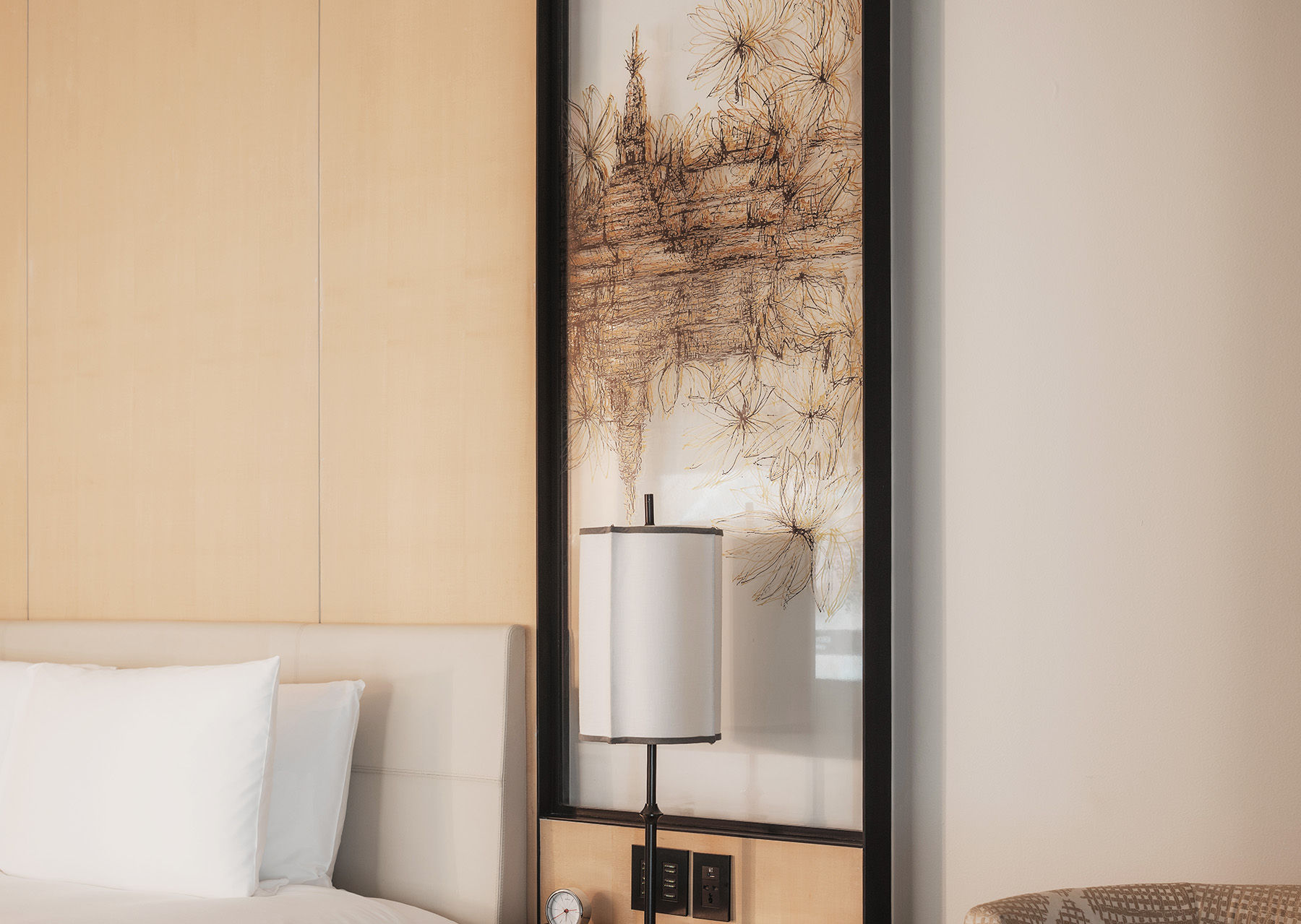
Park Executive Suite
-
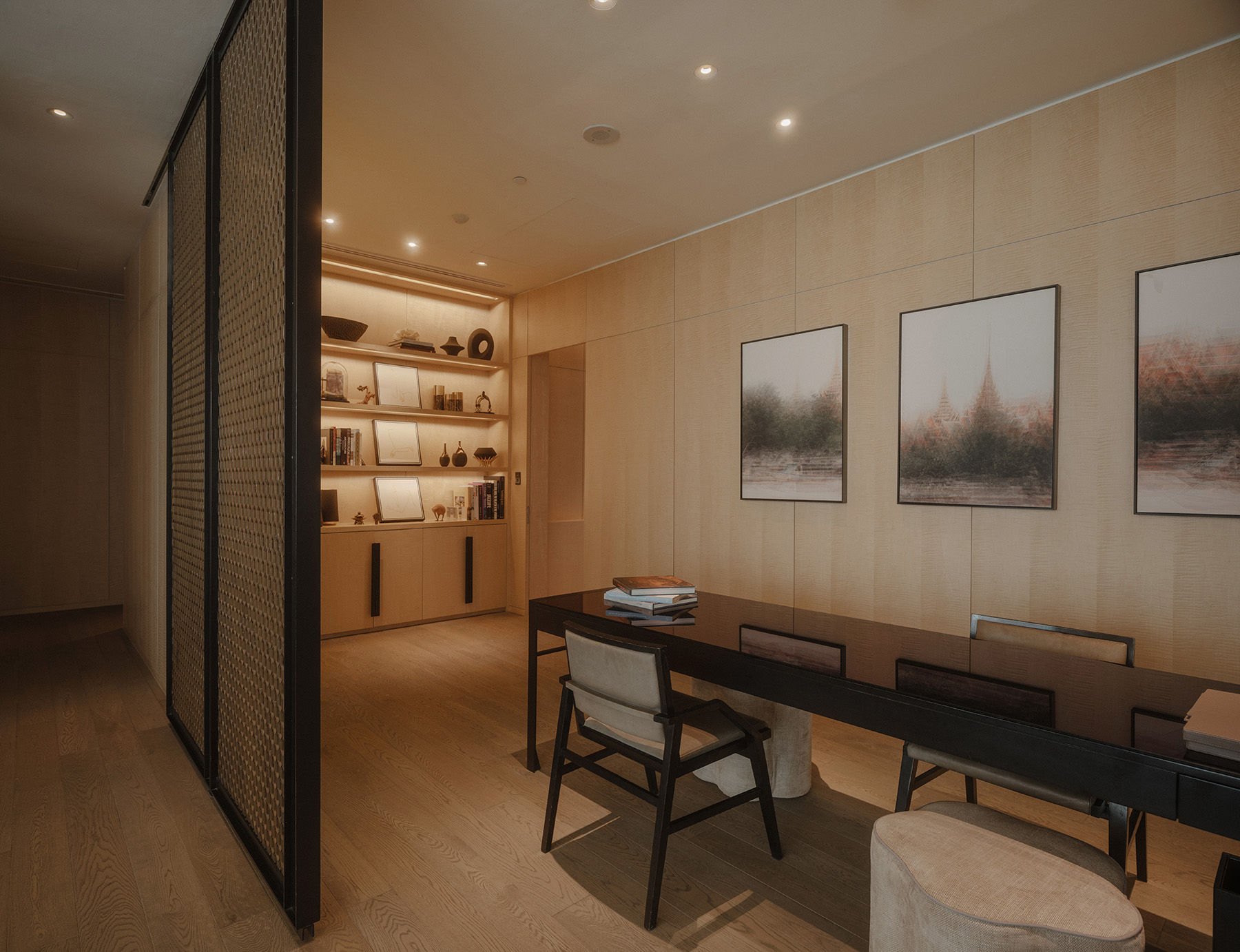
Presidential Suite
-
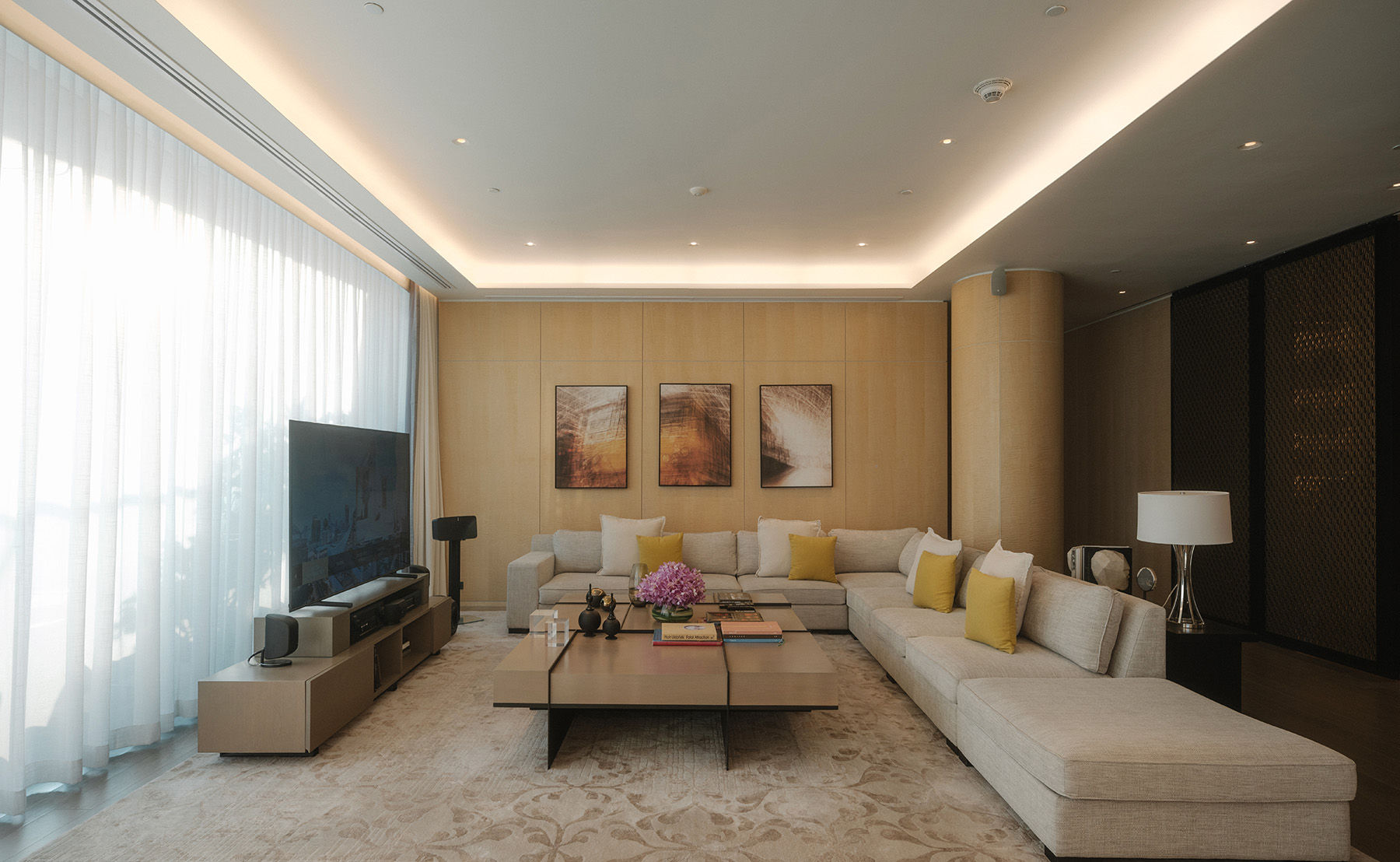
Presidential Suite
-
Presidential Suite
-
Ambassador Suite Living Room and Dining Room
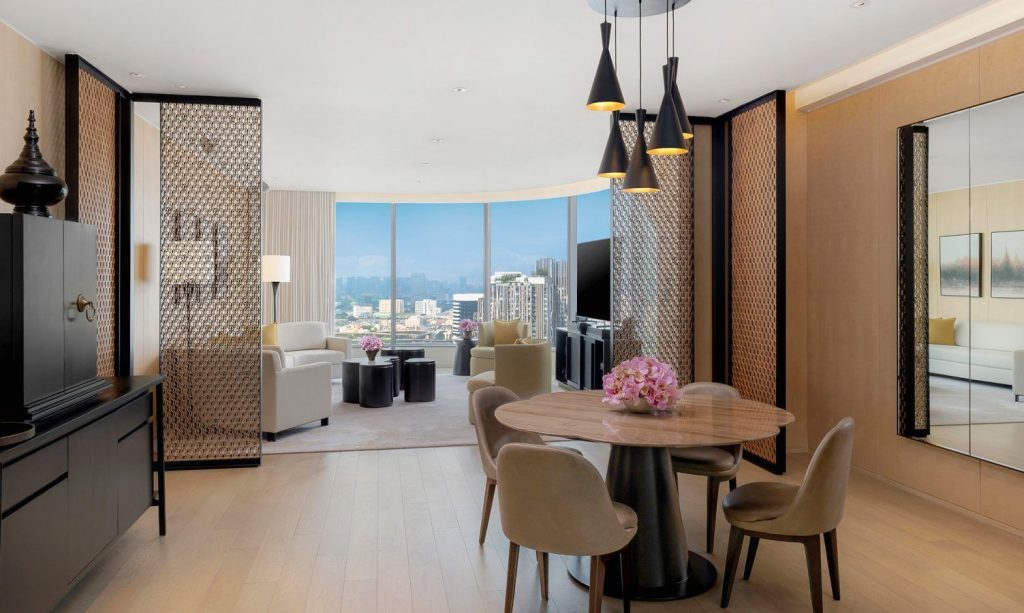
I stayed in the Park Executive Suite, which at 93 sqm (some go up to 109 sqm) comfortably included a bedroom with an oversized king bed, a separate living room, pantry, dining area and powder room. The suite tier also unlocks access to the Executive Retreat at The Park, an intimate experience offered daily from noon to 7 pm that serves artisanal lunch selections, afternoon tea with a contemporary twist, and evening bites paired with handcrafted cocktails, boutique wines and fine spirits. After a day out in the busy city, I looked forward to returning to this sanctuary to unwind in every day.
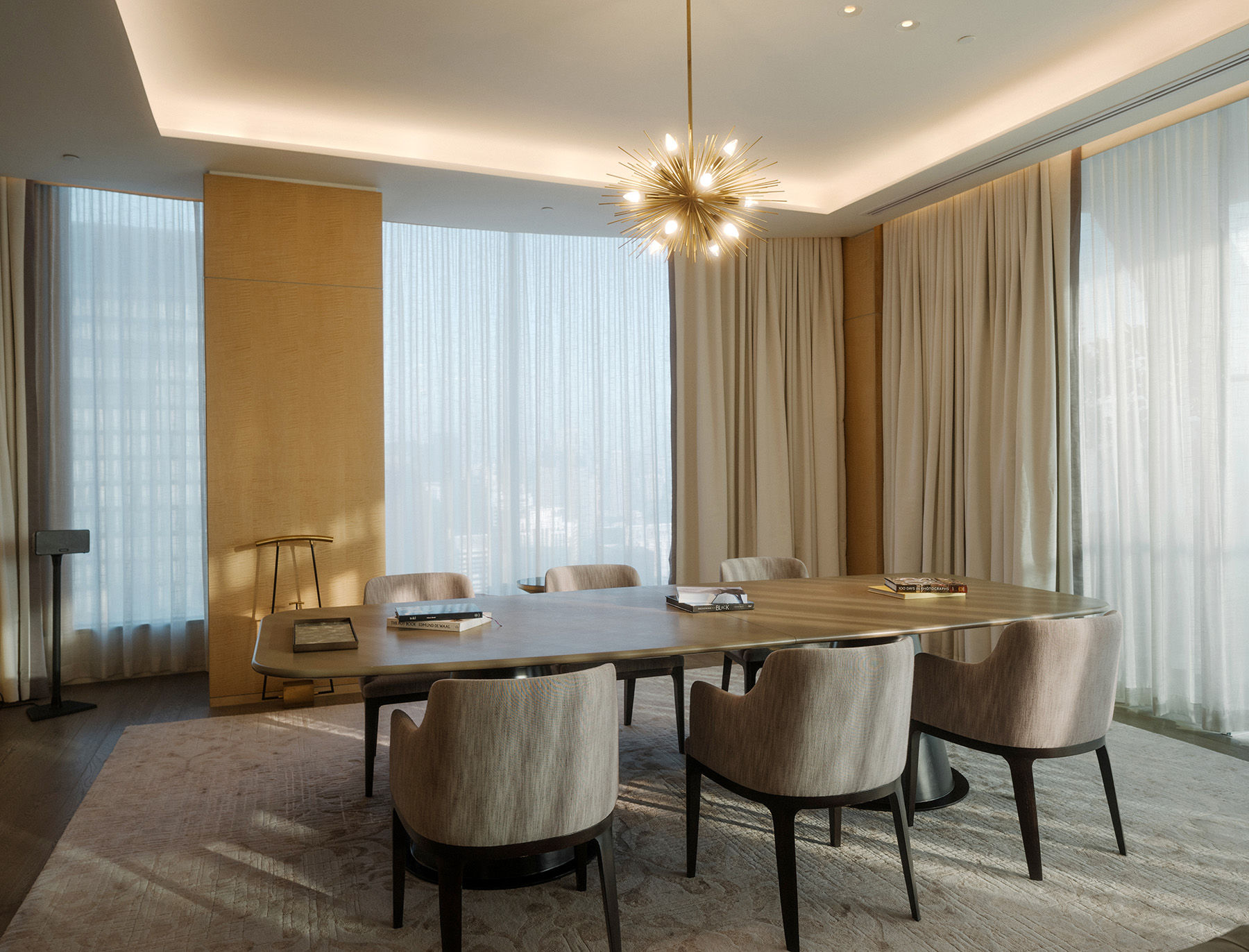
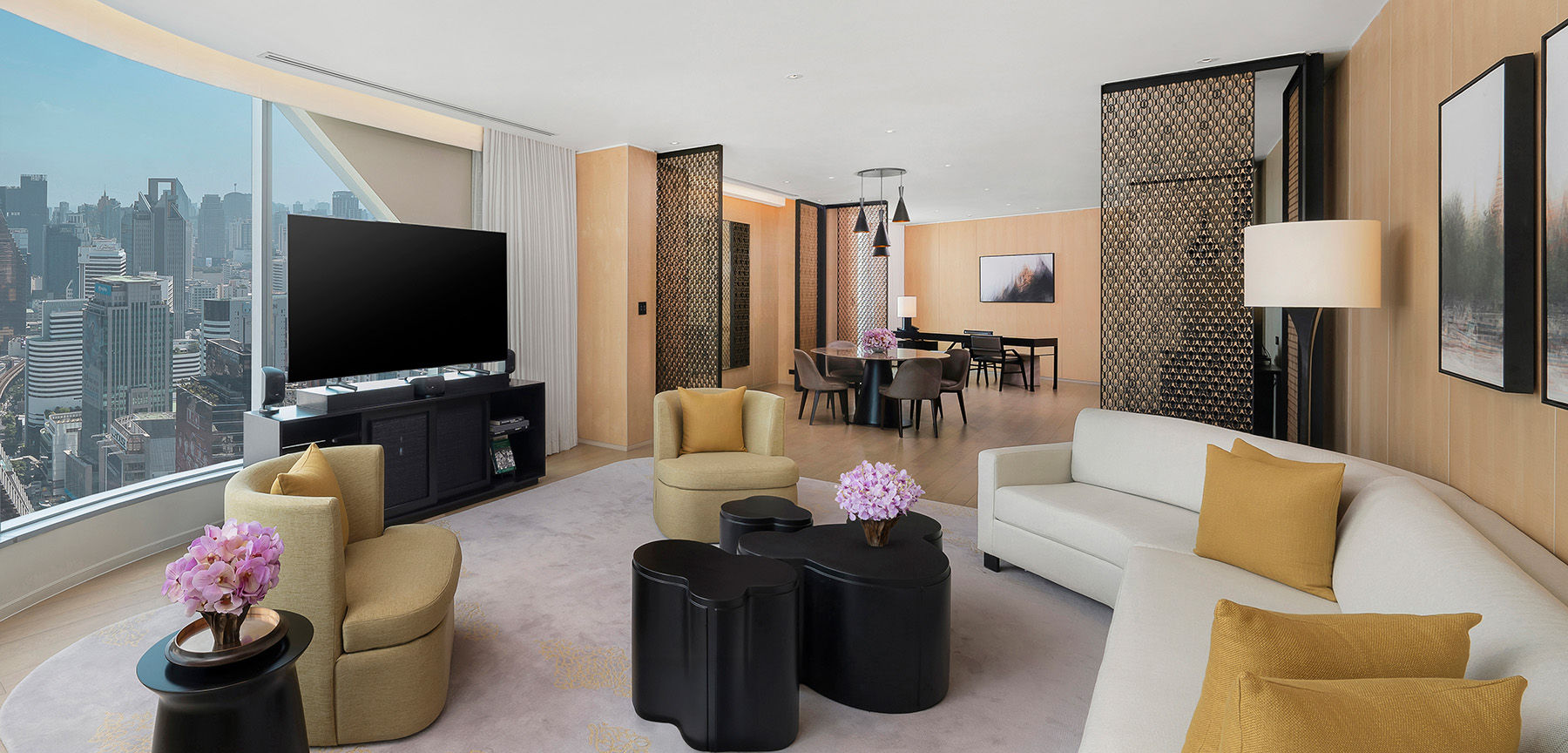
For those wanting an even more elevated stay, the Ambassador Suite steps up to 167 sqm to 177 sqm, with a private gym featuring Technogym Kinesis equipment, a home-style kitchen with Gaggenau appliances, a sommelier-curated private wine collection and a separate dining area. The configuration suggests a pied-à-terre rather than a hotel room. At the apex, the penthouse Presidential Suite occupies 381 sqm and comes complete with private pools, a spa room, a home theater and an outdoor terrace—not to mention breathtaking views over Bangkok.
A Distinct Perspective
Throughout, the interiors by award-winning design studio Yabu Pushelberg maintain a palette of cream, taupe and pale wood that gives every artwork room to speak. The effect of this commitment is that the entire hotel, from the suites to the public areas, feels more like a serious private collection than mere decorated space. Statement-making installations like Andreas Gursky’s Bangkok VII (2011) on the ninth floor further enhance this—the artist’s digitally manipulated aerial image of the Chao Phraya addressing the river’s environmental contamination isn’t the sort of thing a hospitality committee typically approves.
It’s this curatorial confidence that separates Park Hyatt Bangkok from properties that simply describe themselves as art-forward. Here, the collection presents a point of view. And staying in means being immersed in it—you get to understand something about the hotel’s perspective and Bangkok’s creative spirit, just as much as when you’re stepping out.
Article Sponsored by Park Hyatt Bangkok.
Images courtesy of Park Hyatt Bangkok.

Written By
