
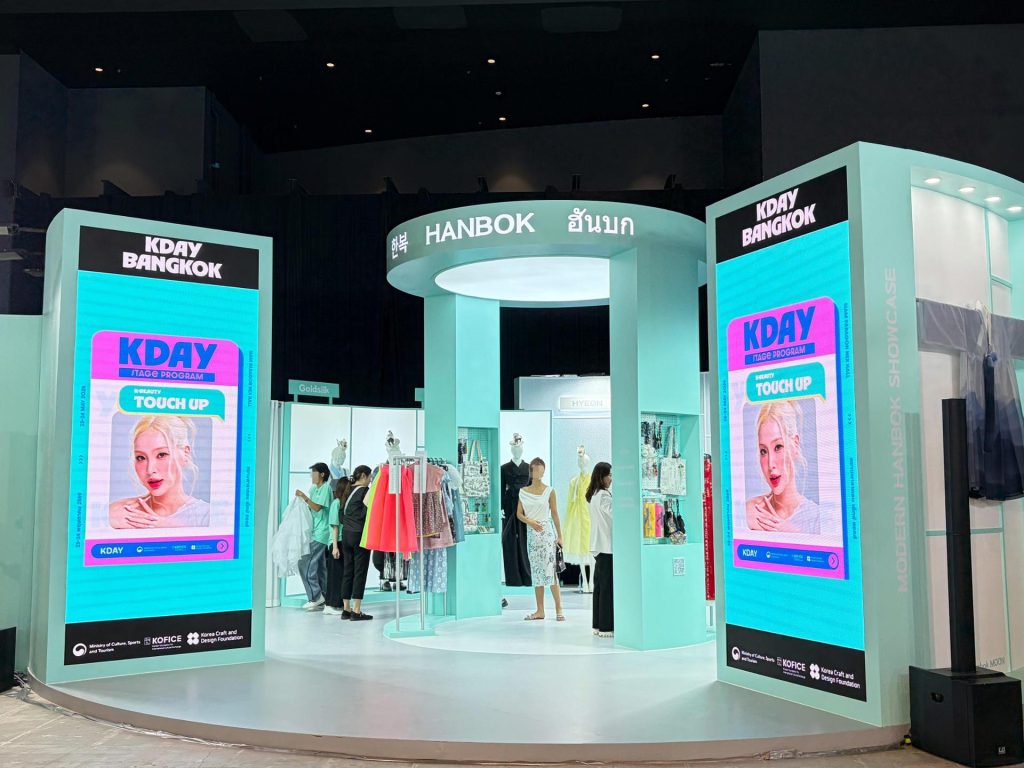

A exhibition booth for hanbok during the KDAY event at Siam Paragon NEX HALL in Bangkok / Courtesy of Ministry of Culture, Sports and Tourism
Korea is expanding its cultural diplomacy beyond the screens of Netflix and the stages of K-pop, launching an integrated initiative to embed traditional lifestyle and fashion goods in international markets.
The Ministry of Culture, Sports and Tourism on Wednesday hailed the successful debut of KDAY, a comprehensive lifestyle festival in Bangkok that drew more than 6,000 visitors over the weekend. Held at the Siam Paragon NEX Hall, the two-day event signals a tactical shift by state planners looking to tie commercial exports directly to traditional aesthetics.
The centerpiece of the showcase was a contemporary reimagining of the hanbok, the traditional Korean attire. Six design brands presented a runway exhibition featuring modernized garments adapted for daily wear. To deepen regional engagement, organizers enlisted Nichkhun, a Thai-born member of the K-pop group 2PM, to lead cultural talk shows and fan sessions exploring the history and modern relevance of the clothing style.
The selection of Thailand as the inaugural site reflects market data. According to the 2025 Global Hallyu Trends Survey, which showed that Thai respondents had the highest hanbok experience rate among 28 countries surveyed, along with a near-universal purchasing rate for Korean beauty and food products.
Beyond the runway, the ministry deployed 46 domestic brands across the fashion, cosmetics and culinary sectors, setting up temporary retail outposts with local digital payment systems to streamline consumer access. Interactive workshops introduced visitors to accessories crafted from traditional fabrics and bespoke tea-blending techniques.
Following the Bangkok trial, municipal and cultural authorities plan to export the model to Japan, with a second installment scheduled for Tokyo this October.
“KDAY provides an avenue for global citizens to experience the full spectrum of the Korean lifestyle, anchored by the evolving aesthetics of our fashion,” a ministry official said. “We intend to establish this cross-disciplinary model as an annual fixture on the international cultural calendar.”
This article was published with the assistance of generative AI and edited by The Korea Times.