
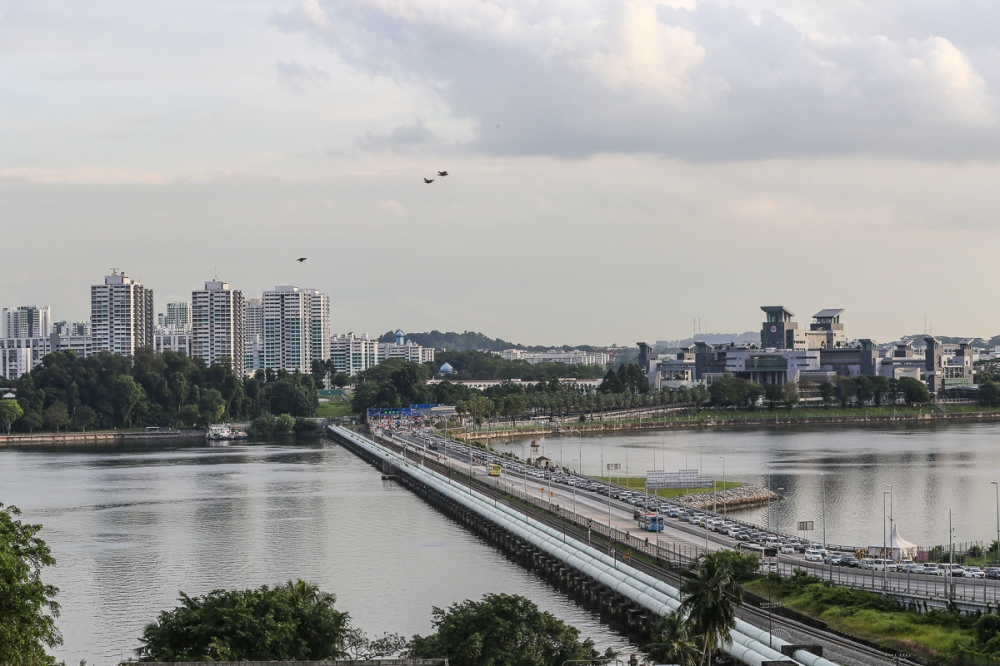
JULY 5 — Johor has always occupied a unique place in the Malaysian imagination.
It is neither entirely like the northern states of Peninsular Malaysia nor wholly comparable to the East Coast states. It is not Kuala Lumpur, and it certainly is not Singapore. Yet Johor sits at the intersection of all these influences while retaining an identity unmistakably its own.
History and geography have combined to ensure that Johor remains distinct yet integral to Malaysia.
This reality explains why every election in Johor attracts attention beyond the state’s borders and why political moods in Johor often become the subject of endless speculation among political parties, investors and observers alike.
The first question often asked by Johoreans is deceptively simple.
Why has Johor not become substantially more dynamic when one of the richest economies in the world has existed just across the Causeway since 1965?
For more than six decades, Johoreans have crossed the border to work, study, trade and build businesses. They compare wages, transport systems, public housing, urban management and public services.
Such comparisons are unavoidable.
Indeed, no other Malaysian state lives in the shadow of such extraordinary prosperity immediately across an international border.
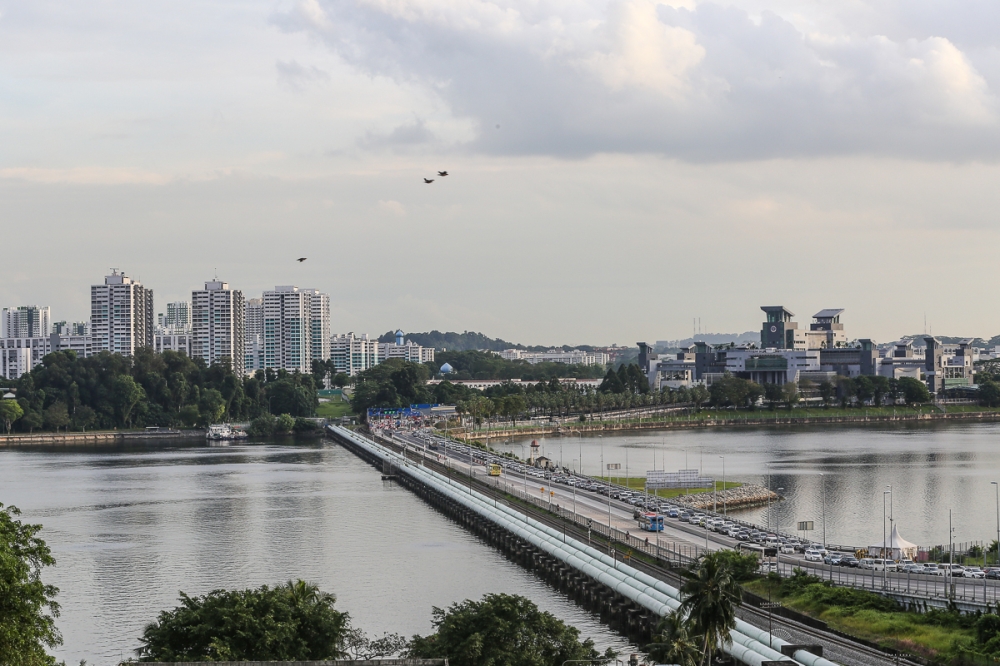
Johor’s proximity to Singapore has long shaped public expectations on development, governance and economic opportunities, while the
The expectation that wealth should somehow spill over naturally into Johor has therefore become deeply embedded in the political psychology of the state.
Of course, Singapore operates as an independent sovereign city-state with taxation powers, fiscal autonomy and administrative flexibility unavailable to any state government within Malaysia.
Yet voters are not asking constitutional questions alone.
They are asking developmental ones.
If prosperity can exist so close geographically, why has Johor not captured more of its benefits?
The second question concerns governance and political change.
If Johor had once suffered from neglect under decades of uninterrupted Barisan Nasional rule, why has change not accelerated since 2018, when the political landscape of Malaysia became more competitive and coalition governments became the norm?
Many voters expected that the end of one-party dominance at the federal level would unleash a new era of reforms, investments and administrative dynamism.
Some improvements have undoubtedly occurred.
Yet institutional reform is often slower than electoral change.
Coalition governments must negotiate compromises.
Bureaucracies adapt gradually.
Policies that took decades to create cannot be reversed within a few years.
Nevertheless, voters continue asking whether the pace of change has matched the magnitude of earlier promises.
The third question concerns the nature of Malaysian federalism itself.
If states possess constitutional powers and responsibilities of their own, why do so many states continue to depend heavily upon Putrajaya for resources and development?
Federalism was designed to encourage experimentation and local initiative.
Instead, many Malaysians increasingly perceive a relationship in which states are unable to exercise meaningful autonomy without federal assistance.
This creates a cycle of mutual frustration.
State governments blame federal agencies.
Federal authorities point towards state administrations.
Citizens, however, judge outcomes rather than explanations.
The issue therefore extends beyond Johor.
It concerns the effectiveness of Malaysian federalism as a whole.
The fourth question is perhaps the most immediate and emotional.
Why can the cost of living not be managed more effectively?
Why does affordable housing remain elusive for so many young families?
The comparison with Singapore’s public housing model inevitably emerges.
Many Johoreans ask why every family cannot reasonably aspire to own at least one affordable housing unit.
Housing is more than a commodity.
It is security.
It is dignity.
It is the foundation upon which families plan their futures.
While the structural conditions of Malaysia and Singapore differ enormously in terms of land ownership, fiscal systems and constitutional arrangements, the aspiration remains understandable.
Citizens do not compare technicalities.
They compare outcomes.
The fifth and perhaps most sensitive question concerns identity.
Why does occasional sentiment emerge suggesting that Johor should somehow stand apart from Malaysia when Johor was among the earliest and strongest supporters of the Malaysian project itself?
The answer lies not in separatism but in history.
Johor possesses one of the oldest traditions of statehood and administration in the Malay world.
Its institutions predate modern Malaysia.
Its rulers played an important role in shaping the federation.
Its economy has always been outward looking and internationally connected.
A strong sense of identity therefore exists naturally and legitimately.
Distinctiveness should never be confused with disloyalty.
Indeed, one of the strengths of Malaysia has always been its ability to accommodate multiple identities within a common national framework.
Sabahans remain proudly Sabahan and Malaysian.
Sarawakians remain proudly Sarawakian and Malaysian.
Johoreans are no different.
They can possess a strong attachment to Johor while remaining deeply committed to Malaysia.
The challenge for policymakers is therefore not to fear Johor’s uniqueness but to understand it.
The state’s concerns are often ahead of national conversations.
Questions about housing, wages, transportation, regional autonomy and institutional effectiveness often emerge in Johor before they spread elsewhere.
Johor therefore serves as an early indicator of broader national trends.
Most importantly, what happens in Johor should not automatically be interpreted as a verdict on the federal government of the day.
Malaysia today is governed through coalition politics.
State elections increasingly revolve around local concerns, regional priorities and distinct socioeconomic realities.
The fortunes of federal coalitions and state administrations no longer move in perfect synchrony.
Johor voters understand this distinction perhaps better than anyone else.
Ultimately, Johor’s uniqueness is not a problem to be solved.
It is an asset to be appreciated.
The state’s history gave Malaysia one of its earliest modern administrations.
Its geography connected Malaysia to the wider world through trade and investment.
Its people continue to serve as an economic bridge between Malaysia and Singapore.
Johor may always think differently from other states.
It may vote differently.
It may ask harder questions.
But this does not place Johor outside Malaysia.
Quite the opposite.
History and geography ensure that Johor remains distinct precisely because it has always been integral to the Malaysian story.
And Malaysia, in turn, is stronger because Johor has never stopped reminding the nation that prosperity, autonomy and good governance must constantly be pursued rather than merely promised.
* Phar Kim Beng is a professor of Asean Studies, International Islamic University Malaysia and a director, the Institute of International and Asean Studies.
** This is the personal opinion of the writer or publication and does not necessarily represent the views of Malay Mail.