
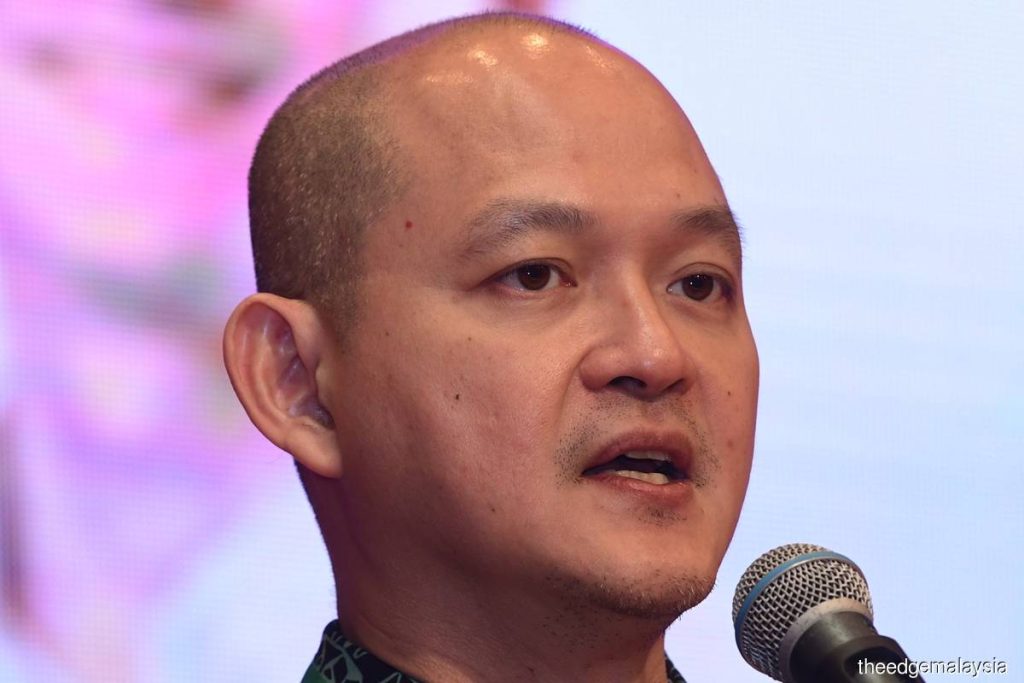
KUALA LUMPUR (June 4): Malaysia needs to strengthen policy execution to attract more foreign direct investment amid rising competition from regional peers, said former deputy minister of investment, trade and industry Dr Ong Kian Ming.
Ong, who is currently Taylor’s University adjunct professor, pointed to the Johor-Singapore Special Economic Zone (JS-SEZ) as an example.
“Right now, there is strong interest from Singapore-based companies, including multinationals, in the JS-SEZ. However, the master plan, which was expected to be announced earlier, has been delayed, raising questions among investors in Singapore about Malaysia’s commitment to the initiative. This is an area where the policy response needs to be clearer,” he said.
Speaking at the Malaysia-Japan Legal Business Forum 2026, Ong also highlighted the need for clearer policies in Malaysia’s engagement with its largest trading partner, China, particularly on supply chain localisation.
“We are attracting a lot of good investments from China, but we need better policy clarity. The automotive sector is one that has been in the news lately, and some of the policy announcements by Miti (Ministry of Investment, Trade and Industry) could have been better handled,” he said.
On the third area, he said there is scope to deepen engagement with Taiwan, particularly in high-value sectors such as semiconductors, where Taiwan plays a key role globally.
“If you look at what Jensen Huang (president and CEO of Nvidia) has been doing, he launched a lot of Nvidia products in Taipei recently. And I think there is room for us to manoeuvre. I’m not saying that we should change our one-channel policy. That should remain.
“Our relationship diplomatically speaking is with Beijing. But there are a lot of other trade and investment types that we can come up with, including in the semiconductor sector. Because for any large Taiwanese company to invest abroad, including in Southeast Asia, they would need permission from the authority,” he said.
Malaysia recorded RM426.7 billion in approved investments in 2025, the highest level on record, representing an 11% increase from RM384.4 billion in 2024, according to the Malaysian Investment Development Authority.
Domestic investments accounted for RM219.6 billion, or 51.5% of the total, while foreign investments rose 20.9% to RM207.1 billion, making up the remaining 48.5%.
Foreign investments increased across all three sectors, led by the primary sector (63.4%), followed by services (28.7%) and manufacturing (13.1%).