
Tokyo’s new weapons export rules, the never-ending China-Japan rift, Thucydides Trap’s historical flaw, Global South’s central ceasefire role, Asian fossil-fuels fall, and BTS manager’s arrest warrant.
Japan this week lifted restrictions on lethal weapons exports, sparking what local media called a wave of interest from countries keen to diversify their sources of weaponry and to strengthen defence-industrial co-operation.
The Japan Times reported Defence Minister Shinjiro Koizumi as saying a number of countries had expressed their interests and needs.
The paper said Tokyo’s decision opened the door to integrating Japan’s high-end industrial base with global allied supply networks that were currently strained by multiple conflicts.
Governments across North America, Europe, Southeast Asia and the Pacific had been expecting Tokyo’s move, signalling strong demand for not only Japanese technology and equipment but also for joint development and production, particularly in such emerging areas as artificial intelligence and quantum technologies.
In a separate story, the paper described the arms export decision as a major policy shift that abolished restrictions limiting military exports to non-lethal categories. Cabinet had decided to put defence equipment into two categories – “weapons” or lethal systems such as warships, tanks and missiles – and “non-weapons” – equipment such as radars and protective gear.
Decisions would be made by the National Security Council and sales would be limited to countries that had defence equipment and technology transfer deals with Japan. At present, that covered 17 countries but officials expected the number to grow, the paper said.
The Asahi Shimbun said the comprehensive embargo dated back to 1976. In 2014, Shinzo Abe’s government allowed the sale of non-lethal equipment used for rescue, surveillance, transportation, vigilance and minesweeping.
The sale of 11 Mogami class frigates to Australia, announced last year, is often portrayed in Japanese media as an example of potential future defence exports. The sale was allowed under another 2014 exemption covering countries with which Japan had close security ties.
Australia and Japan signed an agreement for the sale in Melbourne last weekend. The ceremony attracted modest interest in Australian media, presumably because it was a formality. But it was headline news in Japan.
The Japan Times hailed the A$20 billion deal as Japan’s largest ever defence contract. Nikkei Asia, the online business and politics magazine, said the deal promised to deepen defence industry deals between the two countries. It quoted Koizumi as saying there was no limit to the possibilities of closer security ties.
The announcements provoked a reaction from Beijing. China Daily, an official newspaper, published an academic commentary that said major defence contractors had long pushed for more permissive export rules, using lobbying and political donations.
“The most recent relaxation of the weapons export ban reflects Japan’s ongoing pursuit of ‘neo-militarism’,” the article said.
The paper also published an op-ed that homed in on the frigates deal with Australia. It said experts had warned that the defence collaboration could evolve into a ‘quasi-alliance’ between the two countries.
The never-ending rift
Relations between China and Japan have soured in recent months, since Japanese Prime Minister Sanae Takaichi made provocative remarks on Taiwan and China responded, sternly and emotionally.
But Takaichi did not create the mutual hostility between the people of the two countries. It was simply the latest flare-up in a relationship that has been getting worse for most of this century, according to a story in The Diplomat.
For two decades, a Japanese think-tank called Genron NPO has been asking people in China and Japan a question: what do you think of the other country?
It has tracked what the story calls a punctuated collapse: sentiment lurches downward with each fresh crisis and rarely recovers.
The proportion of Japanese people with a poor impression of China rose from 38 per cent in 2005 to 89 per cent in 2024. Chinese opinion has been more volatile, the story says, but it has reached the same destination. By 2024, almost 88 per cent of Chinese people had a bad opinion of Japan.
“That is not an erosion,” the story says. “It is a near-total inversion of public sentiment over a single generation.”
The story traces the current negative trend to at least 2012, when Japan nationalised the disputed Senkaku Islands (known to China as the Diaoyu Islands) in the East China Sea. This triggered the worst anti-Japanese protests in China in decades and in 2013 the share of Chinese people with negative views of Japan reached its high point of 92.8 per cent. The Japanese proportion hit a high point of almost 90 per cent and stayed there, year after year.
In November last year Takaichi made her statement that a Chinese attack on Taiwan would constitute an existential threat to Japan and China responded angrily, including by advising its citizens not to travel to Japan.
The clash has probably heightened the mutual hostility but the extent will remain a mystery. Genron NPO’s latest survey has been postponed indefinitely: the Chinese partner has pulled out.
Caught in a trap?
The Thucydides Trap is the notion that war is almost inevitable when a rising power challenges the hegemon of the era. In the opinion of author Chandran Nair, however, it is a marketing tool for the military-industrial complex.
“Convince the public that a rising competitor is an existential enemy and vast defence budgets appear prudent, even as schools, hospitals and infrastructure are hollowed out,” he writes.
The idea of the trap was developed by Harvard historian Graham Allison in his 2017 book, Destined for War. It was named after Athenian general Thucydides, historian of the Peloponnesian War between Athenian and Spartan forces almost 2,500 years ago.
Nair says that Allison argued the trap could be avoided. “What Washington heard, however, was not the caveat,” he says. “It was permission.”
Nair is a Malaysian scholar who founded a think-tank called the Global Institute for Tomorrow. He is a member of the Club of Rome.
In a long article in Hong Kong’s South China Morning Post, he says the concept of the trap invites nations to sleepwalk into accepting confrontation as destiny, rather than scrutinising the choices driving current tensions. “That scrutiny would expose inconvenient truths about hegemony, resources grabs and barely concealed disdain for others based on race and religion,” he says.
“Why are we being forced to look at the 21st Century through a 2,500-year-old lens of Greek city-state warfare? Why are Athens and Sparta… rather than the accumulated experience of Asia, Africa or Latin America, elevated as the definitive guide to the future, as if they are a law of physics?”
Yet fatalism makes little sense outside the western canon, he says. Western Europe’s history was one of wars of expansion, colonisation and then, twice within a single century, total war. Other civilisations, he says took different paths: China, India and Iran survived for millennia by giving priority to internal stability rather than global power projection.
“The Thucydides Trap is only as powerful as our willingness to accept manufactured narratives as historical law,” he writes. “…The era in which a handful of countries claim the right to set the terms by which we understand the world and navigate it is ending. The multipolar world will not be risk-free but it will be more progressive if it frees itself of false narratives.”
Did the US ask for help to contain crisis of its own making?
Negotiations to enable and then extend a ceasefire in the US/Israel-Iran war point to an emerging shift in the exercise of international power.
Pedro Abramovay, a former Brazilian secretary of justice, said in an essay published by The Japan Times, that as the era of American hegemony was ending the outlines of what might work in the future were coming into view: countries of the Global South exercising their leadership to shape an emerging world order.
His article, distributed by Project Syndicate, the expert writer’s group, said that behind the scenes American officials had pressed Pakistan to broker an agreement that would allow Donald Trump to step back from his threat to destroy Iranian civilisation.
“The ceasefire, in other words, came about not because the world’s most powerful military imposed order, but because it was forced to contain a crisis of its own making,” he wrote.
Abramovay, a vice-president of the international human rights NGO the Open Society Foundations, said it was clear the G7 countries lacked geopolitical leverage. Their foreign ministers had mildly criticised US Secretary of State Marco Rubio over the war and called only for the cessation of attacks against civilian and civilian infrastructure.
Ceasefires would once have been brokered in European capitals, he said. In this crisis, Islamabad hosted the talks.
“The fact remains that the US had to rely on the Global South to contain the fallout of its own irresponsibility,” he said.
A commentary in Singapore’s The Straits Times made the point that the most important peace broker, shuttling between capitals and working the phones, was Pakistan’s chief of the defence forces, Field Marshal Asim Munir.
The op-ed, by senior commentator Bhavan Jaipragas, asked why UN secretary-general Antonio Guterres had featured so minimally in the midst of a global crisis.
“Was it not the UN secretary-general who historically played this… role of mediator, peace broker and trouble shooter in the worst of crises?” Jaipragas asked.
Renewables rise
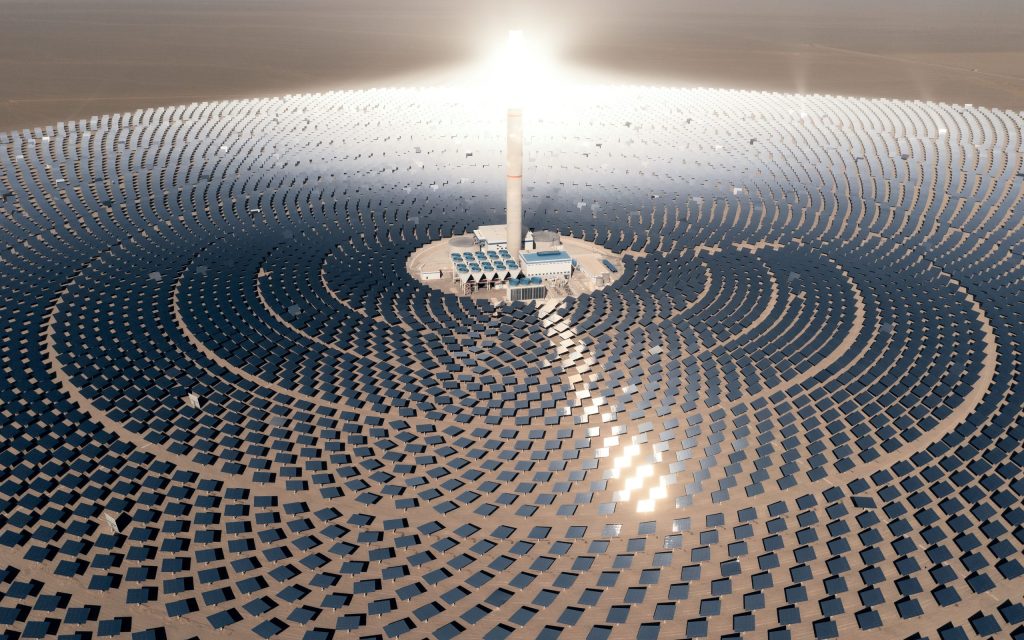
A surge in clean energy production in China and India in 2025 has helped renewables overtake coal’s share of global electricity generation, Nikkei Asia reports.
It says the boost in Asia’s solar power generation last year helped clean power exceed the region’s growth in electricity demand – leading to the biggest yearly fall in fossil-fuel generation this century.
It says a global energy review by the UK-based global energy think-tank Ember showed power production by fossil fuels last year fell by 0.9 per cent across Asian countries. Clean energy generation in Asia grew by 13.06 per cent.
The shift to clean energy was driven by China and India, historically the biggest contributors to global use.
“Asia is leading the charge in adding solar power, with four of the world’s top 10 solar generators – China, India, Japan and South Korea – in the region, and other rising fast,” said Ember managing director Aditya Lolla.
Solar generation in Asia last year rose by 36 per cent – the fastest rate since 2018.
Nikkei Asia says China, the world’s biggest greenhouse gas emitter, accounted for 31 per cent of global clean energy investment. It cites International Energy Agency figures showing China invested US$627 billion (A$875 billion) on clean energy while India’s investment reached US$100 billion (A$139 billion).
India’s fossil-fuel power generation fell by 3.3 per cent last year. Its renewable energy generation grew twice as quickly as electricity demand.
Nikkei Asia quotes Dinita Setyawati, Ember’s senior energy analyst for Asia, as saying the Ukraine war and the Gulf crisis underlined the importance of home-grown renewables and clean energy corporations in the region.
BTS manager’s arrest warrant
When K-pop phenomenon BTS staged their comeback concerts in Seoul in recent weeks, one attendee was a Yale University sociology professor who travelled to South Korea just to go to one concert.
She wasn’t there for professional reasons; she attended because she is a fan.
The academic is Professor Grace Kao. She is also a columnist with The Korea Herald.
“Not long ago, like many, I was bewildered by stories of BTS fans flying to different countries to see them in concert,” she wrote this week. “Now I’ve become one of these fans, I understand why people do it.”
What Kao found was a sense of community among Army, as BTS fans are collectively known. In the Incheon Airport immigration queue, she chatted to fans from other Asian countries.
“Every interaction was warm,” she said, “If this were my first time alone in a foreign country, I would have immediately felt a sense of belonging.
“When I arrived at the hotel… I was immediately greeted by Army… Over the weekend we not only exchanged pleasantries but also little gifts… The gift-giving part of the BTS concert experience is one of my favourite elements.
“Community building is an essential part of the K-pop fan experience.”
But if all is warm and wonderful among BTS fandom, things are not so smooth with officialdom.
Police this week said they were seeking an arrest warrant for Bang Si-hyuk, founder and chairman of the entertainment conglomerate called HYBE that manages BTS. The Korea Times described HYBE as a K-pop powerhouse.
Bang, police allege, in 2019 deceived investors into selling their shares before his company held an initial public offering. He allegedly then pocketed almost 200 billion won (now about A$188 million).
The Times wrote an editorial about the police action. “…[t]he hope is that the allegations will be dealt with legally – and separately from matters relating to BTS,” it said.
It noted that US Embassy in Seoul had reportedly asked police to lift a travel imposed on Bang, to make it possible for him to attend Fourth of July festivities marking the 250th anniversary of American independence.
“The manner of the reported US Embassy’s request did not follow formal convention,” the editorial said.
The views expressed in this article may or may not reflect those of Pearls and Irritations.