
This post is part of NGN Offside, a blog about the 2026 FIFA World Cup, powered by data science.
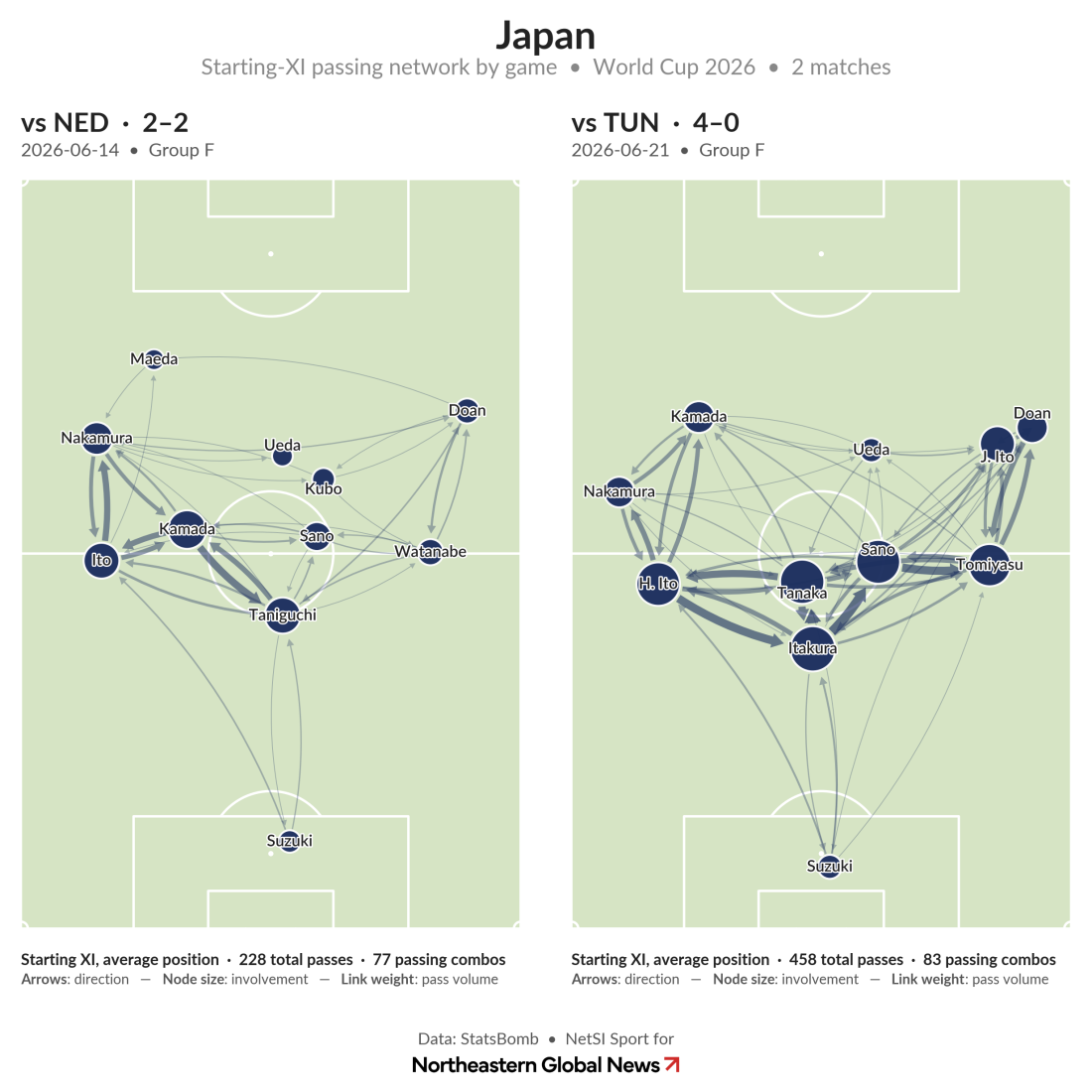
With its 4-0 win on Sunday against Tunisia, Japan became the first Asian Football Confederation team in all of World Cup history to score four points during a game, according to FIFA. The key to Japan’s historic victory was its 3-4-2-1 player formation, according to data analyzed by Northeastern experts.
This is a well-known strategy of arranging players on the pitch in which three defenders are placed in the back, four midfielders are placed in the center and wings, two attackers are placed just above them, and a lone center forward is placed at the very top.
Midfield wing backs Keito Nakamura and Ritsu Doan were key to making it work. Wingers operate on the left and right flanks of the pitch, and are essential to passing the ball to the team’s attacking line. Keito and Doan did just that this weekend, creating scoring opportunities for some of the team’s most valuable players.
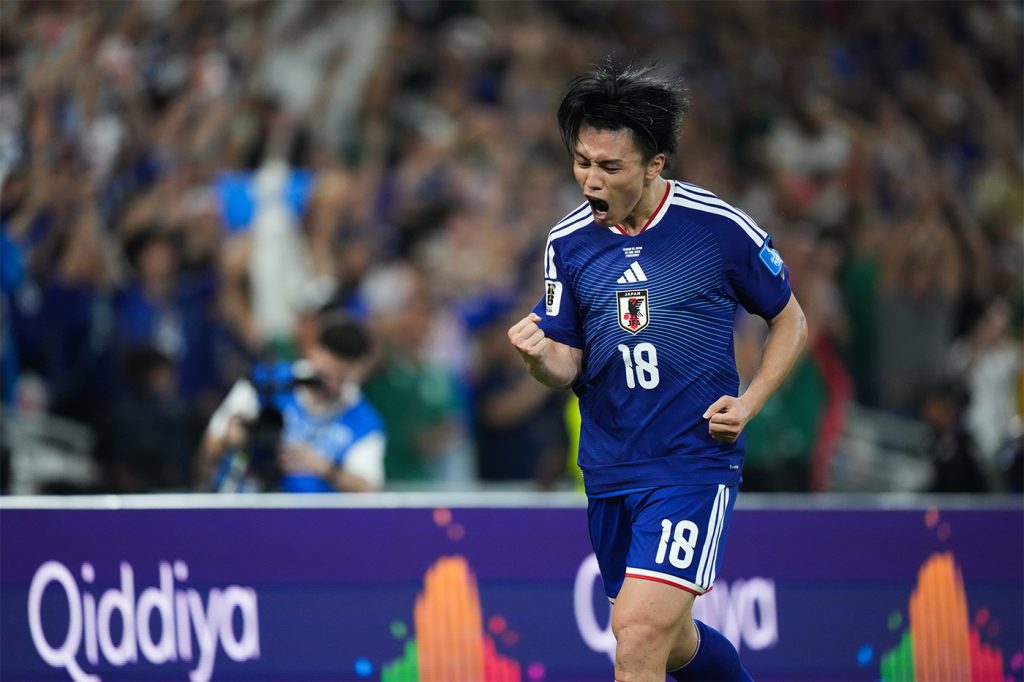
That included center forward Ayase Ueda, who scored two of his home country’s four goals in the 31st and 83rd minutes of the game. Attacking defender Daichi Kamada was also key as he scored a goal in the fourth minute.
The country deployed a similar strategy in its 2-2 game against the Netherlands earlier this month, but struggled given Netherland’s strong possession of the ball. By contrast, Tunisia was a far weaker team, failing to retain the ball during the match and leading to a disorganized network of passes.
Beyond its overall history-making score, it was a night of other firsts for Samurai Blue, the official nickname for Japan’s men’s national team. The match marked the first time a Japanese player scored twice in a single match and the first time the country netted a goal within four minutes of the match’s start.
Japan will now take on Sweden Thursday in what is expected to be a competitive match-up since the country similarly features a strong line up of attacking players and supportive wingers.
Data analysis provided by Brennan Klein, director for Northeastern University’s NetSI Sport research group.