

Japan is re-arming powerfully – but Taiwan can’t rely on its help. The island must prepare to hold out alone against a Chinese attempt at subjugating it, at least until international help can be marshalled.
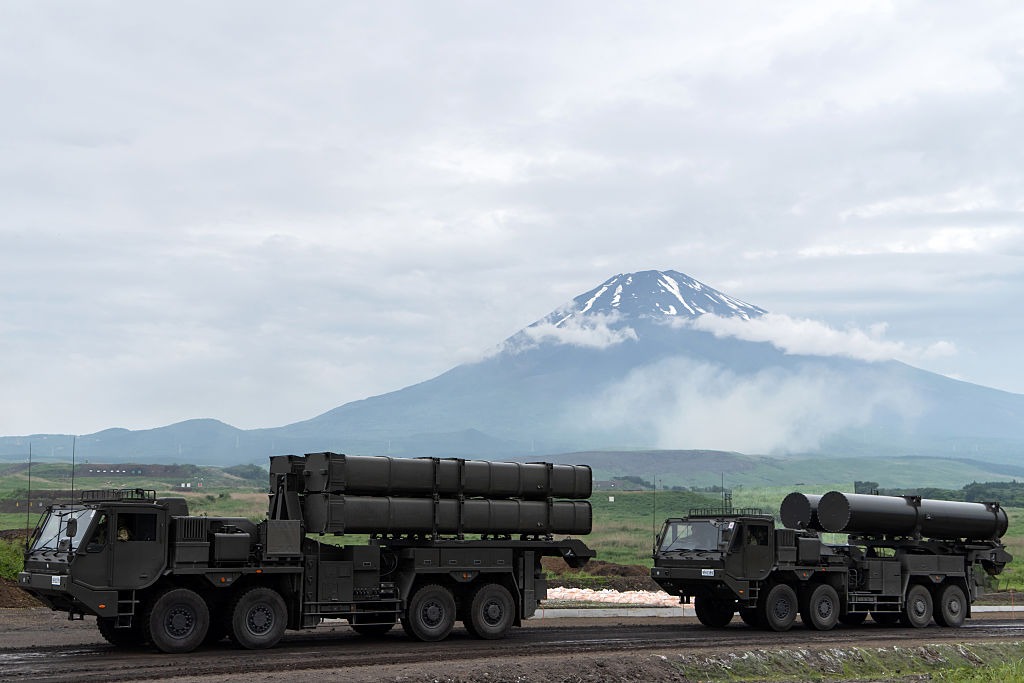
Reinforcement of the Japanese military includes powerful warships, sophisticated air defences and new missiles capable of sinking ships and striking air and missile bases, headquarters and supply lines deep inside enemy territory.
Viewed from Taiwan, that looks like a suite of high-tech weaponry that could help save the island in the event of attempted subjugation by China, whether using invasion or blockade. The problem is that Japan may not race to Taiwan’s defence. Tokyo is acquiring all those new ships and missiles for the defence of Japan, which doesn’t necessarily mean also defending Taiwan.
If the US wouldn’t or couldn’t come to Taiwan’s aid, Japan wouldn’t either. Nor, most likely, would Australia, the Philippines or any other country. Yes, Japanese Prime Minister Sanae Takaichi said in November that a Chinese armed attempt to seize Taiwan could be an example of ‘survival-threatening situations’ for Japan – those that allow the country to engage in collective self-defence with US. But Taipei still should prepare for the worst or at least prepare to hold out for as long as it can.
Fighting alone, Taiwanese forces could blunt a Chinese attack and delay defeat, buying time for diplomacy that might belatedly draw reluctant allies into the war. The US would have to come first. Japan might follow. So might others.
If Japan did get involved, its swiftly modernising forces could make a big difference. In recent years, the Japanese navy has transformed two helicopter carriers into aircraft carriers embarking Lockheed Martin F-35 Lightning stealth jump jets. The Japanese fleet has also expanded its flotilla of non-nuclear submarines.
In the next three years, the fleet plans to commission two 12,000-ton missile-defence destroyers that will be among the biggest surface combatants in the world. Meanwhile, Tokyo is buying 400 US-made Tomahawk land-attack cruise missiles and plans to load them onto destroyers for attacks hundreds of kilometres inside enemy territory.
The Japanese military’s new Type 25 anti-ship missile comes in two variants: a cruise missile and a hypersonic ballistic missile. Ranging as far as 1,000 km from recently expanded installations on the Ryukyu island chain, the Type 25s could help Japanese forces trap the Chinese fleet in the East China Sea and prevent it from breaking out into the Philippine Sea and the wider Pacific Ocean.
Tokyo is paying for all this new hardware and more with a growing defence budget that swelled to 9 trillion yen (A$80 billion) for this year. But Japanese planners are also making hard and smart choices. They’re abandoning increasingly obsolete weaponry such as crewed helicopters for more and better missiles and drones.
But the most obvious application of Japan’s new military might not be for Taiwan. ‘Japan lives in a very dangerous neighbourhood, one where its close proximity to the Taiwan Strait is but one of several longstanding security concerns,’ said Adam Liff, an expert on Japan at Indiana University. ‘After all, China, Russia and the Korean Peninsula are all within 200 miles of Japanese soil, while the South China Sea – on the other side of Taiwan – is not much further.’
‘The tendency for outside observers to think recent defence procurement decisions are all about Taiwan is often divorced from a nuanced understanding of Japan’s actual policy discussions and decision-making,’ Liff added.
The new missile installations on the Ryukyu Islands are a response to China’s aggressive claims on disputed islands in the South and East China seas, including the Senkaku Islands a little more than 320 km west of Okinawa. And Japan’s new missile defences are a response to North Korea’s nuclear- and non-nuclear missiles.
The only realistic scenario where the Japanese might join an alliance for the defence of Taiwan is the one where the US responds first, Liff said.
Bonnie Glaser, managing director of the Indo-Pacific Program at The German Marshall Fund of the United States in Washington, seconded Liff’s assessment. ‘Japan would only participate in collective defence of Taiwan alongside the United States,’ Glaser said.
That should have a sobering effect on friends of a free Taiwan. President Donald Trump’s military action in Latin America and, more recently, his war on Iran divert attention and critical munitions from any near-term defence of Taiwan. More worryingly, Trump gives signs that he doesn’t care much about Taiwan.
Any faltering of US resolve risks not only US participation in the defence of Taiwan but whatever Japanese participation has been possible. Taiwan’s leaders should plan accordingly and plan to fight alone.