
Close Menu
Simply Invest Asia
  • Home
  • About us
  • Explore industries/sectors
    • Automobile
    • Aviation
    • Banking
    • Biotechnology
    • Chemical & Fertilizer
    • Entertainment and Media
    • Food Processing
    • Healthcare
    • Iron and Steel
    • Leather
    • Mining
    • Oil and Gas
    • Pharmaceutical
  • Explore by countries
    • China
    • Dubai / UAE
    • Hong Kong
    • India
    • Indonesia
    • Japan
    • Malaysia
  • Explore cities
    • Bangkok
    • Beijing
    • Chongqing
    • Delhi
    • Dubai
    • Guangzhou
    • Jakarta
    • Kuala Lumpur
  • Why Asia
Facebook X (Twitter) Instagram Threads
Trending:
  • Media sector holds headcount steady amid West Asia uncertainty, focuses on ROI hiring
  • Molina Healthcare (MOH) Stock Valuation After Illinois Medicaid Contract Win And Margin Recovery Signals
  • Bitcoin mining difficulty drops by 10.09%, its second largest decline of the year
  • Reinvigorated Hong Kong Demand Boosts Chow Tai Fook Revenue
  • Why financial awareness matters in the UAE: Banks, schools and families join forces to boost literacy, fight fraud and promote smarter money habits
  • Malaysia crown champions in mixed team relay at Kampar triathlon meet, Ashven Mannoh adds U15 bronze
  • India vs Pakistan LIVE: Women’s T20 World Cup, Edgbaston – cricket score, commentary & highlights
  • Barclays expands family banking offering with GoHenry acquisition
  • Tube Rotators Market Growth Outlook to 2035: Demand Accelerates on Biotech R&D and Industrial Scale-Up – News and Statistics
  • Vedanta demerger: Four spin-off companies list on exchanges on June 15
  • UAE unveils AI and data authority to create ‘faster and smarter’ government
  • Japan boss makes Wataru Endo confession after inflicting heartbreak on Liverpool star – ‘Felt really bad’
  • Bangkok Post – Anthropic cuts access to AI models over US ‘national security’ order
  • Scientists crack a decades-old CO2 problem and triple fuel production
  • Guangzhou Metro Takes Operations of Colombia’s RegioTram de Occidente: 40km Rail Link Transforms Bogotá-Cundinamarca Connectivity in 2027
  • Prabowo’s new brand of resource nationalism
  • Dubai Emirates Road crash: Colleagues bid farewell as bodies of seven Indian and Sri Lankan workers flown home – Gulf News
  • Bollywood drops Beijing as a villain – is a Russia-China-India axis next?
Sunday, June 14
Facebook X (Twitter) Instagram
Simply Invest Asia
  • Home
  • About us
  • Explore industries/sectors
    • Automobile
    • Aviation
    • Banking
    • Biotechnology
    • Chemical & Fertilizer
    • Entertainment and Media
    • Food Processing
    • Healthcare
    • Iron and Steel
    • Leather
    • Mining
    • Oil and Gas
    • Pharmaceutical
  • Explore by countries
    • China
    • Dubai / UAE
    • Hong Kong
    • India
    • Indonesia
    • Japan
    • Malaysia
  • Explore cities
    • Bangkok
    • Beijing
    • Chongqing
    • Delhi
    • Dubai
    • Guangzhou
    • Jakarta
    • Kuala Lumpur
  • Why Asia
Simply Invest Asia
Home»Explore by countries»Indonesia»Prabowo’s new brand of resource nationalism
Indonesia

Prabowo’s new brand of resource nationalism

By IslaJune 14, 20265 Mins Read
Share
Facebook Twitter Pinterest Threads Bluesky Copy Link


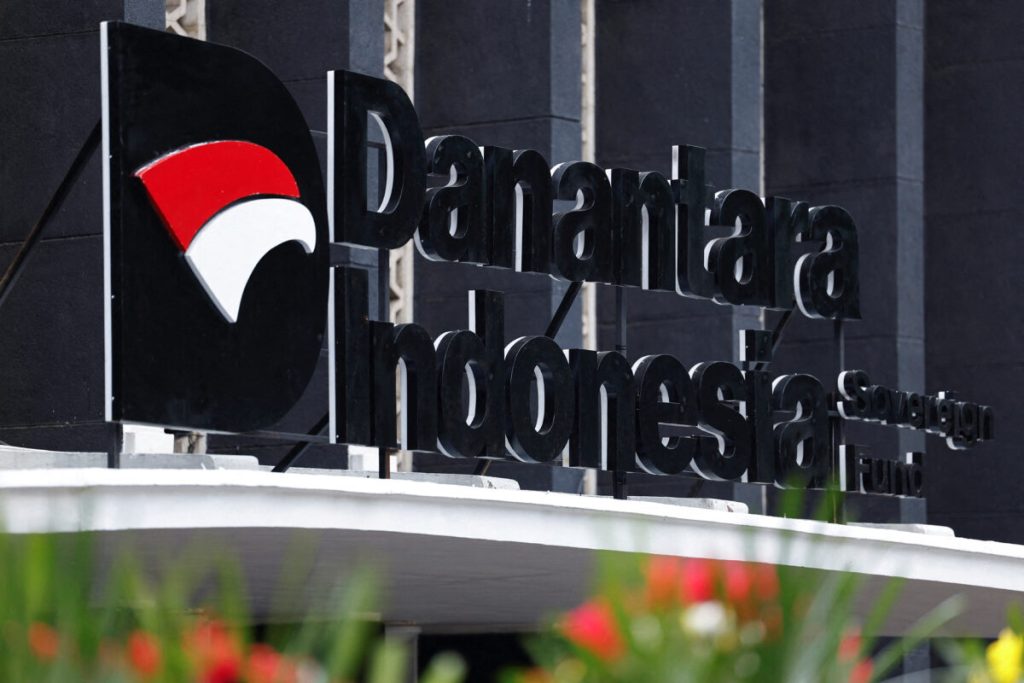
Last month, Indonesian President Prabowo Subianto blindsided his own ministers, stunned the business community and confused global markets with the announcement that exports of key commodities — including palm oil, coal and certain minerals — would soon be channelled through Danantara Sumberdaya Indonesia, a new subsidiary of Indonesia’s state investment vehicle, Danantara.

The policy’s ostensible goals are to expand state oversight of exports and combat tax evasion by resource firms while positioning Danantara as a major player in the global commodities trade. The details continue to evolve, and local business associations are in the meantime pleading with the government to roll the new system out slowly.

This proposed solution to Indonesia’s long-standing problems of revenue leakage has been met with widespread scepticism — if the problem is dodgy invoicing, then why not reform customs and other taxation processes? That the government has not opted for more narrow technical solutions speaks to the grander political objectives at the heart of Danantara Sumberdaya Indonesia.

This new policy is just one in a series of interventions that illuminate the shifts underway in Indonesia’s resource nationalism — from favouring domestic business over foreign rivals to a more wholesale subordination of private interests to state priorities.

Under former presidents Susilo Bambang Yudhoyono and Joko Widodo, resource nationalism defined Indonesia’s approach to governing its extractive industries. The government compelled major foreign oil, gas and mining firms to divest, while also gradually enacting the bans on raw mineral exports that now underpin Indonesia’s ‘downstreaming’ schemes.

These policies did more than satisfy an ideological preference for nationalist intervention shared by elites and voters — they also aligned with the interests of Indonesia’s domestic business class. Their presidencies saw many foreign mining firms exit Indonesia, either put off or pushed out by new restrictions on foreign ownership upstream. And while Jokowi Widodo did consolidate and expand state-owned miners’ assets, he also made sure to deliver opportunities to major private interests. Resource nationalism benefited politically-connected oligarchs with interests in extractive industries by creating opportunities for them to acquire formerly foreign-owned assets that may otherwise have been beyond their reach.

For more than a decade, Indonesia’s resource nationalism has served local capital as much as the state — while also generating political credit for government. Policies were shaped, often decisively, by the preferences of domestic business interests who had the means and political connections to either influence policy outcomes or take shares in foreign projects. Nationalist interventions were often marked by conflicts of interest and corruption, but they also had support across a broad spectrum of state and business actors.

Today, Prabowo’s deeply held statist ideology, and his disdain for important factions of Indonesia’s oligarchic class, is driving a new kind of resource nationalism that targets the interests of those domestic firms advantaged by previous waves of nationalist intervention.

The policy trend was visible soon after Prabowo’s elevation to the presidency in October 2024. By early 2025, his government was launching crackdowns on mining and plantation activities, disciplining major resources firms with unclear permits and expanding the state’s commercial involvement in these lucrative industries. The Forest Area Enforcement Task Force (or Satgas PKH) led by Prabowo’s key political ally, Minister of Defense Sjafrie Sjamsoeddin, has confiscated over 3 million hectares of palm oil and forest plantations from dozens of companies accused of breaking forest protection rules. Some of these assets have been taken over by a new state-owned agribusiness company, Agrinas.

Both Danantara’s new export regime and the ongoing Forest Area Enforcement Task Force are positioned as responses to long-standing problems that Indonesian elites — and ordinary voters — want confronted. There is little doubt that major resource firms engage in ‘creative’ accounting to avoid taxation, and many manipulate licencing processes and encroach on protected land for mining and plantation activities.

At the same time, the application of Prabowo’s new brand of resource nationalism is highly discretionary in practice. These interventions and others, like the Patriot Bond scheme also overseen by Danantara, are thought to be disproportionately targeting businesses without the ‘right’ connections, or those owned by the ethnic Chinese tycoons who sit atop Indonesia’s rich lists — and with whom Prabowo has had an openly adversarial relationship.

This background explains why the launch of Danantara Sumberdaya Indonesia — enacted with little meaningful consultation across government, industry, and civil society — has not just deepened anxiety about erratic policymaking processes under Prabowo but also prompted speculation about how the reordering of rent seeking opportunities figures in the drive to give Danantara its new brokerage role.

Prabowo-era policy trends are nonetheless in step with global trends. Many resource-rich countries are embracing and experimenting with more nationalist approaches to their resource industries against the backdrop of rising minerals demand and geopolitical competition. Initiatives that increase public oversight over extractive industries are crucial for ensuring states and citizens get more value from their finite resources, and in some contexts increasing state ownership can achieve these goals.

There is also little doubt that Indonesia’s resource sectors need reform. More narrow interventions that target tax collection through firm auditing and improved customs regulation would help to reduce under-invoicing, while rehabilitating independent anti-corruption bodies and courts, and improving environmental and social safeguards in extractive projects, are indispensable for tackling the entrenched corruption and long-standing land disputes that plague Indonesia’s commodities sectors. But the heady mix of statism, coercion and nativism that define Prabowo’s brand of resource nationalism is not the solution.

Eve Warburton is Senior Lecturer at the Department of Political and Social Change in the Coral Bell School of Asia Pacific Affairs, The Australian National University.

EAF | Indonesia | Prabowo’s new brand of resource nationalism


Source link

Related Posts

Eni and Petronas Establish Searah Joint Venture for Oil and Gas Assets in Indonesia and Malaysia – News and Statistics

June 14, 2026

Indonesian economy comes up for air but struggles to win back investors

June 14, 2026

Indonesia wins ITTF World Masters Gangneung mixed doubles 50 title

June 14, 2026
Add A Comment
Leave A Reply Cancel Reply

Top Posts

Chinese Wall may stem India tech flows for electronics and automobile

June 1, 2026

Abandoned malls, whispers of nuclear war and young foreigners detained. This is what’s REALLY going on in Dubai… and the chilling warning one taxi driver gave to the Mail’s IAN BIRRELL

April 11, 2026

Von der Leyen warned about China. Europe didn’t listen. Will it now?

June 6, 2026
Don't Miss

Media sector holds headcount steady amid West Asia uncertainty, focuses on ROI hiring

By IslaJune 14, 2026

India’s media and advertising industry is witnessing a sharp shift toward selective and skill-specific hiring…

Molina Healthcare (MOH) Stock Valuation After Illinois Medicaid Contract Win And Margin Recovery Signals

June 14, 2026

Bitcoin mining difficulty drops by 10.09%, its second largest decline of the year

June 14, 2026

Reinvigorated Hong Kong Demand Boosts Chow Tai Fook Revenue

June 14, 2026
SUBSCRIBE TO OUR NEWSLETTER

Get our latest downloads and information first. Complete the form below to subscribe to our weekly newsletter.


I consent to being contacted via telephone and/or email and I consent to my data being stored in accordance with European GDPR regulations and agree to the terms of use and privacy policy.

Stay In Touch
  • Facebook
  • YouTube
  • TikTok
  • WhatsApp
  • Twitter
  • Instagram
Top Trending

Bangkok Post – Anthropic cuts access to AI models over US ‘national security’ order

By IslaJune 14, 2026

Scientists crack a decades-old CO2 problem and triple fuel production

By IslaJune 14, 2026

Guangzhou Metro Takes Operations of Colombia’s RegioTram de Occidente: 40km Rail Link Transforms Bogotá-Cundinamarca Connectivity in 2027

By IslaJune 14, 2026
Most Popular

Seres Restructures Auto Business as ByteDance Tie-Up Draws Market Attention

June 4, 2026

Indian-origin doctor shares experience of UK driving test, says system is ‘strict but necessary’ | World News

May 3, 2026

The best places for evening walks in Dubai

June 1, 2026
Our Picks

Solar-powered airship reaches new heights – News

April 21, 2026

Kuala Lumpur crash kills Bangladeshi, 1 other

April 11, 2026

How Invesco Nasdaq Biotechnology Etf (IBBQ) Affects Rotational Strategy Timing

May 3, 2026
SUBSCRIBE TO OUR NEWSLETTER

Get our latest downloads and information first. Complete the form below to subscribe to our weekly newsletter.


I consent to being contacted via telephone and/or email and I consent to my data being stored in accordance with European GDPR regulations and agree to the terms of use and privacy policy.

© 2026 Simply Invest Asia.
  • Get In Touch
  • Cookie Policy
  • Privacy policy
  • Terms & Conditions

Type above and press Enter to search. Press Esc to cancel.

SUBSCRIBE TO OUR NEWSLETTER

Get our latest downloads and information first.

Complete the form below to subscribe to our weekly newsletter.


I consent to being contacted via telephone and/or email and I consent to my data being stored in accordance with European GDPR regulations and agree to the terms of use and privacy policy.