
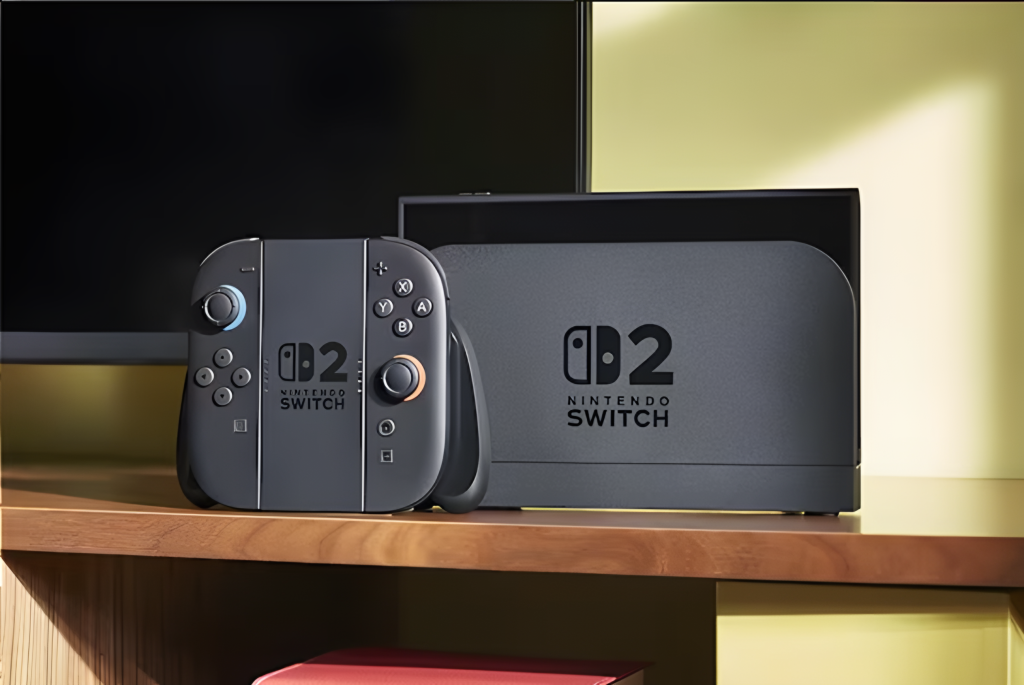
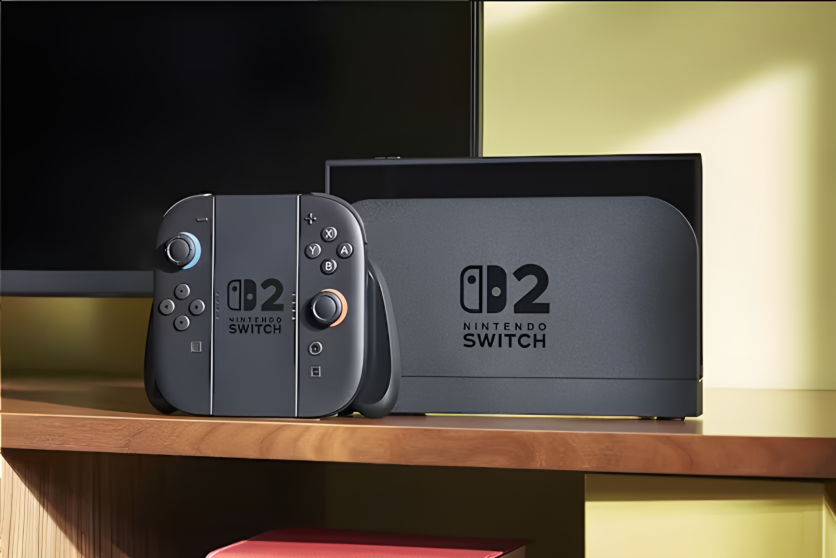
For the first time in Nintendo’s history, the company will sell its hardware officially in Indonesia. Juro Takeuchi, Executive Officer of Nintendo Co., Ltd., announced Tuesday at a dedicated business conference in Jakarta that both the Nintendo Switch and Nintendo Switch 2 will launch in the country in December 2026 — the end of a years-long absence that left the world’s fourth most populous nation entirely dependent on grey-market imports for Nintendo products. The confirmed Indonesia launch announcement took place at the Astor Ballroom of The St. Regis Jakarta on August 11. The digital storefront that Indonesian players need to purchase games online, however, will not be part of that launch.
That missing piece matters for what comes next. Indonesian gamers have for years used foreign Nintendo accounts — set to the United States, Japan, or Singapore — to access the Nintendo eShop’s digital catalogue, because Indonesia has never been among the 49 countries where the store operates. The December hardware launch will not change that. Nintendo has confirmed the eShop launch exclusion — the store will not go live in Indonesia alongside the consoles, and no timeline for its Indonesian rollout has been announced. Physical game cartridges, by contrast, will work natively: the Switch 2 is region-free outside of China, meaning Indonesian retail cartridges will play on any Switch 2 hardware worldwide, per Nintendo’s Switch 2 regional game compatibility rules.
What Tuesday’s Announcement Confirmed
Takeuchi made the formal declaration before an audience of industry partners, press, and government officials assembled at the Astor Ballroom of The St. Regis Jakarta. “Today, with great pleasure, we announce once again that the official launch of Nintendo Switch and Nintendo Switch 2 has been confirmed in Indonesia,” he said. “The launch is scheduled for December of this year.” He described the Switch’s hybrid form factor — functioning as both a home console and a portable device — as a natural fit for Indonesian gaming culture, which centers on communal play with family and friends.
Sales will flow through Nintendo Singapore Pte. Ltd. — led by Managing Director Takahiro Miura — working in partnership with PT Nusantara Interactive Niaga, a subsidiary of the Salim Group. The Nintendo Indonesia distribution deal was announced at the same event. Indonesia’s Salim Group conglomerate is one of the country’s largest and most diversified companies, with holdings that include Indofood (the world’s largest instant noodle producer), Indomaret (Indonesia’s largest convenience store chain), and Indomobil. For Salim Group, the partnership represents an entirely new vertical: the company had not previously operated consumer electronics or gaming console distribution. Axton Salim, Executive Director of the Salim Group, appeared on stage alongside Takeuchi to express his enthusiasm for the venture.
The presence of Irene Umar, Indonesia’s Deputy Minister of Creative Economy, was not incidental. Umar arrived at the cabinet post in October 2024 with a background that game developers welcomed specifically: she had previously served as managing partner of Discovery Nusantara Capital, a gaming-focused investment fund, and co-founded W3GG, an organization promoting blockchain-based games. Her appearance at the Nintendo conference signaled that Indonesia’s dedicated gaming-economy official views formal console distribution as aligned with the government’s creative economy development push to develop the country’s creative economy sector.
The Pokémon Company also took the stage, through Corporate Officer Susumu Fukunaga. He outlined a history of Pokémon collaborations in Indonesia that predates Tuesday’s hardware announcement, including a Pikachu Jet promotion with Garuda Indonesia in 2025 and a batik-themed Pikachu design introduced in Pokémon GO. For the December launch, Nintendo announced a limited bonus of Pokémon: Let’s Go, Pikachu! with Switch 2 purchases, and a Pikachu-themed special-edition Switch 2 console will be available at select retailers.
What Indonesian Gamers Will and Won’t Get at Launch
For Switch 2, Nintendo confirmed a launch lineup that includes Mario Kart World, The Legend of Zelda: Breath of the Wild (Switch 2 Edition), Nintendo Switch Sports Resort, Pokémon Pokopia, and Pokémon Legends: Z-A (Switch 2 Edition). Original Switch buyers will have access to The Legend of Zelda: Breath of the Wild and Pokémon Legends: Z-A, with additional titles to follow.
Two open questions will define how Indonesians actually experience the launch. Nintendo has not disclosed pricing for either console. In the informal market, Switch 2 units have been trading at around Rp10,300,000 (approximately $578 USD) as of early August 2026 — a figure shaped by rupiah depreciation rather than any official price adjustment — and that reference point will color consumer expectations until official figures are released. For context, Switch 2 launched at $449 USD in the United States and has since risen to $499.99, while the regional launch prices in Southeast Asia in 2025 varied from the equivalent of roughly $543 USD in Thailand to $584 USD in Malaysia.
The second open question is the eShop. Nintendo’s pattern in Southeast Asia has been to launch hardware first and digital storefronts later: when the Switch 2 launched in Singapore, Thailand, and the Philippines on June 26, 2025, and Malaysia followed on July 3, the eShop was not ready for any of those markets at launch. Nintendo added the eShop for Singapore, Malaysia, and Thailand in November 2025, and Taiwan in September 2025. Based on that precedent, Indonesia’s eShop could follow in the first half of 2027 — but that timeline has not been announced, and until it arrives, Indonesian players who want digital titles will continue using foreign Nintendo accounts and region-matched gift cards.
Why Nintendo’s Absence Lasted This Long: What Changed
Indonesia’s gaming market is the largest by player count in Southeast Asia. Around 175 million Indonesians play games — more than 80 percent of the country’s internet users — and the country represents 45.8 percent of all Southeast Asian gamers, according to Niko Partners. Despite that audience, the market is dominated by mobile gaming, which accounts for roughly 83 percent of active players, with console gaming reaching only about 21 percent penetration. Gaming software and services revenue figures vary widely depending on methodology: app-store-only trackers land near $650 million, while broader consumer-spend models used by firms like Newzoo and Xsolla estimate the market at closer to $1.9 billion. Either figure places Indonesia firmly at the center of Southeast Asian console growth potential.
Nintendo had been a conspicuous holdout in its own regional expansion — and the delay was not accidental. Community observers and industry analysts had long noted that Indonesian regulatory requirements around formal market entry imposed significant investment thresholds, along with the need for an established local distribution partner capable of navigating compliance, retail, and support infrastructure. The Salim Group partnership appears to have resolved both constraints. With its Indomaret retail network alone — thousands of convenience stores nationwide — the group provides the physical distribution spine that would be prohibitively expensive for Nintendo to build independently.
The timing also aligns with broader momentum. Nintendo Switch 2 has shipped 23.68 million units worldwide through June 30, 2026, already surpassing the GameCube’s lifetime total. Niko Partners noted in its 2026 market model that Switch 2 sales in Asia and the Middle East and North Africa are pacing roughly 70 percent ahead of the original Switch on a launch-aligned basis. Entering Indonesia now brings Nintendo’s Switch 2 into one of the last major emerging markets where the console had no official presence.
Is the Nintendo eShop Coming to Indonesia?
What the December launch will definitively provide is official distribution, warranty coverage, and after-sales support — the consumer protections that parallel imports cannot offer. What it will not immediately provide is the ability to buy games digitally through a native Indonesian eShop.
Nintendo has confirmed the eShop will not be ready for Indonesia at the December 2026 hardware launch. The company said further details will follow, but offered no timeline. For the meantime, Indonesian Switch users who want digital access have the same options they have had throughout the grey-market era: create or set a Nintendo Account to a supported country — the United States, Singapore, or Japan are the most commonly used — fund it with region-matched gift cards, and purchase from that country’s eShop. Nintendo does not prohibit this approach, but it also does not support it; games purchased through a foreign account function normally on the hardware, but customer service and DLC compatibility are the buyer’s responsibility to verify. The eShop workaround mechanics are explained in full at DevRunners’ regional guide.
Nintendo’s Southeast Asian eShop timeline suggests a gap of three to five months between hardware launch and digital storefront in these markets. If that pattern holds, Indonesian players might expect an eShop announcement sometime in mid-2027 — but there is no guarantee the Indonesia rollout will follow the same schedule, and Nintendo has not committed to one.
What Comes Next
Nintendo has roughly four months to finalize retail pricing, complete the physical distribution infrastructure through PT Nusantara Interactive Niaga, and confirm which Indonesian retailers will stock hardware and cartridges at launch. The company will share pricing information at a later date; those numbers, once released, will determine whether December’s Indonesian launch draws buyers away from the grey market or simply formalizes the same transaction with a warranty attached.
For the 175 million gamers who have waited through years of unofficial hardware and no local support, December will represent a genuine change in their relationship with Nintendo — one that comes with warranty cards and authorized service centers for the first time. The digital catalogue remains the piece still to be unlocked.
Exchange rate as of August 11, 2026; conversions are approximate.
Frequently Asked Questions
When is Nintendo Switch 2 officially launching in Indonesia?
Nintendo has confirmed December 2026 as the launch window for both Nintendo Switch and Nintendo Switch 2 in Indonesia. This represents the company’s first official presence in the country. Specific retail dates and pricing have not yet been announced and are expected to be shared in the weeks before launch.
Will the Nintendo eShop be available in Indonesia at launch?
No. Nintendo has confirmed the eShop will not go live in Indonesia alongside the hardware in December 2026. Indonesian players who want to purchase digital games will need to continue using a Nintendo Account set to a supported country — such as the United States or Singapore — and fund it with region-matched gift cards. Nintendo has not announced when or whether an Indonesian eShop will follow. Based on the Southeast Asian precedent (hardware launch in June–July 2025, eShop in November 2025 for Singapore, Malaysia, and Thailand), a mid-2027 timeframe is plausible but unconfirmed.
Who is distributing Nintendo in Indonesia?
Nintendo Singapore Pte. Ltd. will oversee distribution in partnership with PT Nusantara Interactive Niaga, a subsidiary of the Salim Group — one of Indonesia’s largest conglomerates, with holdings spanning Indofood, Indomaret, and Indomobil. This is the first time the Salim Group has entered consumer electronics and gaming console distribution. Indonesia’s Deputy Minister of Creative Economy, Irene Umar — a former gaming investment professional — attended the announcement conference, signaling government alignment with the launch.
Is my grey-market Nintendo Switch 2 still usable under the official Indonesian distribution?
Yes. Nintendo Switch 2 hardware is region-free for game cartridges outside China, so grey-market units purchased before the December official launch will continue to work normally. When the Indonesian eShop eventually launches, those consoles should be able to connect to it, though Nintendo’s warranty and support services will apply only to units purchased through authorized official channels.