
Published on
June 23, 2026

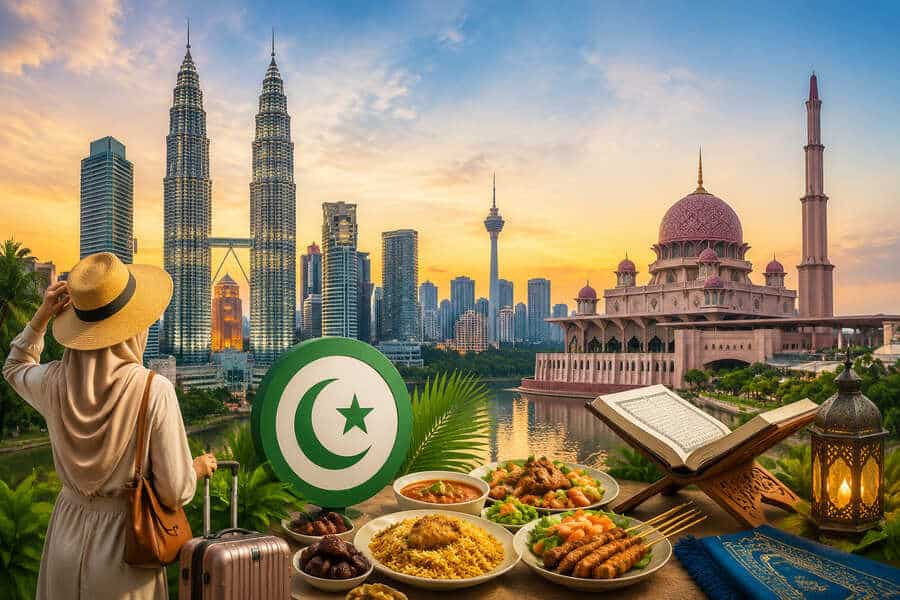
Image generated with Ai
Malaysia leads global Muslim-friendly tourism in 2026, driven by strong halal infrastructure, seamless travel services, cultural diversity, and consistent tourism policies, outpacing major competitors worldwide.
In a highly competitive global tourism landscape, Malaysia has reaffirmed its dominance as the world’s leading Muslim-friendly travel destination in 2026, surpassing key competitors including Indonesia, Turkiye, Singapore, Qatar, Thailand, Bahrain, and others. The achievement comes as the country continues to strengthen its tourism ecosystem ahead of Visit Malaysia 2026 (VM 2026).
According to the latest Global Muslim Travel Index (GMTI), Malaysia retained the top global position with a score of 83, extending its leadership for the 11th consecutive year. This sustained performance highlights the country’s consistent investment in halal tourism infrastructure and its ability to meet the evolving expectations of Muslim travellers worldwide.
Why Malaysia remains ahead of global competitors
Malaysia’s continued leadership is driven by a combination of structural advantages and long-term policy execution. The country has developed a highly integrated halal-friendly tourism ecosystem, which includes widespread halal-certified dining options, accessible prayer facilities, and Muslim-friendly hospitality services across major cities and tourist regions.
Unlike many competing destinations, Malaysia has positioned itself as a fully integrated travel environment where Muslim travellers can move seamlessly without concerns over dietary restrictions or religious needs. This ecosystem has been built over years of coordination between tourism authorities, hospitality providers, and certification bodies.
The country’s cultural diversity also plays a key role. With a mix of Malay, Chinese, and Indian influences, Malaysia offers a broad spectrum of cultural experiences while maintaining strong alignment with Islamic travel requirements.
Advertisement
Advertisement
Rising competition from regional and global players
While Malaysia remains at the top, the GMTI 2026 rankings show intensifying competition across the global halal tourism market.
Indonesia has emerged as a strong challenger, sharing second place globally alongside Turkiye and Saudi Arabia. This reflects its growing investment in halal tourism destinations, island experiences, and religious travel infrastructure.
Singapore continues to lead outside the OIC group, maintaining its position as the highest-ranked non-OIC destination due to its strong safety standards, transport efficiency, and growing halal food availability.
Other destinations such as Thailand and Bahrain have also improved their standings, reflecting targeted efforts to attract Muslim travellers through better service offerings, hotel certifications, and tourism marketing strategies.
Meanwhile, countries like Japan, South Korea, and the United Kingdom continue to gain momentum, signaling a broader global shift toward inclusive tourism models.
Southeast Asia’s growing influence in halal travel
One of the most notable trends in the 2026 rankings is the strengthening position of Southeast Asia as a global hub for Muslim-friendly tourism. The region benefits from geographic proximity to major Muslim travel markets, competitive pricing, and well-established halal certification systems.
Advertisement
Advertisement
Countries such as Malaysia and Indonesia anchor this regional strength, while Thailand and the Philippines continue to develop niche offerings in halal-friendly hospitality and cultural tourism.
This regional ecosystem is increasingly being seen as a global benchmark, particularly for destinations aiming to develop Muslim-friendly services without altering their broader tourism identity.
Key OIC rankings underline Malaysia’s dominance
The latest OIC destination rankings further reinforce Malaysia’s leadership position. The top tier includes:
- Malaysia
- Indonesia
- Saudi Arabia
- Turkiye
- Qatar
- United Arab Emirates (UAE)
- Bahrain
- Iran
- Kuwait
- Oman
This list reflects a balance between Southeast Asia and the Middle East, with each region leveraging distinct strengths. While Malaysia leads through its comprehensive tourism ecosystem, countries like Saudi Arabia and Turkiye benefit from religious tourism demand and historical heritage attractions.
The Gulf states, including Qatar, UAE, and Bahrain, continue to strengthen their luxury tourism offerings and global connectivity, further intensifying competition in the high-value travel segment.
Non-OIC destinations expanding halal offerings
Beyond OIC countries, non-Muslim majority destinations are increasingly adapting to the growing demand for Muslim-friendly travel services. The GMTI 2026 rankings highlight several key performers:
Advertisement
Advertisement
Singapore remains the strongest non-OIC destination at 11th globally, followed by Hong Kong, Taiwan, and the United Kingdom. Countries such as Thailand and the Philippines also rank within the top tier of emerging halal-friendly destinations.
Further down the list, Japan, Germany, Spain, and Australia are steadily improving their accessibility for Muslim travellers, particularly through halal food certification, prayer space availability, and multilingual travel support.
This expansion signals a major shift in global tourism, where Muslim-friendly services are becoming an expected standard rather than a niche offering.
VM 2026 set to amplify tourism momentum
The timing of Malaysia’s continued leadership aligns strategically with preparations for Visit Malaysia 2026 (VM 2026). The campaign is expected to further strengthen the country’s global visibility and attract increased visitor arrivals from key markets across Asia, the Middle East, and Europe.
Malaysia’s consistent performance in the GMTI rankings provides strong branding leverage ahead of the campaign, reinforcing its position as a safe, accessible, and culturally inclusive destination.
Tourism authorities are expected to build on this momentum by expanding infrastructure, improving connectivity, and enhancing visitor experiences across both urban and nature-based destinations.
Advertisement
Advertisement
Global halal tourism market enters a new phase
The GMTI 2026 results reflect a broader transformation in global travel behavior. The Muslim travel segment is expanding rapidly, driven by rising middle-class populations, increased international mobility, and stronger demand for culturally aligned travel experiences.
Destinations are no longer competing solely on attractions but on how well they accommodate specific lifestyle and cultural needs. This shift has elevated halal-friendly tourism into a mainstream global category.
In this evolving landscape, Malaysia’s ability to maintain its leadership position for over a decade underscores both strategic consistency and adaptability. At the same time, rising competition from Asia, the Middle East, and Western destinations suggests that the global halal tourism market will continue to become more dynamic in the years ahead.
Advertisement
Advertisement
