
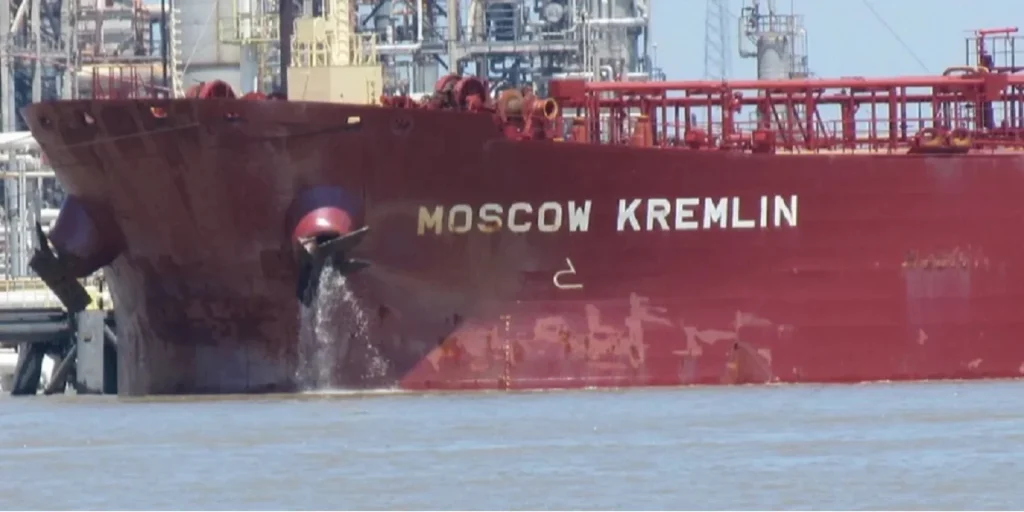
Russian oil tanker (Photo: flickr.com)
Indonesia is working on a special import scheme and
regulatory framework to carry out its plan to buy 150 million barrels of
Russian oil this year, Reuters
reported.
Data show, however, that only one shipment of Russian crude
has reached the country so far.
The Russian oil purchase was announced in April as part of
Indonesia’s effort to offset a shortage caused by the war involving Iran, after
President Prabowo Subianto met with Russian dictator Vladimir Putin in Moscow.
“Even with a framework in place, the target is seen in the
market as ambitious, as delivering 150 million barrels between mid-year and the
end of January would require shipments of about 700,000 barrels per day, close
to the volume of crude Russia sends to buyers such as Türkiye,” Reuters wrote.
“Russia exports about 5 million barrels per day of crude, mostly to China and
India, and allocating such a large volume to a new buyer would mean diverting
oil from others, which could prove difficult.”
Traders said limited availability of tankers able to carry
Russian crude because of Western sanctions, along with the long distances
involved, would likely make the shipments difficult and expensive.
Shipping data show no direct crude deliveries scheduled
soon, oil traders said. Kpler data showed the only recent cargo involving
Russian oil was a shipment delivered to Indonesia on April 21.
Indonesia, which imports about 1 million barrels per day,
will seek additional supplies even if Russian oil begins arriving, government
officials said, in an effort to strengthen supply security.
Jakarta is also looking to import oil from other suppliers,
including the United States.
Indonesia agreed with Russia in April to receive 150 million
barrels of Russian oil under special pricing terms.
The United States extended an exemption for seaborne
shipments of Russian oil on May 18.
The U.S. Treasury Department’s Office of Foreign Assets
Control issued General License 134 on March 12, 2026, allowing the delivery and
sale of Russian oil and petroleum products that had already been loaded onto
vessels as of March 12.
The United States also extended the exemption for seaborne
shipments of Russian oil on April 17. It remained in effect until May 16.
Follow us on Twitter, Facebook and
Google News