
Published on
June 18, 2026

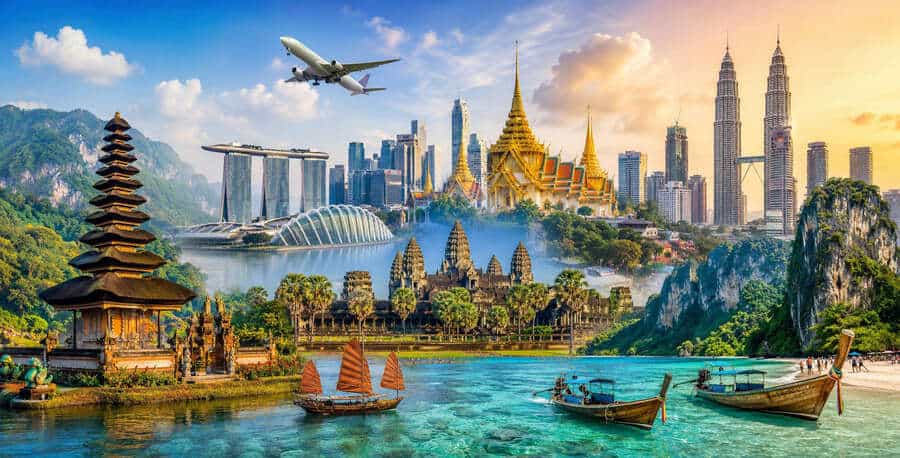
Image generated with Ai
Southeast Asia is entering a strong tourism growth cycle in 2026 as Cambodia joins Vietnam, Malaysia, Thailand, Singapore, Indonesia and the Philippines in advancing a unified regional travel expansion. This momentum is being powered by streamlined border policies, rapid aviation network development, digital travel innovations and a significant rise in global visitor demand. Together, these forces are reshaping the region into a tightly connected tourism ecosystem where cross-border movement is faster, simpler and more coordinated than in previous years, driving a broader redistribution of tourism activity across multiple destinations.
At the same time, Southeast Asia is evolving into a more integrated and competitive tourism landscape, supported by coordinated policy reforms and infrastructure upgrades across key markets. The region is moving beyond fragmented national tourism models toward a shared system that supports multi-country travel experiences. As a result, tourism flows are expanding beyond established hubs into secondary cities, cultural routes, inland regions and island destinations, creating a more balanced and resilient growth pattern across the entire region.
A Unified Tourism System Is Emerging Across Southeast Asia in 2026
Southeast Asia’s tourism model is undergoing structural change in 2026 as Cambodia joins Vietnam, Malaysia, Thailand, Singapore, Indonesia and the Philippines in strengthening regional travel connectivity. The focus is shifting from isolated national tourism strategies to a coordinated regional framework supported by visa reforms, aviation expansion and digital travel integration.
This transformation is creating a seamless mobility environment where travellers can move across multiple countries with fewer barriers and improved efficiency. Airlines are expanding regional networks, airports are scaling up capacity, and governments are aligning tourism policies to support multi-destination itineraries.
Advertisement
Advertisement
As a result, the region is becoming a single interconnected travel corridor. Cultural heritage routes, island-hopping circuits and urban tourism clusters are now being marketed as unified experiences rather than separate national products, significantly increasing tourism competitiveness on a global scale.
Cambodia Expands Heritage-Led Tourism and Regional Travel Connectivity

Image generated with Ai
Cambodia is playing a stronger role in Southeast Asia’s tourism growth story in 2026 by leveraging its cultural heritage assets and expanding its tourism infrastructure beyond traditional centres. Angkor Wat remains the country’s primary global attraction, but tourism development is now spreading into coastal zones, river regions and emerging cultural destinations.
Advertisement
Advertisement
The government is improving airport capacity, enhancing digital visa processing systems and encouraging new hospitality investments to support growing international arrivals. These improvements are reducing entry friction and strengthening Cambodia’s position within regional travel circuits.
A key development is Cambodia’s growing integration with Thailand and Vietnam through cross-border tourism routes. These connections are enabling seamless multi-country itineraries that include cultural heritage, beach tourism and eco-tourism experiences. The expansion of Mekong River tourism and rural eco-tourism initiatives is also helping Cambodia diversify its tourism portfolio and reduce dependency on single-destination travel patterns.
Vietnam Strengthens Coastal Tourism and Expands Aviation Networks

Image generated with Ai
Vietnam continues to stand out as one of Southeast Asia’s fastest-growing tourism markets in 2026, supported by aggressive aviation expansion and destination diversification. The country is strengthening air connectivity across Hanoi, Ho Chi Minh City and Da Nang while also increasing international routes linking Europe, the Middle East and Asia-Pacific markets.
Coastal destinations such as Ha Long Bay, Nha Trang and Phu Quoc remain major tourism magnets, attracting strong visitor volumes and cruise traffic. At the same time, inland regions like Ninh Binh, Ha Giang and the northern mountain provinces are gaining popularity among adventure and cultural travellers.
Vietnam’s tourism strategy increasingly focuses on integrated travel circuits that combine beaches, heritage sites and nature-based experiences. Digital visa improvements and streamlined entry procedures are further supporting visitor growth, while rising hotel development is increasing capacity for longer stays and higher-value tourism segments.
Malaysia Positions Itself as a Cultural and Eco-Tourism Powerhouse

Image generated with Ai
Malaysia is reinforcing its role as a diversified tourism hub in 2026 through strong branding campaigns, infrastructure upgrades and regional connectivity expansion. Kuala Lumpur, Penang and Malacca continue to anchor cultural and urban tourism growth, while Sabah and Sarawak are emerging as key eco-tourism destinations.
Advertisement
Advertisement
The country is benefiting from improved air links with India, China and Middle Eastern markets, which are driving higher international arrivals. Airport expansions and new route developments are improving accessibility and reducing travel times across major gateways.
Malaysia’s tourism strategy is heavily focused on cultural diversity and culinary experiences. Multi-ethnic heritage, religious tourism and food tourism are becoming central attractions. At the same time, eco-tourism development in Borneo is helping the country position itself as a nature-driven destination within the broader Southeast Asian tourism surge.
Thailand Reinvents Tourism Through Wellness and Regional Redistribution

Image generated with Ai
Thailand remains one of the strongest tourism engines in Southeast Asia in 2026, but its strategy is shifting towards diversification and sustainability. The country is moving beyond traditional beach destinations such as Phuket and Pattaya and investing heavily in wellness tourism, cultural routes and secondary destinations.
Regions such as Chiang Rai, Isan and Krabi’s lesser-known areas are being promoted to distribute tourism more evenly across the country. This approach is designed to reduce pressure on overcrowded destinations while expanding economic benefits to rural communities.
Thailand is also strengthening its position in medical tourism, wellness retreats and cultural festivals. Improved visa facilitation and expanded air connectivity are supporting continued visitor growth. The country’s evolving tourism model reflects a transition from mass tourism toward experience-based, high-value travel.
Singapore Focuses on High-Value and Smart Tourism Systems

Image generated with Ai
Singapore is adopting a premium tourism strategy in 2026, focusing on high-value visitors rather than large-scale volume growth. The country is leveraging its position as a global aviation hub and financial centre to strengthen business tourism, luxury travel and transit-based tourism.
Advertisement
Advertisement
Changi Airport continues to play a central role in regional connectivity, offering seamless transfer experiences for long-haul travellers. Singapore’s advanced digital tourism systems, cashless infrastructure and smart city integration are enhancing visitor convenience and operational efficiency.
The country is also expanding its MICE sector, attracting global conferences and corporate events. Cultural attractions, entertainment districts and curated urban experiences are being developed to increase visitor spending and length of stay. Singapore’s strategy reflects a shift toward quality-driven tourism growth in a highly competitive regional market.
Indonesia Expands Tourism Beyond Bali into Multi-Island Networks

Image generated with Ai
Indonesia is undergoing one of the most significant tourism transformations in Southeast Asia in 2026 by reducing its dependence on Bali and developing multiple new tourism centres across its vast archipelago.
Destinations such as Lombok, Flores, Komodo, Raja Ampat and Sumba are being actively developed under long-term tourism expansion plans. Infrastructure improvements, airport upgrades and hospitality investments are supporting this decentralised growth model.
Indonesia’s strategy focuses strongly on eco-tourism, marine tourism and adventure travel. Improved domestic aviation connectivity is enabling easier multi-island travel, allowing visitors to combine multiple destinations in a single itinerary.
This shift is positioning Indonesia as a multi-centre tourism economy, where growth is distributed across regions rather than concentrated in one global hotspot.
Advertisement
Advertisement
Philippines Strengthens Island and Marine Tourism Development

Image generated with Ai
The Philippines is expanding its tourism sector in 2026 by focusing on island-based and marine tourism experiences. Key destinations such as Palawan, Cebu, Boracay and Siargao continue to attract strong international demand, while lesser-known islands are being developed to reduce overcrowding.
The government is investing in airport upgrades, ferry connectivity and digital travel systems to improve accessibility across the archipelago. Diving tourism, cruise tourism and beach-based leisure travel remain central to the country’s tourism growth strategy.
Environmental sustainability is also becoming a key priority, with conservation initiatives aimed at protecting marine ecosystems while supporting long-term tourism expansion. The Philippines is positioning itself as a leading island tourism destination within the broader Southeast Asian growth narrative.
Regional Integration Reshapes Southeast Asia into a Single Travel Corridor
One of the most important developments in 2026 is the increasing integration of Southeast Asia into a unified tourism corridor. Cambodia, Vietnam, Malaysia, Thailand, Singapore, Indonesia and the Philippines are now interconnected through shared tourism routes and coordinated infrastructure development.
Low-cost carriers, expanded regional airports and improved visa coordination are making cross-border travel faster and more efficient. Travellers can now easily combine cultural heritage, beach tourism, urban exploration and adventure travel within a single regional journey.
This integration is increasing tourism spending, extending trip durations and improving regional competitiveness. Southeast Asia is no longer a collection of separate destinations but a unified travel system competing directly with other global tourism regions.
Advertisement
Advertisement
Aviation Expansion and Infrastructure Growth Fuel Tourism Acceleration
Aviation development is one of the strongest drivers behind Southeast Asia’s tourism surge in 2026. Airlines are expanding regional and long-haul networks, while airports across the region are increasing capacity to accommodate rising passenger volumes.
Major hubs such as Singapore, Bangkok, Kuala Lumpur, Manila and Jakarta are serving as critical gateways for both international and regional travel. Secondary airports are also gaining importance by improving direct access to emerging destinations.
Infrastructure development, including highways, rail links and hospitality expansion, is further strengthening tourism capacity. This coordinated investment ensures that increasing demand is supported by efficient transport and accommodation systems, enabling sustained tourism growth across the region.
Conclusion: Southeast Asia Becomes a Global Tourism Powerhouse
Southeast Asia’s tourism landscape in 2026 is being reshaped by strong regional coordination as Cambodia, Vietnam, Malaysia, Thailand, Singapore, Indonesia and the Philippines collectively drive a new phase of integrated travel growth. Supported by seamless border facilitation, expanding aviation networks, digital travel systems and rising international demand, the region is moving into a more connected and efficient tourism structure.
This transformation is distributing visitor flows more evenly across major hubs, secondary cities, cultural corridors and island destinations, reducing pressure on traditional hotspots while unlocking new growth areas. As connectivity improves and cross-border travel becomes easier, Southeast Asia is positioning itself as one of the world’s most dynamic and competitive tourism regions, built on collaboration, accessibility and sustained demand growth.

Advertisement
Advertisement
