
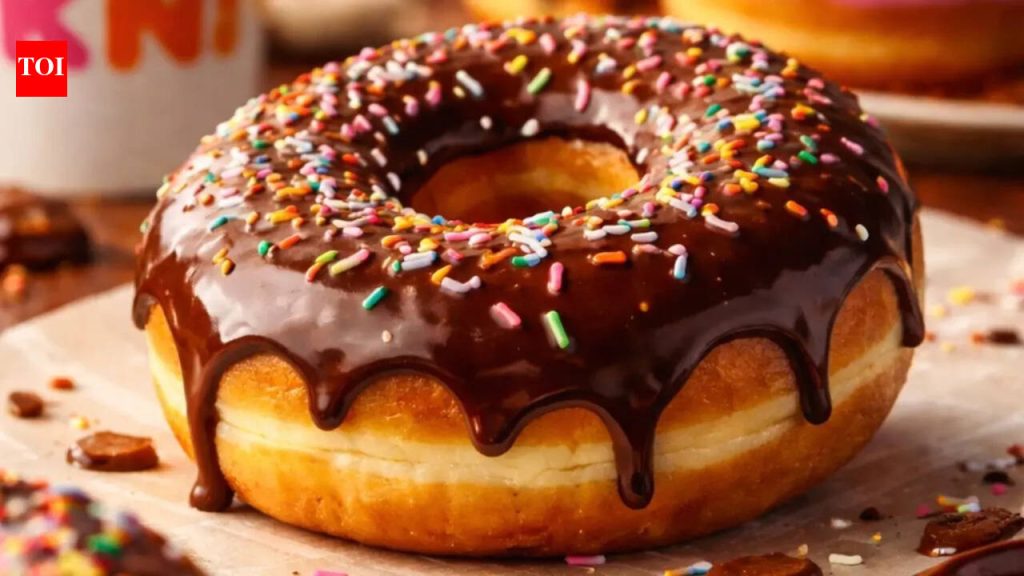

Dunkin’s exit signals a broader recalibration across the QSR landscape.
- Why
Dunkin ’ Failed In India
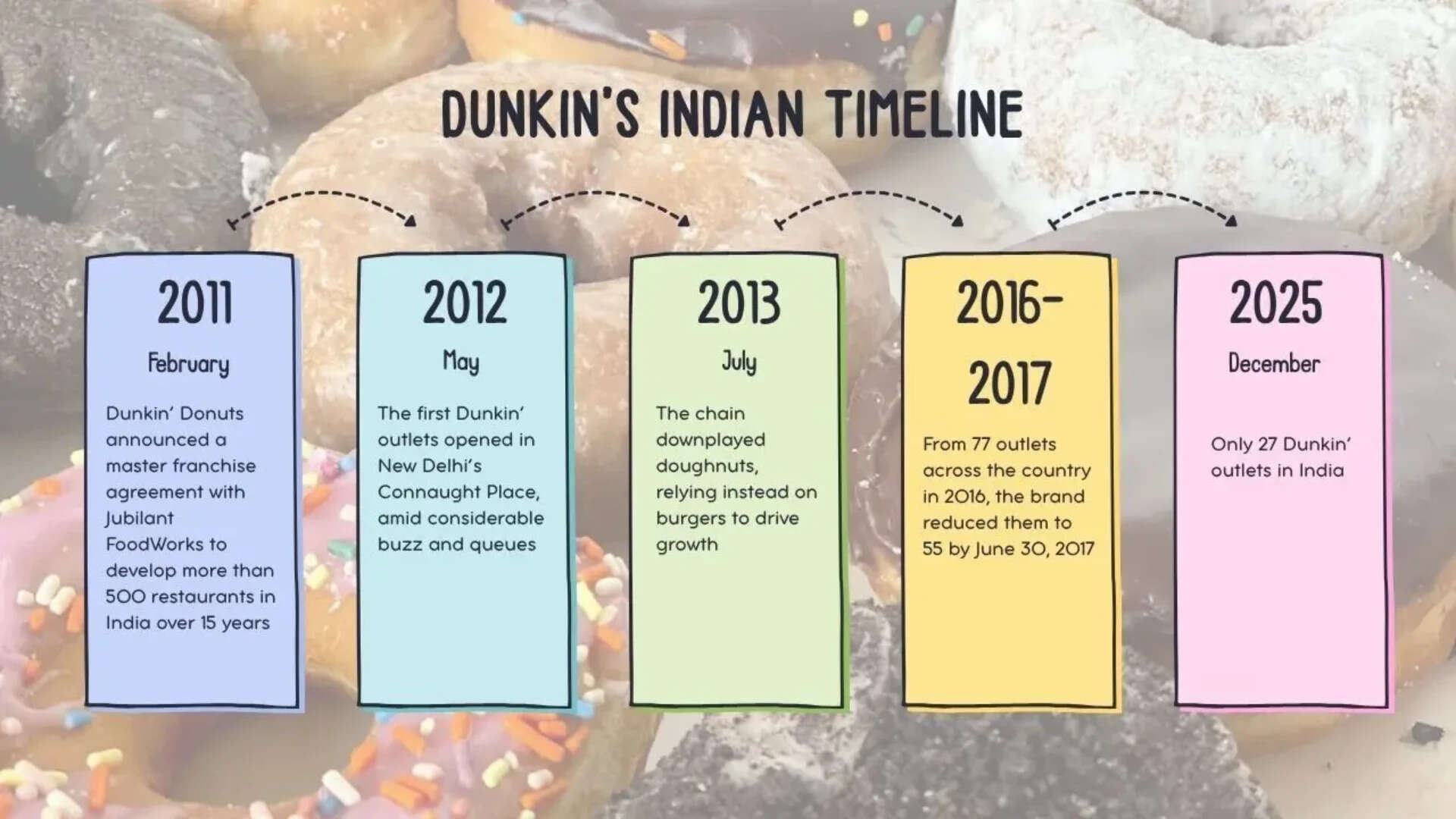
In April 2012, Jubilant FoodWorks opened the first Dunkin’ store in India with a clear idea: it would own the morning. Quick coffee. Grab-and-go doughnuts. A fast, urban American breakfast. It rapidly expanded to over 38 locations by 2014, aiming to ride on India’s growing appetite for global brands.Fourteen years later, that story is ending quietly. In March 2026, Jubilant announced it would not renew its franchise agreement, drawing curtains on a 15-year partnership marked by weak growth and recurring losses.The outcome was evident. For a company powered by high-performing brands like Domino’s and Popeyes, Dunkin’ never quite found its footing. But the real story lies beyond the balance sheet. It is about taste, timing, and a complex Indian market.‘Dunkin’ assumed what worked globally would work here’India’s mornings are not designed for sugary indulgence. So, the concept of an American coffee-and-doughnut breakfast never stood a chance. “I think Dunkin’ came with the assumption that what worked globally would work here,” says Ashita Aggarwal, a marketing professor at SP Jain Institute. “But Indians don’t eat sweet treats for breakfast. They are desserts. They can never replace a core meal.”
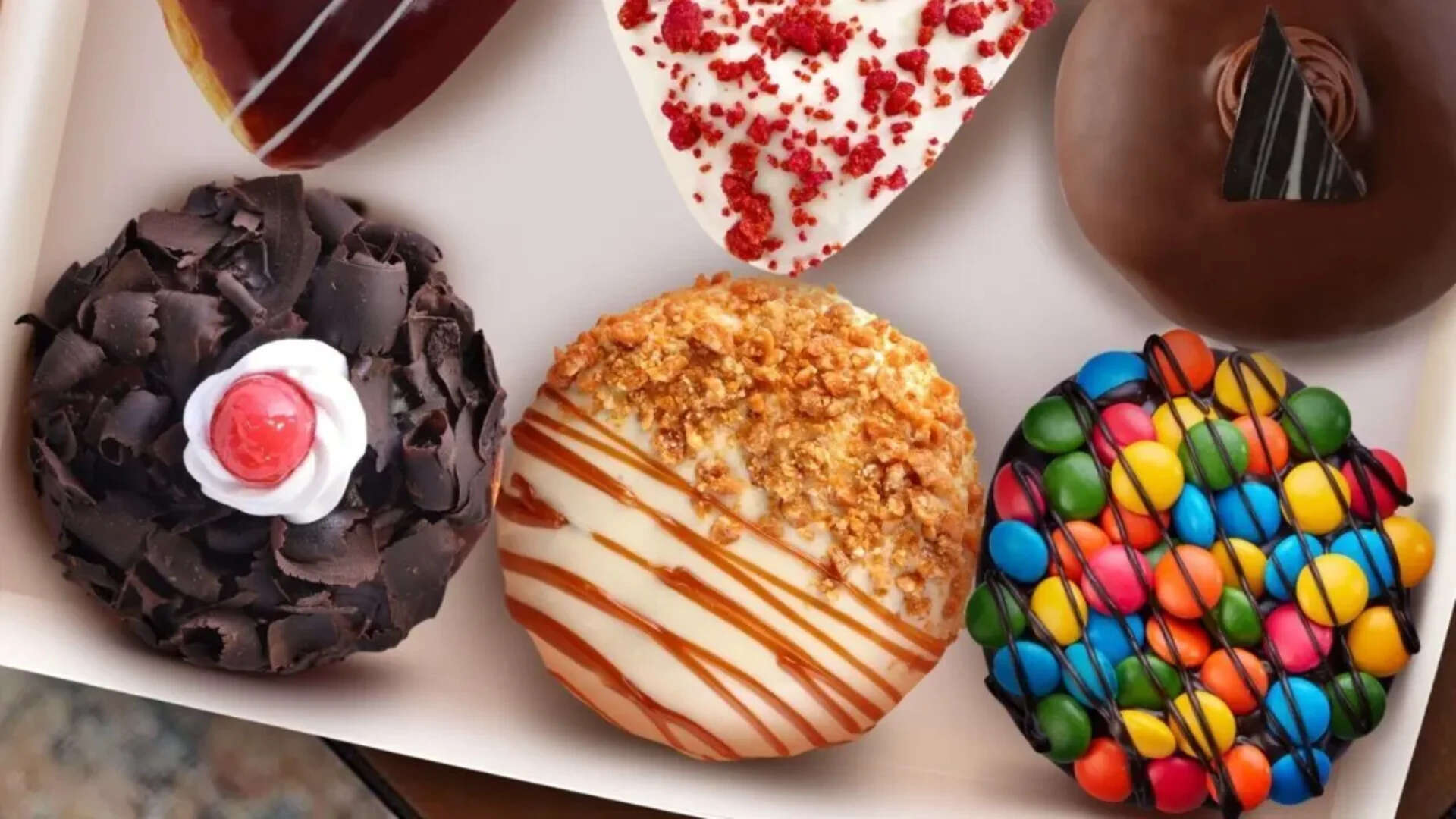
Dunkin’ expanded into high streets and malls – locations that offered visibility, not daily consumption.
That was the first crack. As Amit Mishra, business analyst and CEO of market-research company, Dazeinfo, puts it, “They were trying to buy a slot in a time of the day when Indians are already the busiest. That’s a tough space to crack.”Harish Bijoor, brand guru, frames it as a deeper behavioural mismatch. “Creating a new habit needs to be contextualised to the market; otherwise, it takes a really long time. When Dunkin entered India, it was all about coffee and doughnuts, a habit that just didn’t exist. That early Dunkin habit, which worked globally, simply didn’t find roots in India.”‘They confused visibility with viability’The ambition was never in doubt. The execution was. Dunkin’ expanded into high streets and malls – locations that offered visibility, not daily consumption. They chose places where people would see the brand, not where they would buy regularly. “Within three to four years, it was clear they were fighting an uphill battle,” says Mishra.By the time Dunkin’ attempted a reset in 2018 – smaller stores, kiosks, a tighter format – the gap between presence and performance had already widened. “They confused visibility with viability,” says Mishra.
They moved too quickly into burgers and sandwiches instead of fixing what wasn’t working
Amit Mishra, business analyst
“The real question should have been: where does someone want an affordable coffee at 8am on a Tuesday? That’s office corridors, corporate hubs. That’s where they needed to be,” he concludes.
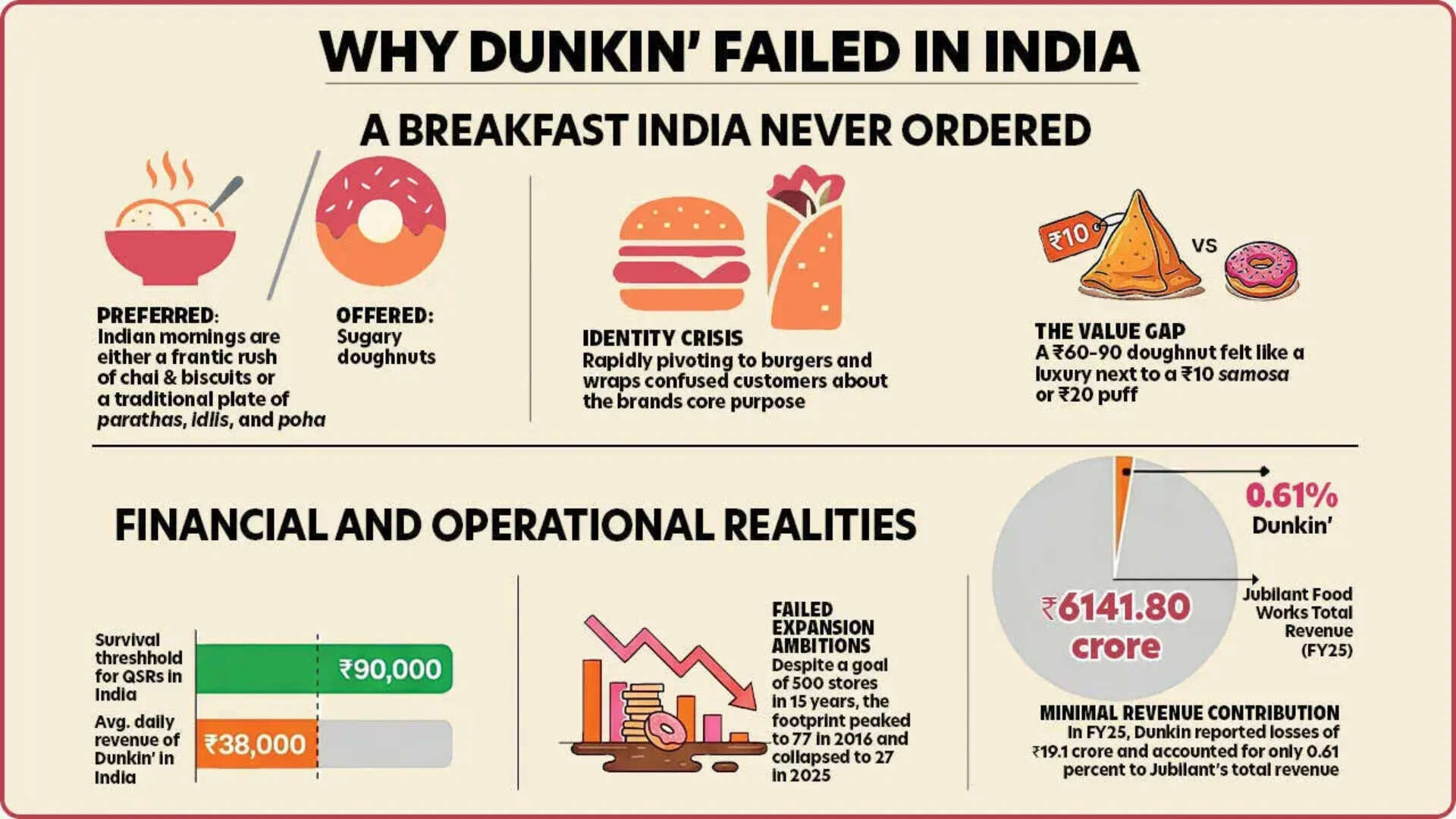
‘The brand that couldn’t decide what it was’When the core product struggled, Dunkin’ panicked. Within two years, the brand pivoted to burgers, wraps, and sandwiches. A global doughnut icon was suddenly selling hash brown burgers for survival.“Unless you are confident about your core product, it becomes difficult to sustain,” says Mishra. Aggarwal agrees, noting that the constant shifting of goalposts confuses the consumer. “They kept changing their positioning. First doughnuts for breakfast, then burgers, then more. When you try to become everything for the customer, you become nothing.”Bijoor echoes this sharply. “Dunkin, when it launched in India, had an ‘and more’ attitude. It was much more than just coffee and doughnuts. That lack of focus in the market is not a great thing. Brand positioning needs a constant, never-changing spine, and Dunkin missed that.”
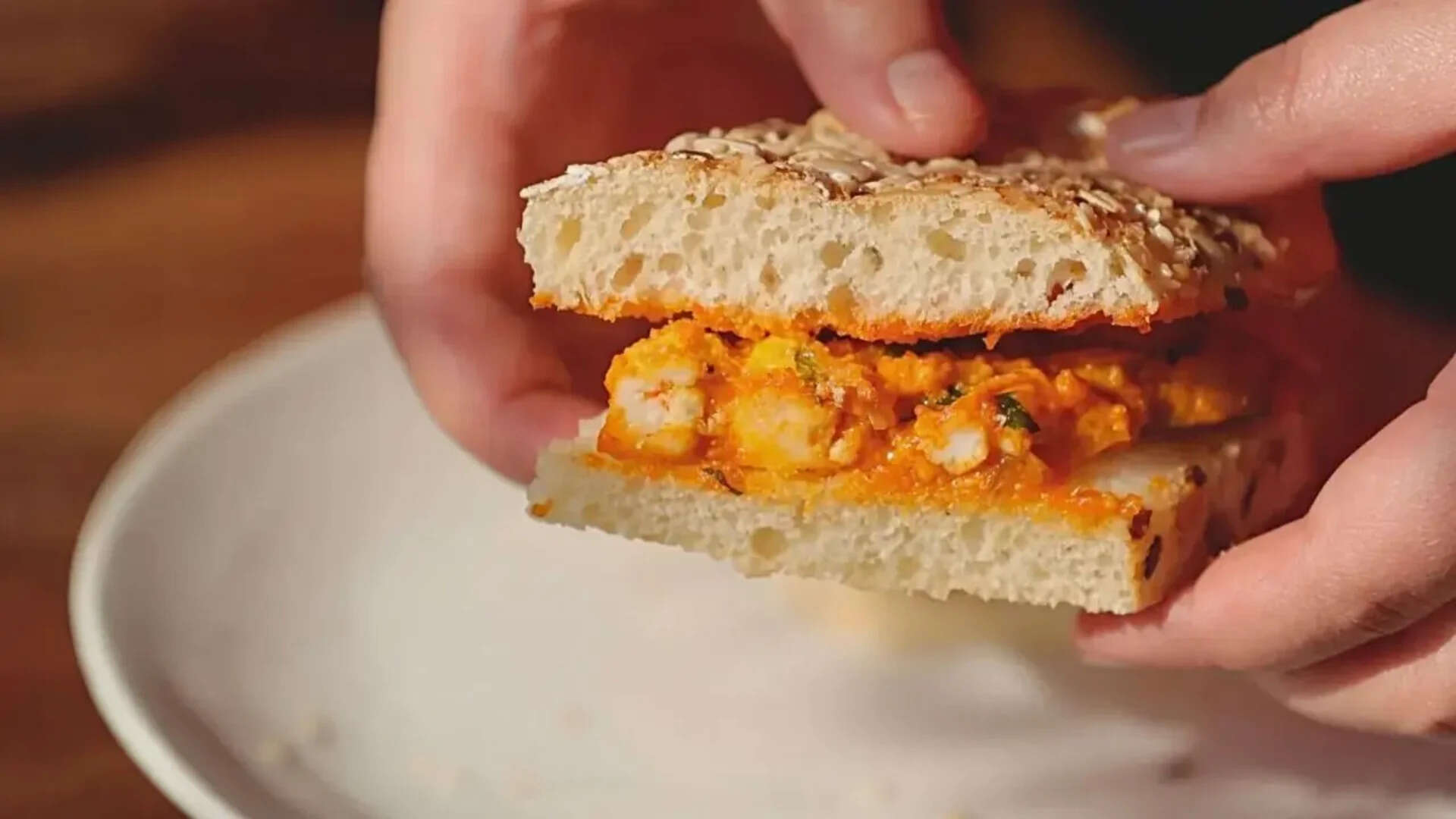
Within two years, the brand pivoted to burgers, wraps, and sandwiches.
The confusion was visible. Was Dunkin’ a café? A QSR (Quick Service Restaurant)? A dessert stop? Customers never knew. Meanwhile, the competitors stayed sharp. Starbucks owned the café experience. Café Coffee Day (CCD) had already built a youth culture. Mad Over Donuts stuck to its core and carved a niche.
Creating a new habit takes time. If it had waited and stuck to its core brand proposition, it could have achieved it. Dunkin’ didn’t wait, and lost its way
Harish Bijoor, brand guru
Missing the café experienceIn the West, Dunkin represented everyday working-class life, particularly tied to Boston’s identity. Its American slogan – “America runs on Dunkin’” – reflected that. In India, that strength was underplayed. The early focus was food-led. Coffee became secondary.In India, coffee chains sell time and conversation. Starbucks and CCD succeeded because they offered a place to linger.“At Starbucks, people sit for long. They may order multiple coffees,” Mishra says. “With doughnuts, consumption is limited. One, maybe two. That caps your revenue per customer.” Dunkin’ never quite built that experience layer.“Doughnuts never became a cultural habit,” Mishra explains. “India is still a tea-first country. Coffee chains work here because they sell an experience. Dunkin never quite did that.”The competition got smarterWhen Dunkin’ entered India, the market was still opening up. Over time, it became crowded and competitive. Local brands adapted faster. Mad Over Donuts took a different route. Smaller stores. Focused menu. Indianised flavours. Bite-sized options that encouraged trial. It rolled out kaju katli, motichoor, and gulab jamun-flavoured doughnuts.“A doughnut brand must persist with doughnuts, right?” MOD’s Tarak Bhattacharya told Forbes.“They understood that doughnuts are a dessert in India,” says Aggarwal. “They innovated around that instead of trying to change habits overnight.”Global brands, too, adapted better. McDonald’s built a vegetarian menu. Domino’s focused on delivery and value. Dunkin’ stayed caught in between.
The great QSR resetDunkin’s exit signals a broader recalibration across the QSR landscape. As brands pivot from rapid expansion to unit economics, the pre-COVID playbook has expired.Mishra notes that the struggle isn’t exclusive to the doughnut giant. All big global brands are feeling the squeeze. The reason? “There are so many alternatives available now,” he says.“Earlier, when you thought of pizza, there was only Domino’s or Pizza Hut. Now, artisanal outlets are serving superior products. They may be pricier, but post-COVID, the consumer is more health-conscious and quality-driven; they don’t mind spending extra for a product that feels ‘real’.”Bijoor offers a final caution for global brands: “When you bring an overseas brand into India, remember there is already brand memory attached to it. You cannot dilute it. You can tweak it a bit, but not so much that it becomes a different QSR altogether. You need to hold your positioning.”