
As part of our 2026 Contenders at Cannes coverage, we next present a selection of entries from VML India. Spanning experiential, design, packaging, and brand-led work, the campaigns explore how cultural insight, craft, and participation can be used to create memorable brand experiences.
Below, the agency shares the thinking and execution behind each submission.
All images provided by VML India.
The Slooowest Vending Machine in the World
Client: Nestle
The original client brief:
It was a proactive idea that was taken to the client. We told them how it was based around the fact that in today’s fast paced world, this can be an interesting way to slow people down. Thankfully, our wonderful clients saw merit in it and gave us their full support. The rest is history.

The cultural or consumer insight that shaped the work:
In today’s hustle culture, young consumers are constantly multitasking – balancing work, social lives, responsibilities, and endless digital stimulation. Even their “breaks” are rushed and distracted, leaving little room to truly pause and recharge. This fast-paced lifestyle created an opportunity for KitKat to reframe breaks not as a snack moment, but as a meaningful mental reset through the idea of microbreaks.

How the team arrived at the idea and executed it:
The team spotted a strong contradiction: while vending machines are built for speed, people today actually need moments to slow down when they take a ‘break’. This inspired the “The slooowest vending machine in the world” KitKat dispenser that took three minutes to deliver a KitKat, turning waiting time into an entertaining visual journey of how India takes breaks. The vending machine was placed in a busy office district for people to experience the journey firsthand and discover the joy of slowing down during a break.
Why the agency believes the campaign is a strong contender in that category:
The campaign transformed an everyday object into a powerful brand experience rooted in a strong human truth. It redefined KitKat’s iconic “Have a Break” positioning for a new generation by making people physically slow down and experience a real break. The idea was simple, culturally relevant, highly talkable, and seamlessly integrated physical experience with social amplification – creating both emotional impact and strong brand memorability.
“We live in a culture that increasingly values speed, especially in India, where even our breaks are becoming shorter,” said Gopichandar J, Director – Confectionery.
“Vending machines are typically built for convenience and immediacy. With this, we wanted to explore whether even a small pause could feel meaningful—a simple KitKat break, experienced a little differently.”

“While the average vending machine pops out a snack in three seconds, ours takes a luxurious ride in no hurry at all,” explained Kalpesh Patankar, Chief Creative Officer, VML India.
“For the entire duration of the KitKat’s journey, people are invited to do what they hardly ever do anymore: have a break. To watch. To smile. To simply be.”
“Everything today is about speed, about multitasking and checking things off a list. But what happened to taking a moment for yourself, to have a break? We created the Vending Machine in order to allow people a guilt-free moment of wonder in a world that needs it more than ever,” added Bas Korsten, Global Chief Creative Officer, Innovation & Chief Creative Officer, EMEA.
The Kolhapuri

Client: Kalapuri
Challenge / Type of Brief:
When Kolhapuri sandals, a thousand-year-old craft from Kolhapur, India, appeared on the global fashion stage without credit to the artisans who created them, it sparked outrage across the country. The challenge was to reclaim recognition for the craft and its makers without escalating conflict, and to bring the global fashion industry closer to the true origins of Kolhapuri sandals.

Idea:
The Kolhapuris are a symbol of regional pride and traditional craftsmanship from the region of Kolhapur in Maharashtra. The idea was thus to tell the story through the voices and portraits of real artisans, humanise the craft and shift the conversation from cultural appropriation to cultural recognition.

Execution:
We created The Kolhapuri, a handcrafted book, documenting the craft’s thousand-year journey and the artisans behind it. Sent as an invitation to Prada’s designers, the book offered a deeper understanding of the heritage and its makers.

Impact / Results:
The Kolhapuri sparked strong engagement across the design, fashion, and cultural communities. The work generated conversation around cultural credit and the recognition of traditional artisans in global fashion. The book was shared across design platforms, forums, and exhibitions, bringing visibility to Kolhapuri artisans and their thousand-year-old craft
Find Your Way

Client name: MINI
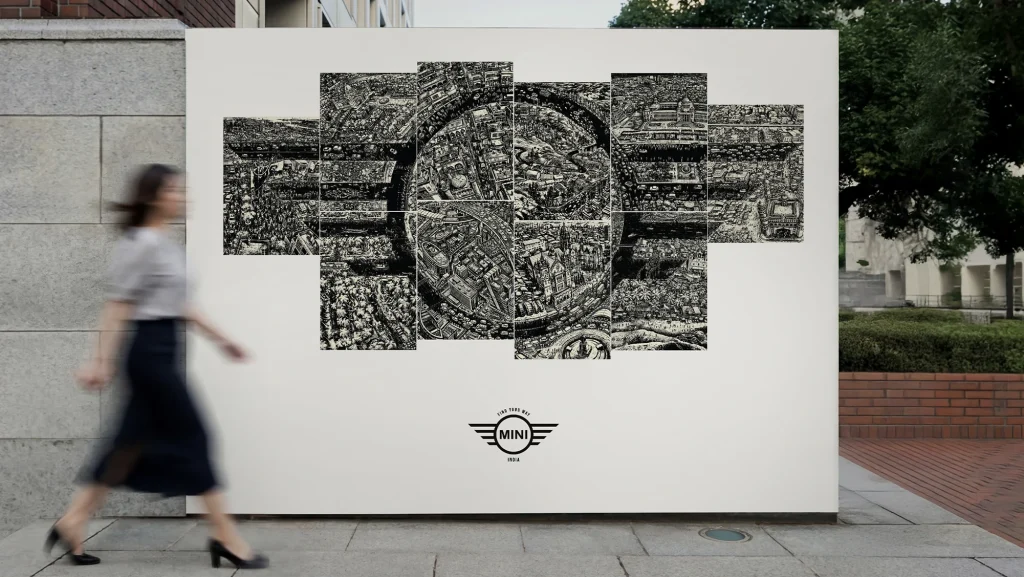
In a country with maximum chaos and congestion, the best way to get around is in MINI. To bring this to life, we turned everyday chaos in India into intricate, hand-drawn illustrations.
Tracking the busiest streets and roads across the country, we mapped them into hyper-detailed artworks. Every choke point, every turn, every tangle and the entire, unpredictable chaos of a place was meticulously recreated by hundreds of hand-crafted illustrations on each of the 10 posters. While each artwork showed how MINI effortlessly finds its way through maximum congestion, all of them came together to form the iconic MINI logo.

Bringing craft and storytelling together on a canvas like never before. Showing how India finds its way in a MINI and how MINI finds its way in India.


COKE HOLI
Client: The Coca-Cola Company

The original client brief:
How can Coke become an integral part of one of India’s biggest and most iconic festival of colours – Holi?
The cultural or consumer insight that shaped the work:
Holi is one of India’s most iconic festivals, where people celebrate by throwing coloured powders and water on each other as a symbol of joy, equality, and togetherness. During the celebration, colours cover everything.
Coca-Cola connected with this cultural ritual by turning its iconic red bottle into white, creating a canvas for the festival itself. As people celebrated Holi, their colour-soaked hands left marks on the bottles, allowing the brand to become part of the cultural act of colouring rather than simply observing it.
The idea resonated because it reflected the true spirit of Holi participation, spontaneity, and shared celebration. By turning packaging into something people could physically colour and keep, the bottle captured a fleeting cultural moment and transformed it into a lasting memory, reinforcing Coca-Cola’s role as a brand that celebrates togetherness in culturally meaningful ways.

How the team arrived at the idea and executed it:
On a festival defined by colour, Coca-Cola removed its own. The idea was simple yet radical, turning the iconic red Coca-Cola bottle white and let people colour it during Holi. The bottle became a blank canvas, inviting participation.
As people played Holi, their instinctive gestures like placing colour-soaked hands on surfaces, naturally extended onto the bottle. Each imprint transformed it into a one-of-a-kind creation: imperfect, personal, and impossible to replicate.
Bottles were distributed at large-scale Holi festivals in Mumbai and through influencers, embedding them within real celebration environments. No instructions were needed, the design relied entirely on instinctive human behaviour.
It resonated because it didn’t interrupt the festival; it became part of it. Instead of advertising Holi, Coca-Cola enabled it, turning a product into a medium of expression and a memory people could take home.

Why the agency believes the campaign is a strong contender in that category:
The activation strengthened Coca-Cola’s cultural relevance during Holi by embedding the brand directly into one of India’s most celebrated festivals. By turning its iconic bottle into a participatory canvas, Coca-Cola moved from being a beverage consumed during the celebration to becoming part of the celebration itself.
The campaign reinforced Coca-Cola’s positioning as a brand that celebrates togetherness and shared moments, strengthening emotional connection with consumers and enhancing brand affinity during the festival period.
The project encouraged people to see packaging not as something disposable, but as something personal and worth keeping. By turning Coca-Cola bottles into Holi keepsakes through people’s own colourful handprints, the campaign promoted emotional value and reuse. It also celebrated shared cultural participation, strengthening the brand’s connection to community traditions and responsible engagement with culture.
“Going beyond conventional festive advertising, Coke Holi created a culturally relevant experience people could participate in,” said Kalpesh Patankar, Chief Creative Officer, VML India.
“In India, Holi represents the diversity of celebrations, local identity, and the shared traditions of joy, togetherness, renewal and revival. Coke Holi built on this idea by making Holi a kaleidoscope of cultural expressions. Each one, inimitable. Individualistic. Incomparable.”