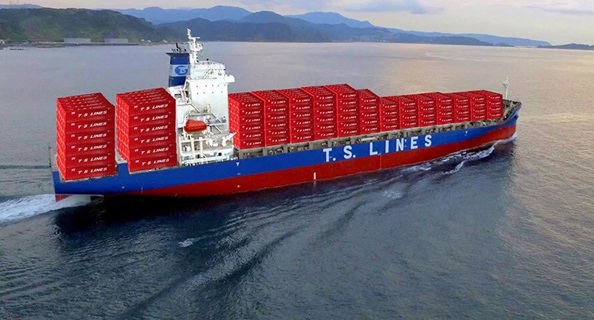
Intra-Asia container specialist TS Lines has officially expanded its Indian Subcontinent network with the launch of the China–West India Express 2 (CWX2) service. The newly established maritime loop is custom-designed to address growing cross-border trade demand by linking major manufacturing and industrial load ports in East and South China directly with the primary commercial gateways of Western India.
Operating on a comprehensive 42-day round-trip rotation, the CWX2 service introduces a highly streamlined routing architecture engineered to bypass intermediate transshipment bottlenecks, providing shippers with more predictable transit windows and stable equipment allocations.
Securing Direct Main-Line Port Coverage
The CWX2 service maintains a fixed-day weekly schedule that provides direct, un-interrupted links between key coastal production zones and high-demand South Asian distribution hubs.
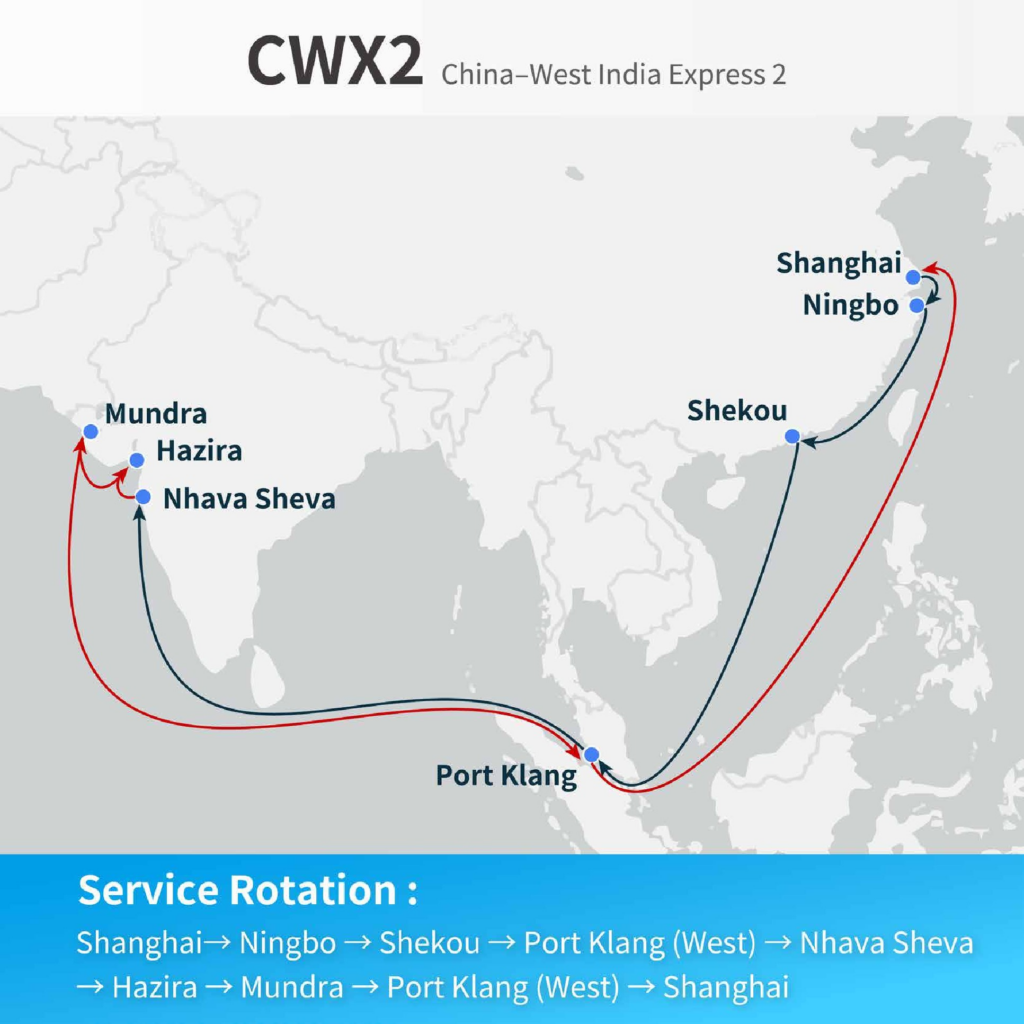
The service operates on the following multi-country port rotation:
CWX2 Service Port Rotation: Shanghai – Ningbo – Shekou – Port Klang (West) – Nhava Sheva – Hazira → Mundra – Port Klang (West) – Shanghai
By anchoring the service at Shanghai, Ningbo, and Shekou, TS Lines covers the vital industrial corridors of the Yangtze River Delta and Pearl River Delta. This direct pipeline allows automotive parts, industrial machinery, chemicals, and consumer electronics to move directly to Indian shores with minimal intermediate handling.
Enhancing West India Market Reach via First Call at Hazira
A major strategic highlight of the new CWX2 network layout is the inclusion of a direct port call at Hazira, marking TS Lines’ first-ever scheduled service deployment at this rapidly growing maritime gateway. The addition provides several distinct operational advantages for international logistics planners:
- Expanded Indian Footprint: Comprehensive coverage across Western India’s three premier commercial gateways—Nhava Sheva, Hazira, and Mundra—under a single liner service.
- Hinterland Access: Direct entry points into the high-density industrial manufacturing and agricultural zones of Gujarat, Maharashtra, and North India.
- Reduced Transshipment Dependency: Eliminating secondary relay stops via regional transshipment hubs lowers the risk of cargo damage and reduces terminal dwell-time variables.
TS Lines management noted that the introduction of the CWX2 service operates in tandem with the carrier’s existing Indian Subcontinent (ISC) network portfolio. By expanding service frequency, routing flexibility, and overall network resilience, the carrier delivers a focused, highly efficient shipping solution to support the evolving logistics requirements of the China–India trade ecosystem.
อัพเดตข่าวสารและบทความที่น่าสนใจในอุตสาหกรรมโลจิสติกส์ก่อนใคร ผ่าน Line Official Account @Logistics Mananger เพียงเพิ่มเราเป็นเพื่อน @Logistics Manager หรือคลิกที่นี่