
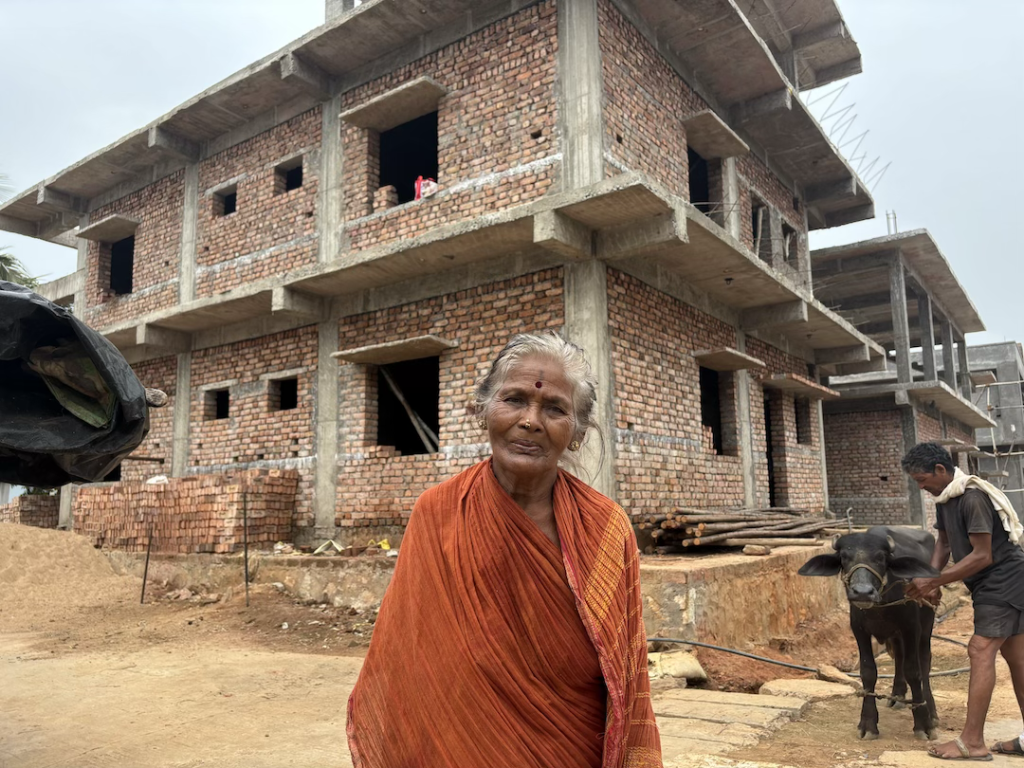
Relli, who is in her late sixties, belongs to a Dalit community — a group historically discriminated against under India’s caste system and still, by most measures, India’s most land-poor community. Between 58 and 71 percent of rural Dalit households are landless. In the 1970s, the Andhra Pradesh government allotted small parcels of land to Relli’s family and fifty others in Tarluvada — two acres each for cultivation, along with additional plots for housing.
“Before this land, we survived on the goodwill of dominant-caste landowners we worked for,” Relli says. “Some days we weren’t paid at all — just given rice porridge for a day’s labor.”
The allotted land was rocky, uneven, and barely fit for cultivation, she says. Over the years, her family leveled the ground, improved the soil, and planted cashew and mango trees, turning it into a dependable source of income. “We made it fertile with our blood and sweat,” says Relli.
The farm earned her family nearly 100,000 rupees ($1,048) a year — modest by most standards but enough to transform their lives. “This land lets us stand on our own,” she says.
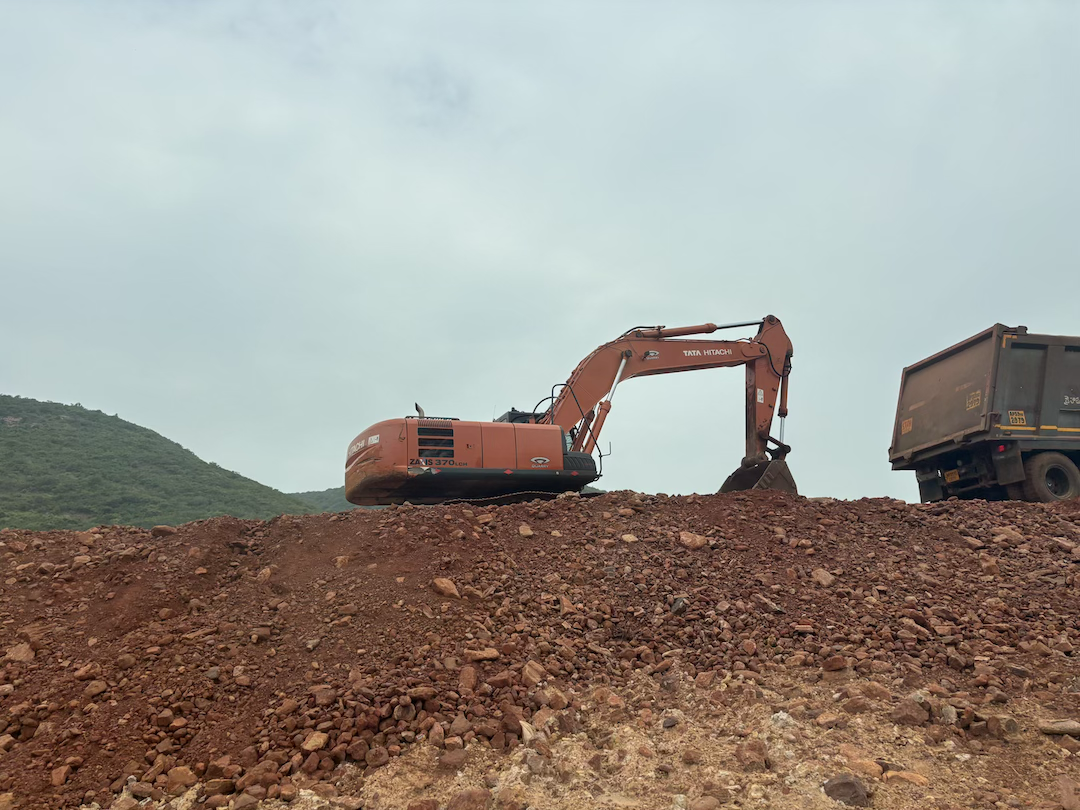
The Tarluvada site is now part of the land the state government has acquired for Google’s data center. The fifty-one families were offered eight million rupees ($83,848) — 4 million rupees for each acre — along with a promise of land equivalent to one-fifth of their acquired holding elsewhere, though where remains unclear.
The compensation has largely been distributed, but residents say they had little warning of what was happening. “No one asked us if we wanted to leave,” says Pyla Kondamma, a farmer and former head of the village council. “They just told us to hand the land over. This is our way of life — why should the decision about whether to give it up not be ours?”
The state has described the payout as generous, but Dr E. A. S. Sarma, a former secretary in India’s power ministry who has opposed the project, argues that the state has effectively subsidized Google’s investment by acquiring land at prices far below its market value. “The people who are subsidizing this project are Dalit and small landholding families,” he says. “They are being paid a fraction of what the land is actually worth.”
For many families, the compensation offers a chance to patch over years of deprivation. Some are expanding single-story homes into two- and three-story concrete buildings. Others are replacing aging brick structures with new houses.
“The land is gone now. We cannot bring it back. At least this money gives us a chance to build a proper house on the land that remains,” says resident P. Bangarama, sixty.