
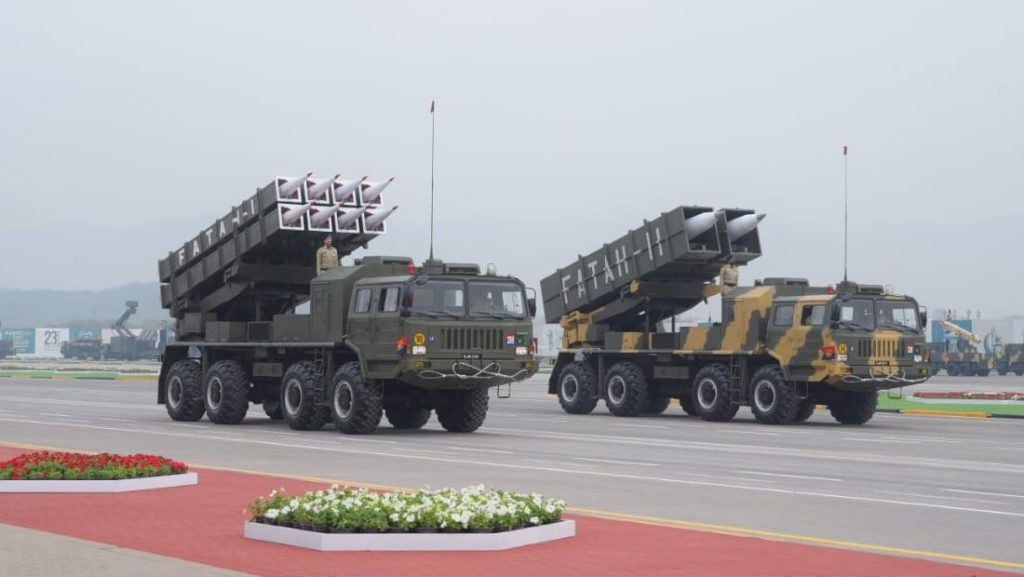
Pakistan conducted a successful training launch of the indigenously developed Fateh-II missile system on Tuesday, marking a significant milestone for the Army Rocket Forces Command.
According to the military’s media wing, Inter Services Public Relations, the Fateh-II, also known as Fatah-II, is an indigenously developed guided multi-launch rocket system with a range of around 250 miles, equipped with sophisticated avionics and cutting-edge navigational technology to ensure high accuracy and survivability on the modern battlefield. Its low, flat trajectory is designed to reduce the chances of radar detection.
Senior leadership from the Strategic Plans Division and various defense scientists monitored the flight, which received high praise from the president, prime minister, and services chiefs for the technical expertise demonstrated by the engineering teams.
This validation of the Fateh-II is particularly resonant given the system’s performance during the intense military confrontation between Pakistan and India in May 2025.
During that brief but fierce conflict, the Fateh series emerged as a decisive factor in the conventional theater, allowing for precise strikes against strategic infrastructure and military installations deep within the neighboring territory.
The ability of these rockets to bypass defensive layers and hit high-value targets changed the tactical calculus on the ground as both nations engaged in heavy exchanges involving drones, artillery, and fighter jets.
The effectiveness of the Fateh missiles during those weeks provided Pakistan with a critical standoff capability that influenced the dynamics of the conflict before a ceasefire was eventually brokered by the United States.
The training launch was carried out by the Army Rocket Forces Command, a specialized group formed in August 2025 to unify Pakistan’s conventional missile and rocket capabilities under a single command structure, while the exercise was used to enhance troop readiness and validate updated technical parameters.
While regional ties remain deeply strained following the 2025 war, this latest test confirms that the military remains committed to maintaining the technological edge and operational reliability of the missile assets that proved so pivotal during the previous year’s hostilities.