
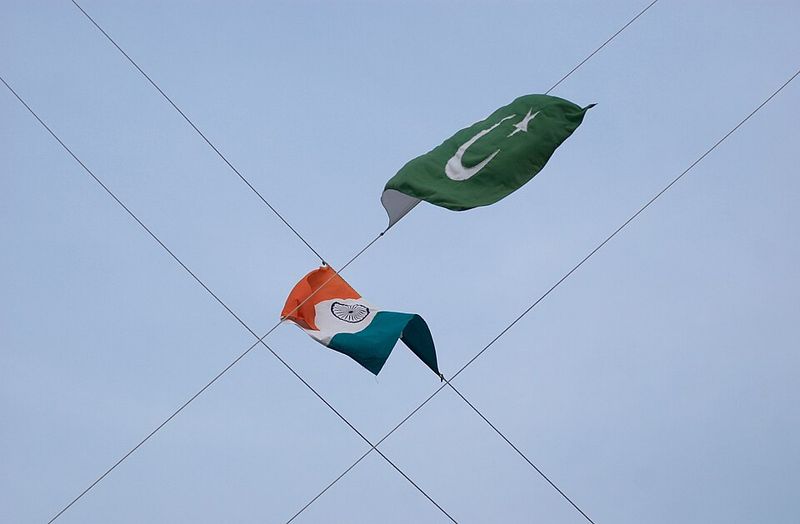
MEA has dismissed Zardari’s comments as interference in India’s internal affairs and criticised Pakistan’s human rights record.
New Delhi: India on Saturday rejected comments by Pakistan President Asif Ali Zardari expressing concern over the alleged demolition and threats to historic Muslim religious sites in India, saying he had “no locus standi” to comment on India’s internal affairs and accusing Pakistan of a long record of human rights violations.
In a statement, Ministry of External Affairs spokesperson Randhir Jaiswal said India “categorically rejects the unwarranted comments made by the President of Pakistan.”
“He has, in any case, no locus standi to comment on matters that are internal to India,” Jaiswal said.
The Indian response came hours after Zardari posted on X that he was “deeply concerned” over what he described as demolitions and threats to historic Muslim religious sites in India, including the “1,000-year-old Masjid Ganj Shaheeda in Varanasi”. He urged India to halt such actions, protect minority rights and preserve shared cultural heritage, warning that such developments risked leading to “the disintegration and perennial chaos of India”.
Zardari’s remarks referred to the Ganj-e-Shaheedan mosque in Varanasi, which has recently become the centre of a dispute after a notice said to have been issued by Northern Railway sought the removal of the structure on the grounds that it stood on railway land.
The mosque’s management committee has disputed the notice, arguing that the structure predates the railway line and that the litigation cited in the notice does not concern the mosque itself. Muslim groups have described the mosque as centuries old, while some local accounts have claimed it is around 1,000 years old, a figure that has not been independently verified.
In its rebuttal, New Delhi stated that the Pakistani president’s comments were “particularly absurd given Pakistan’s own abysmal record on human rights, which is a matter of global commentary.”
The MEA spokesperson added that Pakistan’s “long history of systematically targeting and victimizing minorities across various faiths is notorious”.
“Given this reality, the President’s remarks can only be read as a deliberate political attack, driven by Pakistan’s national policies of bigotry and hatred,” he said.
India has routinely rejected Pakistani criticism of developments within the country as interference in its internal affairs. New Delhi has also countered such criticism by highlighting the treatment of religious minorities in Pakistan, including Hindus, Sikhs, Christians and Ahmadiyyas.
This article went live on June twentieth, two thousand twenty six, at twenty-nine minutes past eleven at night.
The Wire is now on WhatsApp. Follow our channel for sharp analysis and opinions on the latest developments.