
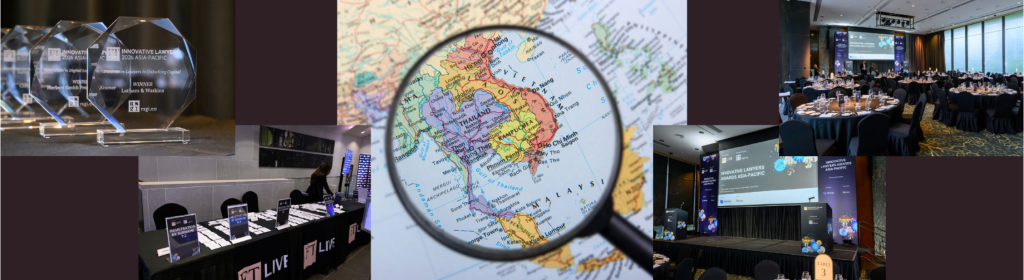
There is a buzz of optimism and activity in the Hong Kong legal market unlike recent years. Law firms are busy, IPOs are booming and new AI tools are being onboarded regularly.
Advertisement

Law firm leaders, general counsel and heads of innovation were in Hong Kong last week for the FT Innovative Lawyers Asia-Pacific Awards. The awards and report, researched by our team at RSGI, cover innovation across the spectrum of legal advice and business, including the latest applications of AI within law firms and in-house legal teams.
This year we saw AI applications in the law progress unevenly along three vectors. The technology itself is racing ahead; individuals are building new capability at vastly different rates; and organisations are investing in the foundations and new business models needed to leverage AI. In many cases, individuals are moving faster than their organisations.
Advertisement

Across the Asia-Pacific region, leading law firms are deploying custom-built AI platforms, agentic workflows and proprietary data infrastructure. And in several cases, preparing to commercialise those tools for sale to other firms and clients.
Australian law firms – or those like with legacy Australian roots – dominated the FT list of most innovative law firms in the region.
The newly independent Mallesons (following its demerger from Chinese firm King & Wood) topped the ranking. It is building agentic workflows using Harvey at a rapid pace. They include workflows for side-by-side provision comparisons, compliance checklist reviews, document and term sheet alignment, ACCC merger notifications and a pleadings matrix. Mallesons report that a 74-step Security of Payment Act (SOPA) workflow has reduced processing time from months to hours.
Gilbert + Tobin came in second overall and was recognised for innovations including its Lakehouse project. The cloud-based data platform is built on Microsoft Fabric and unifies matter, client, financial and operational data that had previously been fragmented across systems. It has enabled near real-time reporting, a streamlined AI workflow for capturing deal data, and an agentic conflict-check workflow.
Outside Australia, law firms have fewer dedicated legal technology and innovation resources. Here practising partners or other business leaders often led AI and technology innovations.
In Japan, Nagashima Ohno & Tsunematsu’s Ryuhei Itaya won the individual ‘Intrapreneur’ award for co-founding MNTSQ (pronounced like the name of the French philosopher Montesquieu). MNTSQ aggregates contract data and expertise from three of Japan’s four largest law firms – Nagashima, Nishimura & Asahi, and Mori Hamada & Matsumoto – to help corporate legal teams digitise their contracting processes. Itaya reports that approximately 35% of Japanese companies with revenues exceeding JPY 1 trillion have now adopted MNTSQ.
Data sovereignty concerns guide other approaches to using AI in Asia. In Singapore, Allen & Gledhill built A&GEL, a custom on-premises large language model platform built with Singapore’s Pand.ai. In Korea, law firm Yulchon developed AI solutions with a Korean legal tech company that deployed its own proprietary small language model rather than OpenAI, Gemini or Claude.
And for the first time, an Indian law firm – Khaitan & Co – received the equal highest digital score in the FT report, including for its proprietary AI tool, KAI.
Law firms across the Asia-Pacific region may be smaller than the leading firms in the UK or US, but many are nimble and ready to move quickly.
However, at a roundtable event for managing partners and innovation heads following the awards, one lawyer noted a topic missing from the coverage this year. Pointing over the jagged green mountains surrounding Hong Kong, he referenced the tech powerhouses and startup labs rapidly developing AI in Shenzhen, the Chinese tech hub just 20 minutes away by train. Perhaps there will be a Chinese legal AI story to cover in 2027.