
Published on
June 27, 2026

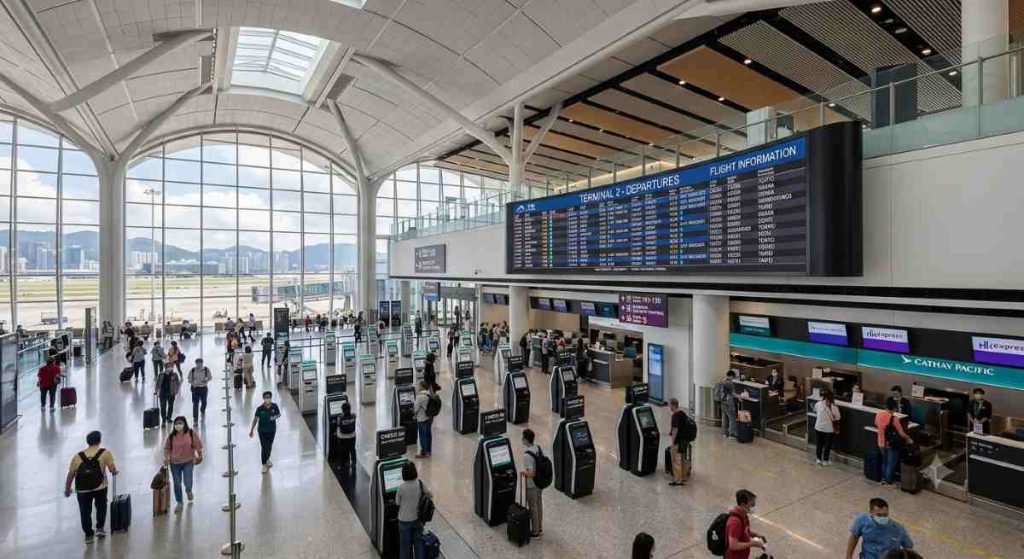
Image generated with Ai
The global aviation landscape has witnessed a significant transformation. This change follows the recent expansion of Hong Kong International Airport. By prioritizing state-of-the-art technology and modern infrastructure, the facility has taken a decisive step. It is cementing its status as a primary international aviation hub. The official commencement of departure operations at the newly redeveloped Terminal 2 on May 27, 2026, serves as a testament to the city’s commitment. The project accommodates the rising tide of global travel. It simultaneously redefines the passenger experience in Hong Kong.
Background and Context of the Terminal 2 Expansion of Hong Kong Airport
The revitalization of Terminal 2 is not an isolated project. It is a pivotal component of the comprehensive Three-Runway System initiative. Following a multi-year development period, a significant investment of 12.9 billion Hong Kong dollars was utilized. The terminal has been meticulously redesigned to facilitate a massive increase in passenger throughput.
- This expansion is projected to bolster annual capacity by an additional 30 million passenger trips.
- The combined total for the two terminals will reach a robust 100 million passengers annually.
- The project spans 300,000 square meters of space.
- This design was conceived to address future air travel demands at Hong Kong International Airport.
The Impact of Terminal 2 on Travellers in Hong Kong
For the modern voyager, the inauguration of Terminal 2 introduces a new paradigm of efficiency. Through the strategic implementation of smart technology, traditional bottlenecks are being systematically dismantled. Upon arrival at the terminal, passengers are greeted by an environment optimized for independence.
- 58 smart check-in kiosks have been installed.
- 68 express self-bag drop counters are now available.
- 108 hybrid check-in counters help reduce manual processing.
- Facial recognition technology is integrated across 20 e-Security Gates.
Notably, the eligibility for these biometric gates has been expanded. The minimum age requirement is now lowered to seven. This change significantly enhances the travel experience for families. Inside the security zone, smart screening channels allow passengers to retain laptops and small liquids in their carry-on luggage. This change further expedites the transit process at Hong Kong International Airport.
Advertisement
Advertisement
Industry Insights and Strategic Objectives
From an industry perspective, the relocation of 15 regional and short-haul airlines to Terminal 2 marks a calculated shift. By concentrating leisure-oriented and short-haul flights within this specialized facility, Terminal 1 is allowed to focus its resources on long-haul services. This segmentation is intended to improve operational flow and reduce congestion during peak hours. The inclusion of vibrant, multi-level LED displays ensures that the terminal functions as an engaging space for the modern traveler. These developments align closely with the broader objectives of the National 15th Five-Year Plan. They reinforce the strategic role of Hong Kong in connecting the Greater Bay Area to the international community.
Practical Information for Passengers
For those navigating the airport, the transition requires an awareness of new operational procedures. While check-in, baggage drop, and security screening occur within Terminal 2, boarding procedures currently remain located in Terminal 1.
Advertisement
Advertisement
- An Automated People Mover (APM) system is utilized to transport passengers between the two facilities.
- The APM operates between 05:30 and 00:30.
- Passengers with late-night flights are advised to follow clearly marked pedestrian paths to Terminal 1.
- Numerous A-Route and NA-Route airport buses now service the Terminal 2 drop-off area.
- Private vehicles and taxis benefit from direct access to the new departures level.
Given the phased relocation of airlines through June 10, 2026, it is strongly recommended that all passengers verify their terminal details with their respective carriers prior to travel.
Comparison and Future Outlook
The current redevelopment stands in stark contrast to previous iterations of the airport’s infrastructure. While the original design focused on foundational requirements, the new Terminal 2 incorporates modular, sustainable architectural elements. Parametric engineering is used to enhance structural resilience against typhoon wind loads. This evolution represents a shift from a purely functional capacity model. It now emphasizes a holistic, intuitive, and tech-driven passenger journey.
As the project moves toward its next phase—with the full integration of arrivals and departures expected by the end of 2027—the facility is poised to handle the complexities of future travel. By reducing face-to-face interactions and prioritizing self-service, Hong Kong International Airport has responded to current trends in passenger autonomy. It has also established a robust framework for long-term growth and competitiveness in Hong Kong.
Advertisement
Advertisement
