
With the Hong Kong Special Administrative Region recording more than 1 million Chinese mainland visitor trips during this year’s Labor Day Golden Week (Friday through Tuesday), the headlines focused on the numbers — border crossings, hotel occupancy, retail sales, and transport capacity.
 But the more interesting story lies not in how many visitors arrived, but in how they experienced the city and what that says about Hong Kong itself.
Tourism, at its best, is not simply an economic activity. It is a mirror. It reflects how a place is seen and felt, what it offers, and how it is changing. And in Hong Kong’s case, that reflection is interestingly nuanced.
For decades, Hong Kong’s tourism model was clear: Visitors came for convenient shopping and dining. The city’s role as a gateway between the mainland and the broader world, reinforced by its free port status and international connectivity, made it a natural destination.
Today, that model has already evolved. Visitors, particularly from the mainland, are no longer coming only for luxury goods — they have them aplenty. Increasingly, they are seeking experiences — neighborhood walks, rural villages, food culture, exhibitions, shows, nature trails, and everyday urban life.
This shift is subtle but significant. It marks a transition from a transactional model of tourism to an experiential one. In this sense, Hong Kong is becoming less of a place to “visit” and more of a place to “feel”.
This evolution is part of a broader global pattern. Cities today compete not just on infrastructure or designed attractions, but on character. Each major city has its own identity shaped by geography, history and culture. Singapore, for example, is tropical, planned and efficient — a modern city built on order and design. Shanghai represents China’s eastern dynamism — expansive, ambitious and constantly reinventing itself. London and New York carry the weight of their histories and global finance, layered with cultural depth and diversity.
HKSAR is different from all of them. It is a subtropical, mountainous city, where skyscrapers rise against a backdrop of hills, country parks and dramatic coastlines. Few global cities offer such immediate proximity between dense urban life and natural landscapes with many beaches, hiking trails and outlying islands that are never far away.
This physical setting alone gives Hong Kong a distinctive appeal. But it is only part of the story. The SAR’s identity has always been shaped by its position “in between”. For over 150 years, under British rule, it was often described as the “Pearl of the Orient”, a place where East met West, where Chinese culture and Western systems coexisted. That legacy left a lasting imprint on institutions, architecture, language and ways of doing business.
Since 1997, the city has been a special administrative region of China, and its role has continued to evolve alongside the country’s rise. Today, it embodies something more complex. It reflects the end of the colonial era, the reemergence of “Chineseness”, and the broader transformation of Asia in a shifting global landscape. It is connected to the mainland in ways that are deeper and more integrated than before, while still maintaining its own systems and international links.
Hong Kong has never been static. Its strength has always been its ability to adapt to new economic realities, new political contexts, and new global trends. The current moment is no different. The rise in tourism from the mainland is a positive signal of recovery and confidence. But more importantly, it offers an opportunity to reflect on what Hong Kong is becoming
This creates a certain “edginess” — a sense of being in motion, not fully defined, but constantly adapting. It is precisely this quality that makes Hong Kong compelling. You cannot understand it in a single visit. You must come, and come again, to feel its pulse. In recent years, some observers have argued that Hong Kong has become “less international”. Often, this is interpreted in visible terms — fewer expatriates and Western firms, hence a changing demographic mix.
But this raises a deeper question: What does “international” mean in today’s world? It cannot be narrowly defined by the density of Western individuals or institutions, as global dynamics are changing.
Mainland residents are now among the most mobile travelers in the world. Asian economies are playing an increasingly central role in trade, investment and culture. Cities are becoming interconnected through new networks that go beyond traditional East-West binaries. Seen from this perspective, Hong Kong’s evolving composition may not represent a loss of internationalism, but a transformation of it.
Tourism provides a useful lens here. The continued popularity of Hong Kong among mainland visitors, alongside its appeal to regional and global travelers, suggest that the city remains relevant, but in a different way. It is no longer simply a Western-facing outpost in Asia. It is a place where multiple worlds intersect. One way to see this evolution is through something very tangible — food. Walk through Hong Kong today, and the diversity is striking. There is, of course, the deep and rich tradition of Cantonese cuisine in all its diversity. But alongside it, one now finds a far wider range of regional and specialty Chinese cuisines.
At the same time, the city has seen an expansion in international offerings: Portuguese, Spanish, Italian, French, modern European, Japanese, Korean, halal and fusion concepts, alongside bakeries of all types, as well as a vibrant bar and cafe culture. This is not just about dining. It is a signal. Restaurants reflect who is in the city, who is visiting, and what people are seeking. They are indicators of openness, exchange and experimentation.
In this sense, Hong Kong continues to evolve as a cultural crossroads, not in the old colonial sense, but as a contemporary meeting point shaped by new flows of people, capital and ideas. Another dynamic shaping Hong Kong today is its proximity to the mainland, particularly in the Guangdong-Hong Kong-Macao Greater Bay Area.
For Hong Kong residents, Shenzhen offers increasingly attractive options, from dining and entertainment to services that are affordable. This creates a certain tension. Yet this is precisely where Hong Kong’s distinctiveness should become clearer.
Convenience and cost are not the same as character. Hong Kong offers something less tangible but equally important — a unique urban experience shaped by its geography, its density, its history and its ongoing transformation.
It is this “edginess”, the feeling of being at the intersection of forces, that continues to define the city. Tourism leaders need to understand this. The surge in Golden Week visitors tested Hong Kong’s operational capabilities — transport systems, border control, and hospitality services. The government rightly put in place coordination mechanisms to ensure smooth management.
But the longer-term question goes beyond logistics. If tourism is shifting toward experience, then the challenge is not simply to accommodate visitors, but to think more deeply about what the city offers.
How can Hong Kong enhance its natural assets, its coastlines, country parks and urban landscapes? How can it support local neighborhoods and small businesses that are becoming part of the visitor experience? How can it present its unique history and evolving identity in ways that are authentic? These are not just tourism questions. They are questions about urban development, culture and governance.
Hong Kong has never been static. Its strength has always been its ability to adapt to new economic realities, new political contexts, and new global trends. The current moment is no different. The rise in tourism from the mainland is a positive signal of recovery and confidence. But more importantly, it offers an opportunity to reflect on what Hong Kong is becoming.
Not a replica of other global cities. Not a fixed idea rooted in the past, but a place that continues to sit productively, sometimes uncomfortably, between changing worlds. This is what keeps people coming.
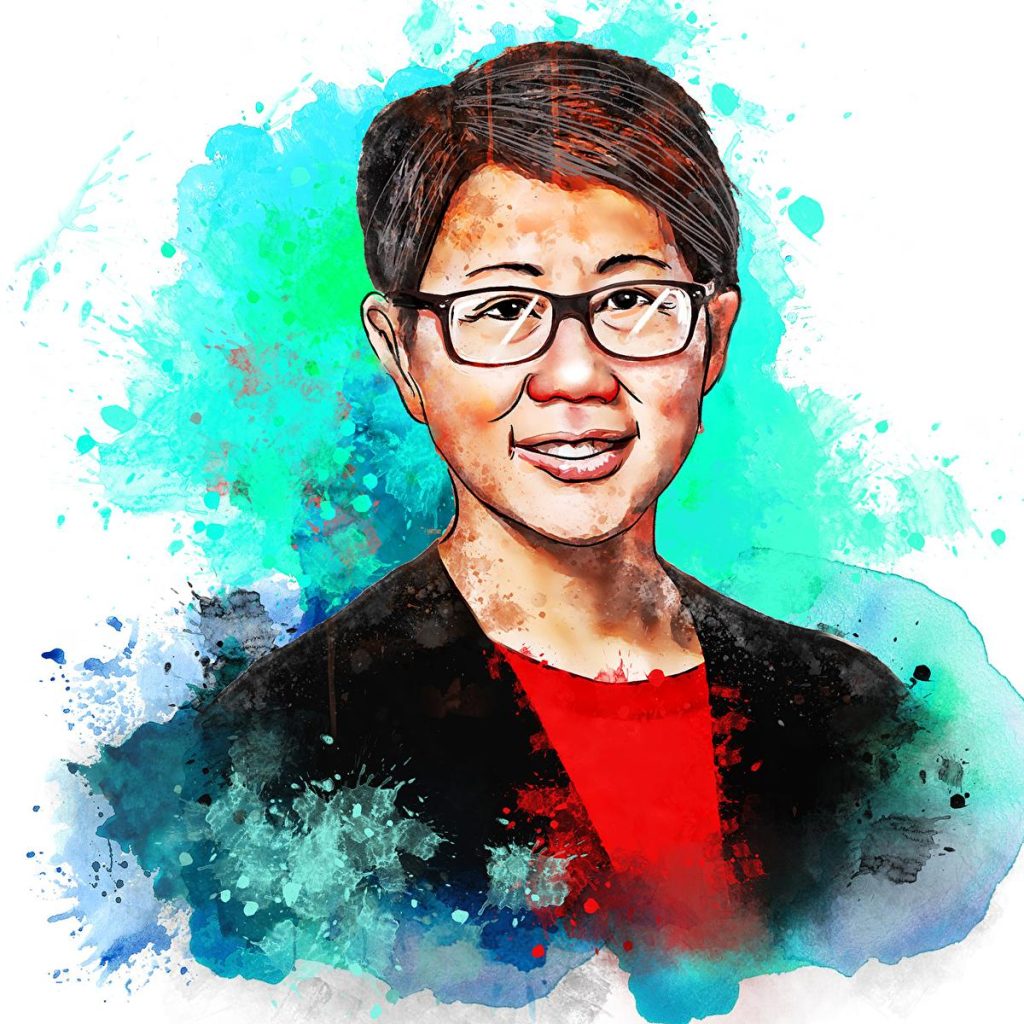
The author is chief development strategist at the Hong Kong University of Science and Technology’s Institute for the Environment.
The views do not necessarily reflect those of China Daily.