
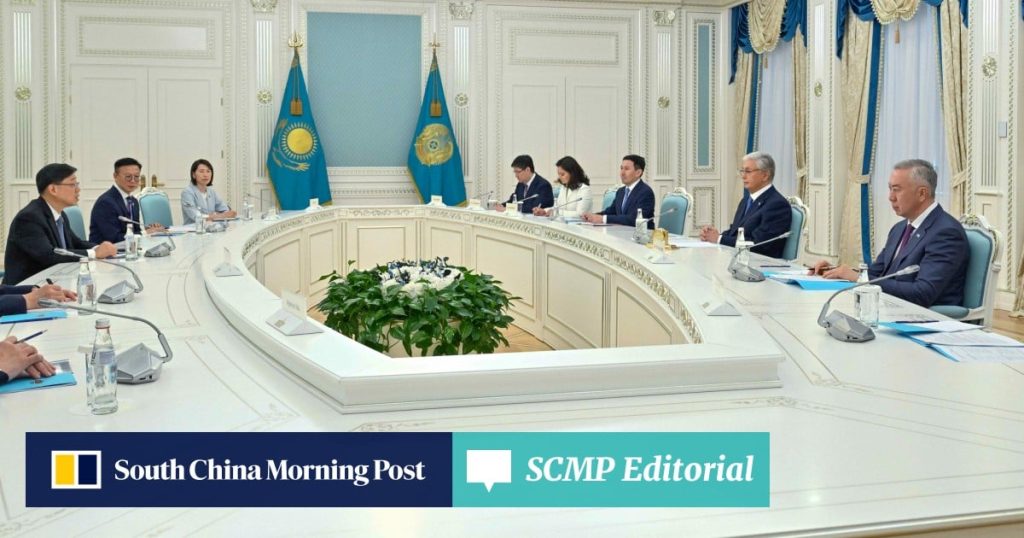
Equally significant is the resumption of a pre-pandemic route to Central Asia, with Cathay Pacific, the city’s carrier, planning to fly three times a week to Almaty. This will save travellers from having to take indirect routes via mainland and foreign cities. Together with the push for 30-day visa-free access for Hong Kong residents, as well as taxation and investment protection agreements, business and tourism will be enhanced.
For the first time, two local news bodies, the Newspaper Society of Hong Kong and the Hong Kong News Executives’ Association, have signed a memorandum of understanding with one of Kazakhstan’s largest state-owned conglomerates to strengthen collaboration in journalism and information exchange. Separately, the South China Morning Post sealed a partnership with Astana International Financial Centre Authority to boost ties between Central Asia, Hong Kong and mainland China, and entered into an agreement with the Autonomous Cluster Fund “Astana Hub”, alongside Gobi Partners and the Khan Tengri Innovation Hub of mainland China, to strengthen economic and business ties.
The breakthrough by this government’s largest overseas delegation underlines the correct strategy in pivoting towards new markets for future development. Since taking office in 2022, Lee has reached out to Southeast Asia and the Middle East to broaden partnerships and collaboration. The achievements have paved the way for more vibrant and diversified development. We trust that Hong Kong’s “superconnector” role will be further reinforced as Lee’s delegation moves to Uzbekistan. Hopefully, the partnerships will continue to bear fruit for the city and the country.