
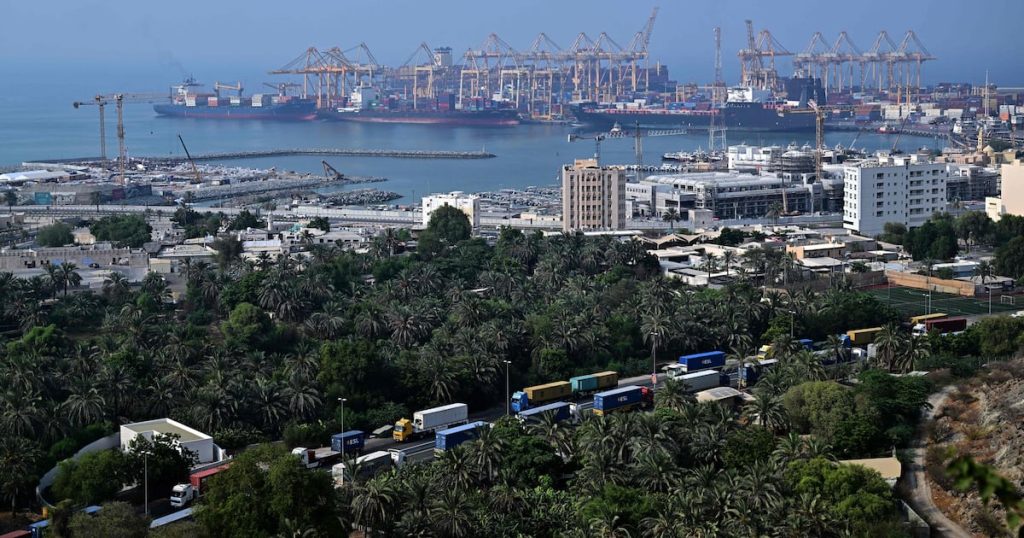
The UAE’s non-oil foreign trade rose 13.1 per cent annually in the first half of the year to Dh1.937 trillion ($520 billion) as the country pushes ahead with its economic diversification plan.
Non-oil exports “achieved a new record” of Dh452.8 billion during the six-month period, Sheikh Mohammed bin Rashid, Vice President and Ruler of Dubai, said on social media platform X on Sunday.
The figures “reflect the strength of our economy” and the “world’s confidence in the UAE”, he said.
The results come as the UAE continues to push ahead with its economic diversification plan as it faces disruption amid the Iran war.
The country’s economy is set to rebound in the second half of the year despite the regional war, amid an exports recovery following its exit from Opec, the International Monetary Fund said on Friday.
The UAE has “demonstrated significant resilience” amid the conflict, the IMF’s mission chief to the UAE, Said Bakhache, said following a visit to Dubai this month. “Sound fundamentals, ample policy buffers, advanced preparedness and a swift policy response have contained the overall impact of the shock,” he said.
Looking ahead, deeper trade integration, supported by the UAE’s Cepa deals and sustained investment in technology and human capital would “reinforce non-oil growth and support resilience to external shocks”, he added.
Trade focus
The UAE has been taking several steps to boost its global trade flows, with the Comprehensive Economic Partnership (Cepa) programme a key contributor.
The Emirates launched the Cepa programme in 2021 to reduce tariffs and remove trade bottlenecks with selected countries through simplified customs procedures and rules.
It has signed 37 Cepas with trading partners, with 18 already in force. They include deals with India, Turkey, Jordan, Serbia, Vietnam and Ukraine, among others.
The agreements helped the country’s non-oil foreign trade surge by 26 per cent annually in 2025 to exceed $1 trillion for the first time.
The UAE aims to further boost non-oil foreign trade as part of its national economic goals. The country is investing heavily in trade and logistics infrastructure, including modern marine ports and airport infrastructure to attract foreign investors.
Foreign direct investment into the UAE rose by about 6 per cent to $48.24 billion in 2025, the ninth highest total in the world, according to the UN Conference on Trade and Development (Unctad).
The UAE was the top recipient of FDI in the broader Middle East region, Unctad said in a report this month.