
- Gap between off-plan and ready homes
- Off-plan prices up 113% in Dubai Marina
- Ready homes rise in Jumeirah Village Circle
Property prices across Dubai moved in sharply different directions in April, with some areas recording steep gains while others fell, according to Dubai Land Department data compiled by property intelligence site DXB Interact.
The figures highlight a widening gap between off-plan and ready-home price trends across the city.
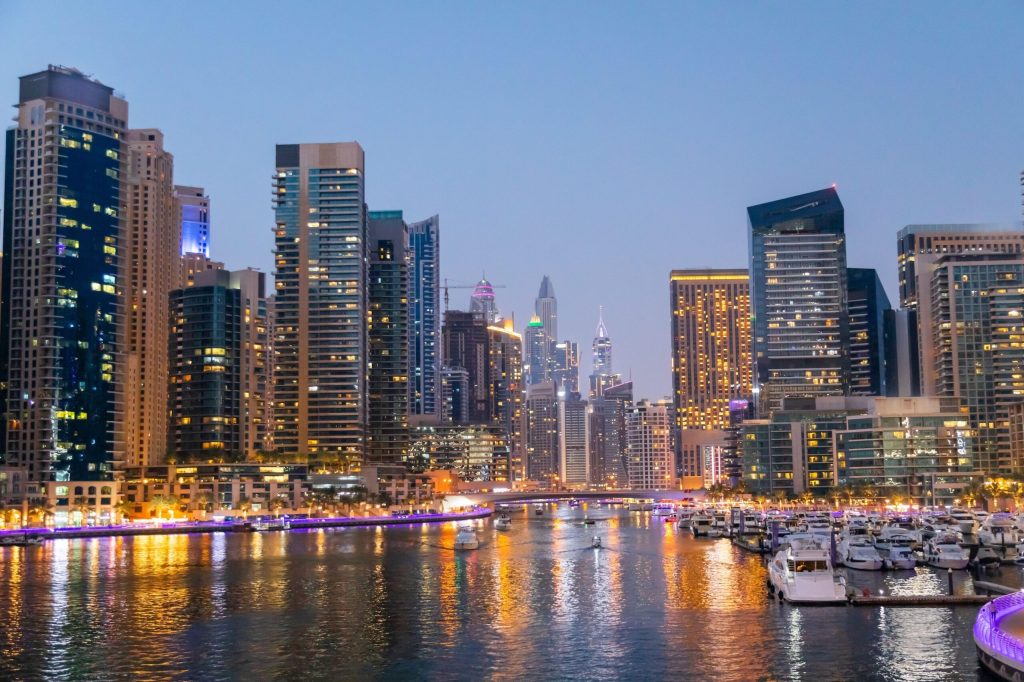
In Dubai Marina and Business Bay, off-plan prices rose 113 percent and 80 percent respectively from a year earlier.
But prices for completed, ready-to-move-in homes in those same areas fell 46 percent and 6 percent over the same period. When off-plan prices are rising fast and ready prices are falling, it typically means buyers are purchasing new units as an investment rather than to live in them.
At the other end of the scale, Greens and Jumeirah Village Circle told a different story. Both areas recorded gains in ready-home prices — up 18 percent and 10 percent year on year respectively — while off-plan prices were down 9.7 percent and 1 percent respectively.
That combination points more towards genuine end-user residential demand from people relocating to Dubai rather than simply parking capital in the emirate.
Downtown Dubai sat closest to what analysts would consider a healthy market. Both off-plan and ready prices rose, by 14 percent and 3 percent respectively, suggesting developer and end-user demand were moving in the same direction.
Louis Harding, chief executive of brokerage Betterhomes, said Dubai’s property boom began to accelerate during the pandemic.
“Up until then, the market was pretty subdued and prices were pretty soft,” he explained at a company webinar last month.
“The UAE, though, saw Covid and reacted in a very proactive way. It attracted a large proportion of the world’s high net worth individuals who saw it as a cool place to live while [the pandemic] blew over.
“That created a disproportionate amount of demand in Palm Jumeirah, parts of Downtown and Dubai Hills.”
“For the first time ever, that created a genuine two or three-tier marketplace. Mature markets like New York or London have ‘super-prime’, ‘prime’, ‘mass-market’. Up until Covid, Dubai didn’t have that. You didn’t see massive disparity in prices over a relatively small geographical area; you do now,” Harding said.
AGBI reported earlier this month that about a tenth of homes listed in Dubai have dropped their prices.
Dubai South stood out as the sharpest anomaly in the data. Ready-home prices there fell 53 percent year on year – the steepest decline of any area reviewed – even as off-plan prices rose 6.4 percent.
The divergence comes despite a wave of major development.
Earlier this month, Dubai-based conglomerate Majid Al Futtaim and state-backed Dubai South announced a mega mixed-use community located near Al Maktoum International Airport.
Spanning 22 million square feet, the upcoming city in Dubai South is estimated to cost AED62 billion ($17 billion) to build. The project, anchored by a large shopping mall, will feature a mix of residential, retail and lifestyle components, Dubai South said in a statement.
Further reading:
Further reading:
Dubai Creek Harbour recorded an unusual pattern in the opposite direction. Off-plan prices fell 20 percent while ready prices rose 5.7 percent, one of only two areas where the ready market outperformed off-plan. That gap may reflect buyers favouring completed buildings over new launches in the area.
Palm Jumeirah posted a 12 percent rise in off-plan prices and a 2.5 percent decline in ready-home values.
Given the island remains one of Dubai’s most expensive residential markets, with average off-plan prices at about AED10 million, the relatively modest movement may suggest demand at the very top end has started to plateau following the earlier wave of capital inflows.
“It’s about finding a product with an element of rarity, particularly in mature, infrastructure-led areas,” Harding said.
“It’s that cliché: Always buy the worst house on the best road.”