
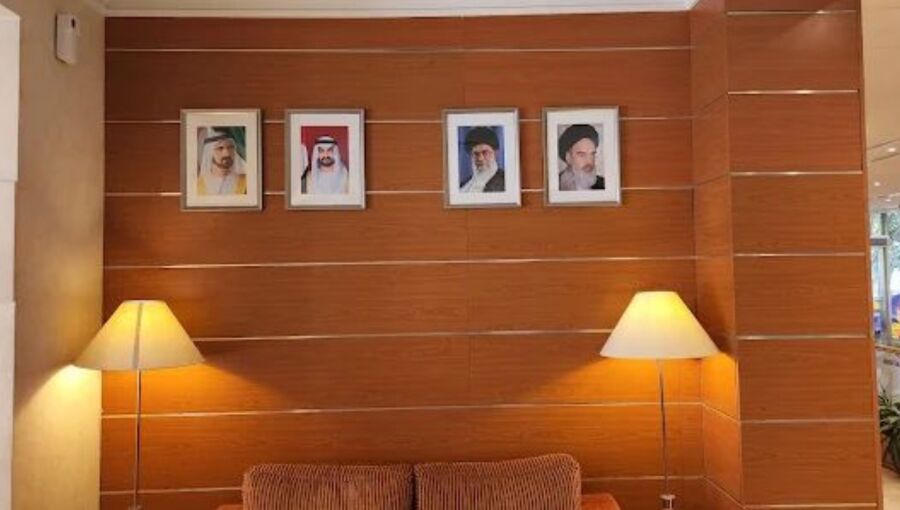
For over a century, the geographical gap between the southern coast of Iran and the bustling ports of the United Arab Emirates (UAE) was less a barrier and more a bridge. However, the recent war on Iran by the US and Israel and Iran’s response to GCC neighbours has all but burnt that bridge.
As Amin Moghadam illustrates in his work The Other Shore, the rise of Dubai as a global metropolis is inseparable from the Iranian presence. From the Sunni Persian merchants of Lingah who fled 19th-century customs duties to the modern entrepreneurs of the “Golden Visa” era, Iranians have been the silent architects of the Persian Gulf’s “ultra-modernity.”
However, recent reports of residency cancellations, the shuttering of historic Iranian schools and hospitals, and the revocation of long-term property permits suggest that this bittersweet dream is entering its final, most bitter chapter. The “other shore” is becoming a fortified front line, and the casualties are a transnational community that has survived decades of regional volatility.
A History of Double Belonging
The Iranian presence in the UAE has always existed in a state of “visibility and invisibility.” Historically, the relationship was defined by what Moghadam calls “double belonging.” Families from Bastak, Lar, and Evaz moved to the Trucial States long before the discovery of oil, bringing trade networks that transformed Dubai from a pearl-diving village into a commercial hub. By the early 21st century, over 400,000 Iranians called the UAE home, with their investments estimated at upwards of $200 billion.
According to the EU Tax Observatory, Iranian nationals are among the top investors in Dubai’s residential real estate in recent years. The UAE is one of Iran’s major trading partners across all products, accounting for about 30% of Iran’s imports and about 7% of its exports, according to the latest World Integrated Trade Solution (WITS) data for 2022.
In terms of sporting connections, Iranian soccer players have been among the most employed players in the UAE Pro League over the past two decades. Dubai also hosts a large number of concerts by Iranian singers and musicians, attracting many Iranian tourists and residents and creating significant year-round jobs across the city.
Between 2023 and 2025, Iranians made nearly 365,000 trips to the UAE, according to Euromonitor International data.
For decades, the UAE played a masterful game of geopolitical hedging. It served as a “Hong Kong for Iran,” a vital re-export platform that allowed Iranian businesses to circumvent international sanctions while the UAE simultaneously hosted U.S. military bases. This pragmatism allowed the “grey economy” of dhows and lenjes to navigate the Strait of Hormuz, carrying everything from consumer electronics to medical supplies.
The Breaking Point
But pragmatism has a limit. Recent reports describe a systematic dismantling of the Iranian socio-economic infrastructure in the UAE. The reported revocation of residency for those holding “Golden Visas” and the cancellation of permits for thousands under 99-year leasehold plans are particularly significant. These instruments were designed to offer permanent security to the global elite; their cancellation signals that in the current climate of existential security, no contract is sacred.
By targeting the Iranian Hospital in Dubai and the UAE branch of Islamic Azad University and the Iranian population, the UAE authorities are signalling that the Iranian presence is no longer considered a manageable economic asset, but a latent security liability.
The Logic of the Rentier State
Why would a state risk billions in investment and the stability of a major demographic? The answer lies in the political economy of the “Rentier State.” As theorised by Hazem Beblawi, states like the UAE, which derive their primary income from external rents (oil and global logistics), are not dependent on a domestic tax-paying citizenry.
Unlike a traditional democracy, where the mass deportation of a productive merchant class would trigger an economic and political crisis, the Rentier State can use its wealth to “buy” its way out of the immediate fallout.
In this context, the UAE’s “authoritarian resilience” allows it to prioritise regime security over the “merchant-city” logic that built Dubai. As regional tensions escalate into direct military confrontation, marked by reported strikes on Gulf Cooperation Council (GCC) bases which host U.S. army, the UAE’s calculation has shifted.
The Foreign Ministry’s recent descriptions of Iran as “terrorist” suggest that the era of quiet diplomacy is over. The “double belonging” that once facilitated trade is now viewed through the lens of a “fifth column.”
The Human Cost of Geopolitics
The most tragic aspect of this shift is the fate of those caught in the middle. Resource-wealthy states like the UAE often face less external pressure to uphold labor and human rights.
If the current trend continues, the UAE will succeed in making the Iranian community “invisible,” but at a profound cost. The “metropolisation” of Dubai was fueled by its status as a sanctuary for regional capital. By closing the “other shore,” the UAE risks losing the very cosmopolitan essence that made it a global miracle. The bridge is burning, and the smoke is clouding the future of the entire Persian Gulf.
Authors: Mohammad Reza Farzanegan (Marburg University, CNMS, Marburg, Germany; HIAS – Hamburg Institute for Advanced Study, Hamburg, Germany) and Hassan F. Gholipour (Western Sydney University, Sydney, Australia)
Disclaimer: The views and opinions expressed in this article are those of the authors and do not necessarily reflect the official policy or position of IntelliNews. This op-ed represents the authors independent analysis and commentary.