
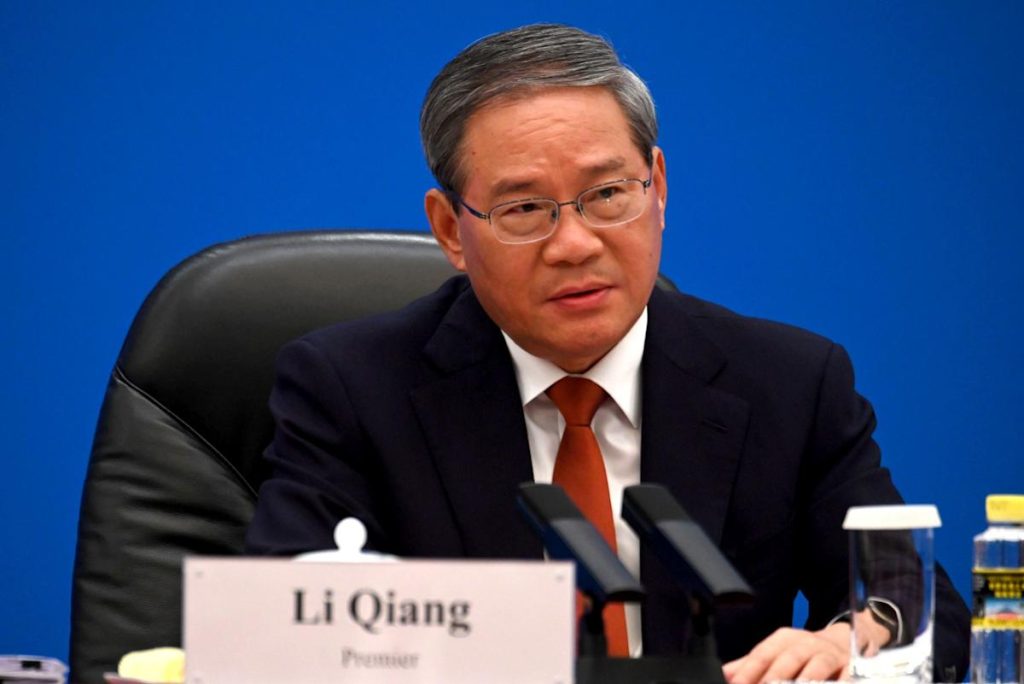

China’s Premier Li Qiang on Wednesday rejected allegations that his country obtains a competitive advantage due to unfair subsidies and stressed the country’s reliability in uncertain geopolitical times.
Li, speaking at the World Economic Forum’s “Summer Davos” forum in the north-eastern Chinese coastal city of Dalian, said it was not as some people claimed that the competitiveness of Chinese products was mainly based on subsidies from the Chinese government.
The World Economic Forum meets in Davos, Switzerland in January and focuses on broader economic topics, while the summer gathering meets in China and is focused on business and technology.
China’s government was not yet so rich and could not afford such subsidies, Li said. He cited research and development and China’s large market, which produces new products, as reasons for China’s competitiveness.
Trading partners have long accused China of using subsidies to enable companies in the People’s Republic to offer low prices for products, leading to distortions in other markets. One example is electric cars made in China. The European Union has slapped additional tariffs on Chinese e-car exports because of this.
Criticism of “China shock” thesis
Brussels has also been concerned for some time about China’s rising exports to Europe. Because China’s economy was growing more slowly, Beijing was flooding markets worldwide with “subsidized overcapacity,” European Commission President Ursula von der Leyen said a year ago. “We are seeing a new ‘China shock’,” she said at the time at a G7 meeting in Canada.