
Of the food that Cuba imports, $403 million comes from the United States, $328 million comes from Argentina, and $282 million comes from Brazil. But again, not all calories are created equal. Cuba imports 85 percent of its wheat from Canada, and — perhaps most important — 80 percent of its poultry from the United States.
Frozen chicken quarters and legs are the most affordable and accessible animal protein in the Cuban diet. Cuba has been one of the top five largest export markets for American poultry for over ten years, ahead of countries with massive populations like the Philippines and China. Last year, the United States exported $298 million worth of poultry to Cuba, virtually all of it frozen chicken quarters and legs.
The latest sanctions are expected to tilt the balance of agricultural trade even further in the United States’ direction.
Canadian agribusiness is unlikely to see upside in continuing CAD$278 million of agricultural trade with Cuba in the face of compliance risks that have already led to one prominent mining firm being distressed into sale to a Donald Trump–allied US buyer. For comparison, Canada did over CAD$100 billion of agricultural trade in 2024, 62 percent of which was with the United States.
“If you’re a third country and you supply goods or services to a blocked party, you can be blocked,” explains Robert Muse, a prominent lawyer who specializes in US laws and regulations relating to Cuba. “Then anyone who supplies goods or services to you can be blocked. . . . and so on.” Title III of the Helms-Burton Act, which opens private companies to lawsuits if they deal in assets expropriated during the Cuban Revolution, can theoretically be extended limitlessly.
Aside from their desire for market access to the United States, there is at least one other reason why companies don’t revolt against these unnecessary compliance risks: “The international banking system and the supremacy of the U.S. dollar prevents companies from fighting back,” says Helen Yaffe. Dollar transactions, which account for most world trade, need to clear the US banking system.
This leaves Cuba with only one frictionless trading partner: the country that is presently trying to dismantle its government. “American companies will be preferred investors in the ‘new Cuba’ that the US is trying to engineer through secondary sanctions,” says Muse.
Molding Cuba in the model of Latin American countries like Guatemala, locked in a relationship of dependency and unequal exchange with the United States, does seem to be the ultimate ambition of the Trump administration. As for the role of agriculture in this grand strategy, “America’s leverage over the Cuban government increases as the amount of food it imports to Cuba increases,” says Muse.
This may help explain this latest round of sanctions. By leaving the humanitarian carve-outs in place while targeting the port industry and importers, the United States can claim it is not forbidding the import of food to Cuba, even as it causes domestic food production and food imports to plummet.
“The effect is multiplied by existing food shortages. Cuba may be getting 16 percent of its imported food from America, but if you knock out the other 84 percent – now you’ve got a catastrophe,” says Muse.
As for now, most of the world isn’t willing to risk access to the US market and to payment and credit systems by continuing trading with Cuba. Yet pressure for an alternative continues to build as the United States’ mercurial trade policies and unilateral sanctions regime come under increasing stress in the context of trade disruptions related to the Iran war.
“If Cuba still had the rest of the world to trade with, it could prosper,” says Yaffe.
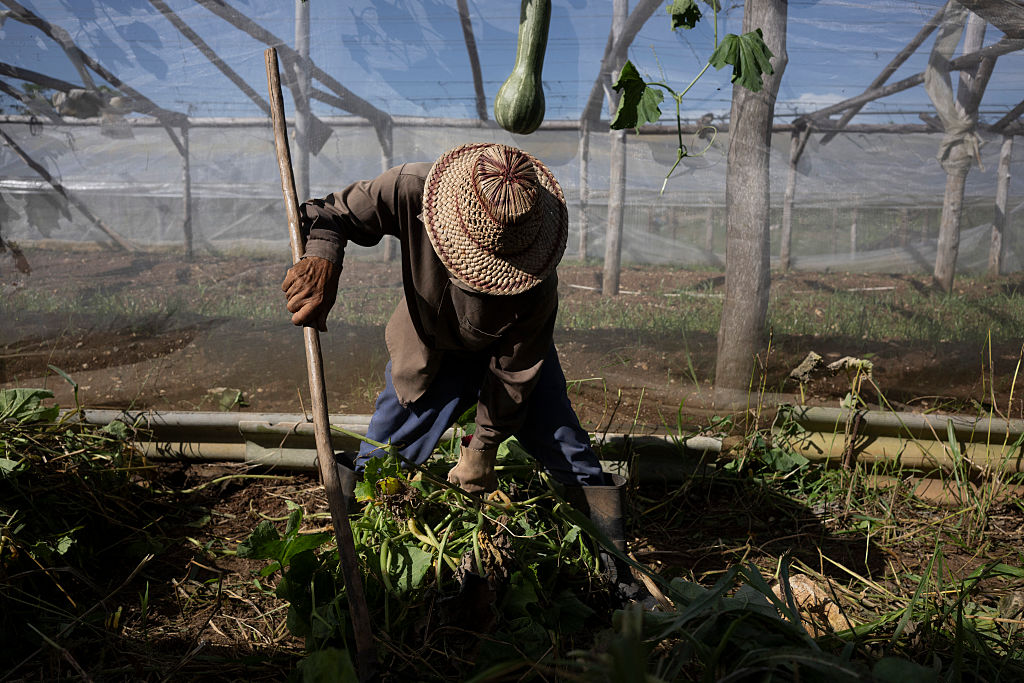
The US government has exploited the limitless reach of the Helms-Burton Act and the hegemony of the dollar to create a regulatory environment and sanctions regime so severe that no rational actor would defy it. Simultaneously, its oil blockade has made food sovereignty via an industrial agricultural model nearly impossible, leaving Cuba dependent on American agribusiness for cheap proteins.
Meanwhile, banking, mining, and tourism sanctions have starved Cuba of the foreign exchange it needs to fund a transition to more sustainable agricultural models. In other words, as the United States seeks to topple the Cuban government and open the country to private US ownership, it is using access to food as the ultimate leverage.