
There is a temptation to explain Dubai through its skyline. Visitors inevitably do. The towers are photographed, the artificial islands admired, the superlatives recited. Yet the city’s real architecture is invisible.
It consists of connections: shipping routes, airline networks, financial markets, business forums, diplomatic relationships and, perhaps above all, an instinct for bringing together people who might otherwise never have met. Dubai has become one of the world’s great conveners. It is no accident that discussions about Africa’s economic future increasingly take place here.
I was reminded of this while moderating a panel at the Global Banking & Markets Conference, where the discussion centred on one of the most significant shifts in international finance: the growing alignment between Gulf capital and African opportunity.
The conversation itself was important. The setting was equally revealing.
For much of the post-Cold War period, Africa’s external relationships were viewed through a familiar triangle: Europe, North America and, increasingly after the turn of the century, China. Today, the geometry has changed. The world has become less globalised, more regional, and decidedly more multipolar. Capital, like diplomacy, is finding new pathways.
Few places have understood this transformation earlier — or acted upon it more deliberately — than Dubai.
Long before Africa became fashionable among global investors, Dubai was quietly investing in the relationship. The Emirates airline stitched together African cities with remarkable frequency.
DP World invested in ports and logistics networks. Banks expanded their African franchises. Free zones welcomed African entrepreneurs. Supply chains deepened. Trust accumulated. Relationships, after all, compound much like capital.
Long before Africa became fashionable among global investors, Dubai was quietly investing in the relationship. The Emirates airline stitched together African cities with remarkable frequency.
Since its launch in 2013, the Global Business Forum Africa has become one of the principal meeting places for African presidents, ministers, business leaders and international investors. It has done something rather valuable: it has treated Africa not as a development challenge to be solved, but as a commercial partner to be understood.
Expo 2020 Dubai reinforced the same philosophy. The extraordinary African presence was not accidental. It reflected years of diplomatic engagement and deliberate outreach by the United Arab Emirates (UAE). During the expo, over six months, nearly every African nation stood on one of the world’s biggest stages — not asking for sympathy, but presenting opportunity. Narratives matter.
For decades, conversations about Africa often began with risk. Increasingly, they begin with growth. This is not to romanticise the continent. Africa continues to wrestle with familiar constraints: infrastructure deficits, political uncertainty in some jurisdictions, fiscal pressures and uneven institutional quality. No serious investor ignores these realities.
But neither should we ignore the equally compelling counter-narrative. Africa remains the world’s youngest continent. Its cities continue to expand at remarkable speed. Digital adoption has accelerated beyond expectations.
Financial innovation has often leapfrogged developed markets. Across much of the continent, macroeconomic reforms are quietly improving resilience, inflation is moderating, fiscal discipline is strengthening, and growth is expected to outpace most other major regions over the medium term.
That combination deserves attention. The changing geopolitical landscape makes it even more significant.
As traditional sources of development finance become more constrained and Western governments devote increasing fiscal resources to domestic priorities, defence spending and strategic competition, new pools of capital are assuming greater importance. Gulf sovereign wealth funds, commercial banks and institutional investors are among them.
This is not simply about replacing one source of finance with another. It is about recognising that Africa’s development increasingly requires commercial partnerships rather than donor relationships, investment platforms rather than isolated projects, and long-term capital rather than episodic funding. That was the central thread running through our panel discussion.
As traditional sources of development finance become more constrained and Western governments devote increasing fiscal resources to domestic priorities, defence spending and strategic competition, new pools of capital are assuming greater importance. Gulf sovereign wealth funds, commercial banks and institutional investors are among them.
We explored how sovereign alignment can reduce investment risk. How export credit agencies can catalyse private capital. How logistics corridors, renewable energy, mining, digital infrastructure and agricultural value chains can evolve into bankable investment platforms capable of attracting billions rather than millions.
These are fundamentally different conversations from those held 20 years ago. The emphasis has shifted from whether Africa merits investment to how investment can be scaled. That is genuine progress.
There is another reason why Dubai occupies a distinctive place in this story. Unlike many global financial centres, it understands both developed and emerging markets instinctively.
It is equally comfortable hosting Silicon Valley entrepreneurs, Indian manufacturers, African bankers and European institutional investors. It speaks several commercial languages fluently. Geography certainly helps. But ambition has mattered even more.
The numbers illustrate the scale of that ambition. Dubai’s non-oil trade with Africa exceeded $145bn (about R2.4-trillion) in 2025, while cumulative trade over the previous decade surpassed $650bn. More than 30,000 African companies now operate through the Dubai Chamber ecosystem.
These figures tell us something larger than the value of commerce. They reveal the emergence of habit. Businesses invest where relationships already exist.
Economists often describe trade as the movement of goods. In reality, it is the movement of confidence.
Leaving Dubai, I found myself reflecting less on what had been said during the conference than on what the city itself represents. History has an amusing habit of relocating its centres of gravity. Venice had its moment. London had its century. New York shaped an era. None lost relevance overnight; rather, new intersections gradually emerged. Dubai has become one of those intersections. Indeed, this could be said of the wider Gulf region.
For Africa, that matters. Not because every investment opportunity will succeed, nor because every geopolitical ambition will be realised. Rather, because one of the world’s most influential commercial crossroads has made a long-term wager on the continent’s future. Increasingly, the rest of the world appears willing to do the same.
And perhaps that is the quiet story unfolding beneath Dubai’s spectacular skyline: not simply the rise of a city, but the emergence of a new economic corridor connecting two regions whose futures are becoming ever more closely intertwined.
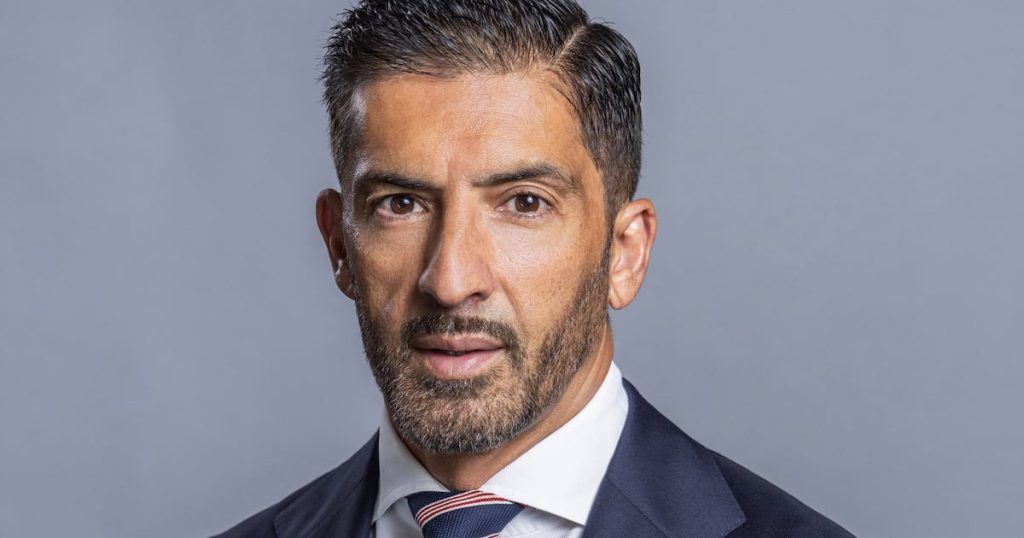
• Ballim is chief economist and head of research for the Standard Bank Group.