
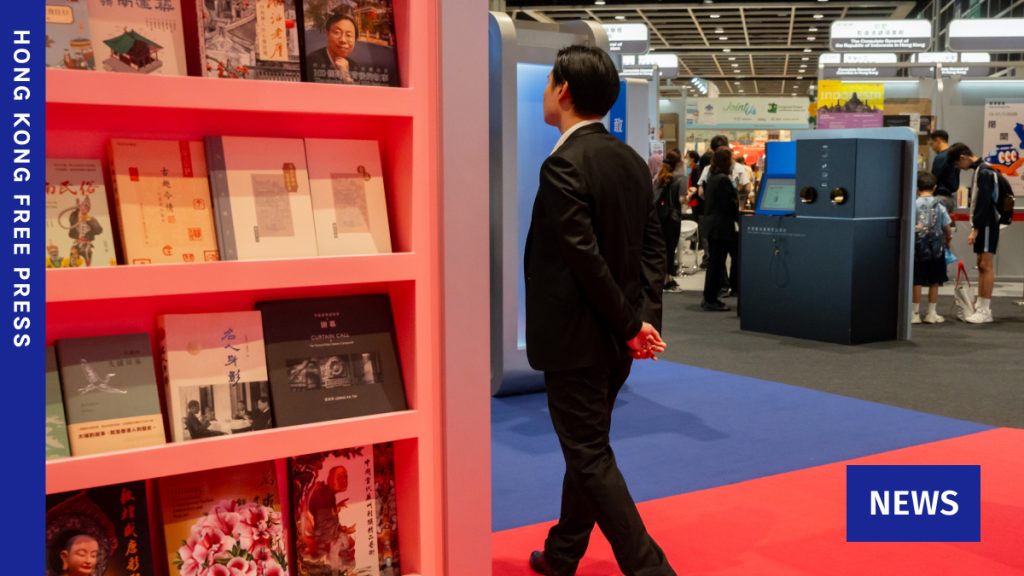
Hong Kong authorities have been checking for “banned books” delivered from Taiwan, a Taiwanese official has said, prompting publishers on the self-ruled island to self-censor before shipping titles.

Liang Wen-chieh, deputy minister of Taiwan’s top cross-strait policy body, the Mainland Affairs Council (MAC), told a press conference on Thursday that Hong Kong’s national security authorities had been monitoring imported publications for banned books with a “potentially large scope.”
“So far, they have not publicised a list of books they consider prohibited,” Liang said in Mandarin. “We can only collect information on a case-by-case basis regarding the books and their nature.”
Liang’s remarks came after Hong Kong’s national security police raided two independent bookstores last week and arrested five operators for allegedly displaying and selling seditious publications.
One of the titles deemed problematic was reportedly the Chinese edition of Let Only Red Flowers Bloom: Identity and Belonging in Xi Jinping’s China, originally written in English by American journalist Emily Feng and recently published by a Taiwanese house.
The MAC said Hong Kong authorities had been inspecting “almost every book shipment” from Taiwan since March, compared with one check every few months in the past, according to local media.
Liang said on Thursday that Taiwanese publishers had been self-censoring before shipping books to Hong Kong.

“I can only say Hong Kong is now very different from the city we used to know,” he said.
This week, a Hong Kong logistics firm’s Taiwan branch reportedly told clients it would not ship “prohibited books” to the city to comply with the Beijing-imposed national security law.
Jaguar Logistics said in a notice to clients that it would also not ship to bookstores under Hong Kong government investigations, naming four bookshops that had been raided by national security police this year, according to Taiwanese media Formosa Television.
Hong Kong’s Customs and Excise Department told HKFP on Wednesday that it would not comment on remarks made by individual organisations.
In an emailed reply, it said it would tightly safeguard national security, adding that it would detain shipments suspected of containing seditious items and refer them to the police for investigation.
Beijing inserted national security legislation directly into Hong Kong’s mini-constitution in June 2020 following a year of pro-democracy protests and unrest. It criminalised subversion, secession, collusion with foreign forces and terrorist acts – broadly defined to include disruption to transport and other infrastructure. The move gave police sweeping new powers and led to hundreds of arrests amid new legal precedents, while dozens of civil society groups disappeared. The authorities say it restored stability and peace to the city, rejecting criticism from trade partners, the UN and NGOs.


