
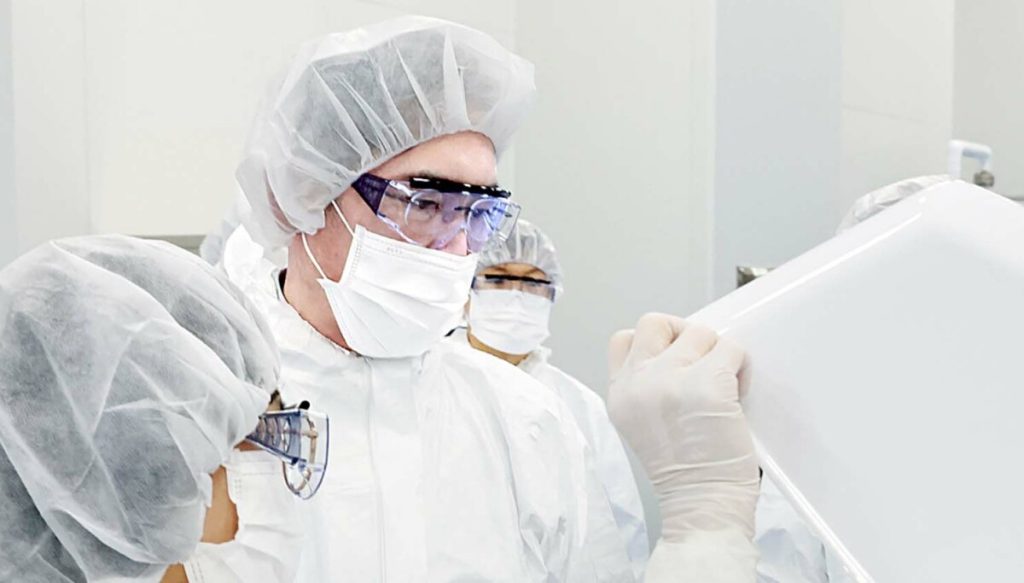
The acquisition expands the company’s portfolio into peptide-based medicines central to the booming weight loss drug industry.
Samsung Biologics will acquire Swiss contract development and manufacturing organization (CDMO) PolyPeptide for 1.46 billion Swiss francs ($1.8 billion), marking the largest acquisition ever by a Korean pharmaceutical and biotechnology company.
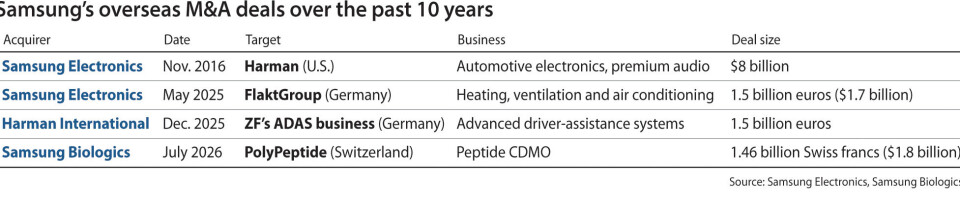
The deal is also Samsung Group’s biggest overseas acquisition since Samsung Electronics acquired Harman International in 2017. The latest acquisition is part of the group’s push to expand its biotechnology business, which has been identified as one of its key future growth engines alongside semiconductors.
Samsung Biologics disclosed the agreement on Monday. The company plans to complete the acquisition by securing a 100 percent stake by the end of this year.
The acquisition is intended to expand Samsung Biologics’ portfolio beyond antibody therapeutics into peptide-based medicines while positioning the company to meet rapidly growing manufacturing demand driven by glucagon-like peptide-1 (GLP-1) obesity treatments, according to industry observers.
Peptides, the key ingredient in obesity drugs, are chains of amino acids whose manufacturing process is highly complex and requires stringent quality control. As a result, about 62 to 64 percent of the world’s top 10 pharmaceutical companies outsource peptide production to specialized contract development and manufacturing organizations rather than producing them in-house.
By adding peptide-manufacturing capabilities to its existing antibody drug portfolio, Samsung Biologics aims to capitalize on surging demand for obesity drug production.
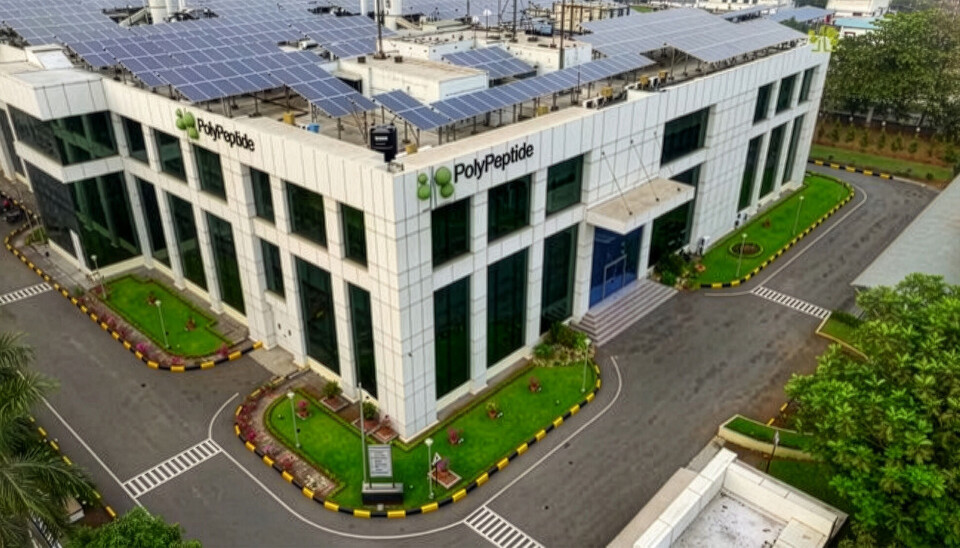
Headquartered in Baar, Switzerland, PolyPeptide was spun off from the peptide manufacturing division of Swiss pharmaceutical company Ferring in 1996. The company posted revenue of 389.3 million euros ($445 million) last year and employs about 1,500 people. It operates six manufacturing sites and research and development centers across five countries, including Switzerland, the United States, France, Belgium and India.
“[PolyPeptide] has completed more than 1,000 peptide therapeutic development and manufacturing projects and has established environmentally friendly manufacturing technologies,” Samsung Biologics said.
Industry observers are particularly focused on what they see as a major upside revealed in the filing. The minutes of Samsung Biologics’ board meeting cited “relationships with major customers, including Eli Lilly, and pipeline expansion” as among the key strategic benefits of the acquisition. Eli Lilly manufactures Mounjaro and Zepbound, two blockbuster drugs that dominate the global obesity and diabetes treatment market.
With PolyPeptide already supplying Eli Lilly, many in the industry believe the acquisition will strengthen Samsung Biologics’ chances of securing large-scale manufacturing contracts for Eli Lilly’s obesity drugs once the deal closes.
The acquisition marks a major investment aligned with the three-pronged expansion strategy that Samsung Biologics CEO John Rim has repeatedly emphasized at this year’s J.P. Morgan Healthcare Conference and the BIO International Convention, also known as BIO USA: expanding manufacturing capacity, broadening the company’s portfolio and strengthening its global footprint.
After acquiring the Rockville, Maryland, manufacturing facility of the British pharmaceutical and biotechnology company GSK in April, Samsung Biologics has now secured a production base in Europe, further reinforcing its global supply chain.
The deal also carries broader significance for Samsung Group. The biotechnology business, which Samsung launched more than two decades ago at the direction of the late Chairman Lee Kun-hee as a future growth engine, has now emerged as one of the group’s core growth drivers under the leadership of Samsung Electronics Executive Chairman Lee Jae-yong.
Market research firm Business Research Insights forecasts that the global peptide CDMO market will grow from $5.5 billion this year to $29.1 billion by 2035, representing an average annual growth rate of more than 20 percent.
Samsung Biologics is expected to compete in the sector against major global CDMOs such as Switzerland’s Bachem, Germany’s CordenPharma and China’s WuXi AppTec.
Industry observers said that successfully integrating PolyPeptide’s organization and operations, along with securing new contracts, will be key challenges following the acquisition.
Samsung Biologics plans to maintain a stable revenue base by taking over PolyPeptide’s existing contracts while expanding cross-selling opportunities among its existing antibody drug customers.
“The key challenge will be successfully integrating the two companies without losing key personnel or core technologies before the acquisition is completed,” a biotechnology industry source said.
BY CHOI EUN-KYUNG [kim.jiye@joongang.co.kr]