
Published on
July 19, 2026
By: Kritika Shah

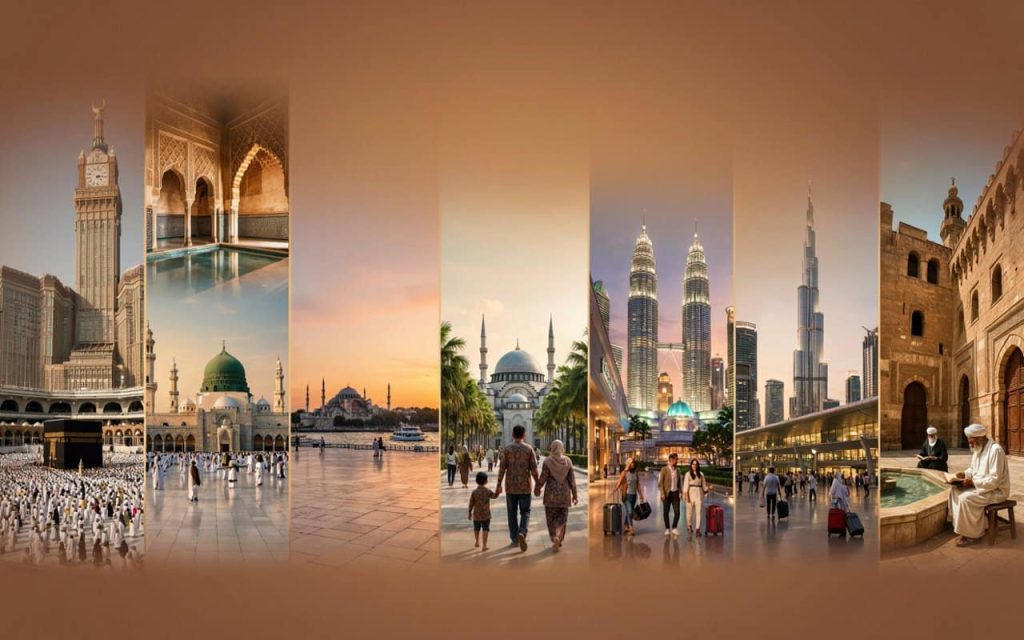
Image generated with Ai
The religious tourism is experiencing a major revival as millions of travellers return to pilgrimage destinations, Islamic heritage sites and faith-based journeys across the world. After years of disruption caused by global travel restrictions, the sector is rebuilding strongly, supported by rising demand for Hajj, Umrah, spiritual experiences and halal-friendly travel.
Saudi Arabia remains at the centre of global Muslim religious tourism due to the importance of Makkah and Madinah, while countries including Türkiye, Indonesia, Malaysia, Egypt and the United Arab Emirates are expanding their Islamic heritage tourism offerings.
The recovery of religious travel is also creating new opportunities for airlines, hotels, transport providers, tour operators and destination authorities. Governments across Muslim-majority countries are investing in infrastructure, digital services and visitor experiences to support the growing demand.
Today, Muslim travellers are increasingly combining religious journeys with cultural exploration, heritage visits and extended holidays, transforming traditional pilgrimage tourism into a broader global travel sector.
Why Is Muslim Religious Tourism Growing Again?
Religious tourism has historically been one of the strongest forms of international travel, with millions of Muslims travelling annually for pilgrimage, worship and spiritual experiences.
The recovery has been supported by several factors:
Advertisement
Advertisement
| Growth Factor | Impact on Muslim Tourism |
|---|---|
| Restored international connectivity | Easier access to pilgrimage destinations |
| Rising global Muslim population | Increased long-term travel demand |
| Improved tourism infrastructure | Better visitor experiences |
| Digital travel services | Easier booking and planning |
| Government investment | Expansion of religious tourism facilities |
The growing interest is not limited only to pilgrimage. Many travellers are also exploring Islamic history, architecture, cultural traditions and religious landmarks.
Saudi Arabia Leads the Global Muslim Religious Tourism Revival
Saudi Arabia remains the most important destination in Muslim religious tourism because of Makkah and Madinah, the two holiest cities in Islam.
Millions of Muslims travel to Saudi Arabia every year for:
- Hajj pilgrimage
- Umrah pilgrimage
- Visits to Islamic heritage locations
- Religious learning experiences
The country has invested heavily in expanding tourism infrastructure, transportation networks and visitor facilities.
Saudi Arabia’s religious tourism development
| Area | Development Focus |
|---|---|
| Makkah | Pilgrim accommodation and crowd management |
| Madinah | Religious heritage experiences |
| Transport | Faster connections and improved mobility |
| Digital services | Online permits and travel support |
| Hospitality | Expansion of hotels and facilities |
Saudi Arabia’s broader tourism strategy also aims to increase international visitors beyond religious travel by promoting cultural, historical and leisure experiences.
Hajj Remains the World’s Largest Muslim Religious Gathering
Hajj continues to represent the most significant event in global Muslim religious tourism.
Advertisement
Advertisement
The annual pilgrimage attracts Muslims from every region of the world, creating major demand for:
- International flights
- Hotels
- Ground transportation
- Food services
- Religious tour operators
Recent Hajj seasons have seen millions of pilgrims return as international travel capacity improves.
Hajj tourism impact
| Sector | Contribution |
|---|---|
| Aviation | Global passenger movement |
| Hospitality | Large-scale accommodation demand |
| Transport | Pilgrim mobility services |
| Retail | Visitor spending |
| Tourism services | Religious travel packages |
The scale of Hajj makes Saudi Arabia a central hub in the global faith tourism economy.
Indonesia Becomes a Major Source Market for Religious Travel
Indonesia has the world’s largest Muslim population and plays an important role in international religious tourism.
Every year, large numbers of Indonesian travellers participate in Hajj and Umrah journeys.
The country’s religious tourism market is supported by:
Advertisement
Advertisement
- Strong demand for pilgrimage packages
- Growing middle-class travel spending
- Expanding travel agencies
- Improved international connectivity
Indonesia is also developing Islamic heritage tourism through destinations featuring mosques, historical sites and cultural traditions.
Indonesia’s religious tourism strengths
| Destination | Tourism Attraction |
|---|---|
| Jakarta | Islamic heritage and modern travel hub |
| Aceh | Islamic history and cultural experiences |
| Yogyakarta | Heritage and religious sites |
| West Sumatra | Islamic architecture and traditions |
Türkiye Combines Islamic Heritage With Cultural Tourism
Türkiye has become one of the most attractive destinations for Muslim travellers because it combines religious heritage, historic landmarks and modern tourism infrastructure.
Cities such as Istanbul, Konya and Bursa attract visitors interested in Islamic history and culture.
Major attractions include:
- Historic mosques
- Ottoman heritage sites
- Religious museums
- Islamic architectural landmarks
Türkiye also appeals to travellers seeking a combination of faith, history, food and cultural experiences.
Türkiye’s Muslim tourism appeal
| Location | Importance |
|---|---|
| Istanbul | Ottoman and Islamic heritage |
| Konya | Spiritual and historical significance |
| Bursa | Early Ottoman heritage |
| Edirne | Historic Islamic architecture |
Malaysia Expands Its Position as a Global Halal Tourism Hub
Malaysia has developed a strong reputation as one of the world’s leading halal tourism destinations.
Advertisement
Advertisement
The country attracts Muslim travellers through:
- Halal-certified restaurants
- Muslim-friendly hotels
- Prayer facilities
- Islamic cultural experiences
Destinations such as Kuala Lumpur, Penang and Sabah offer a combination of modern tourism, nature and cultural experiences.
Malaysia’s halal tourism model has become a benchmark for destinations seeking to attract Muslim visitors.
United Arab Emirates Builds Luxury Muslim-Friendly Travel Experiences
The United Arab Emirates has become a major hub for Muslim travellers due to its international connectivity, luxury hospitality and modern infrastructure.
Dubai and Abu Dhabi attract visitors through:
- Religious-friendly facilities
- Luxury hotels
- Shopping experiences
- Cultural attractions
- International aviation connections
The UAE also serves as an important transit hub connecting Muslim travellers from Asia, Africa and Europe with pilgrimage destinations.
Advertisement
Advertisement
Egypt Promotes Islamic Heritage and Historical Tourism
Egypt offers a unique combination of religious heritage and ancient history.
Cairo, Al-Azhar Mosque, historic Islamic districts and religious landmarks attract visitors interested in Islamic culture.
The country is strengthening faith tourism by combining:
- Religious experiences
- Heritage tourism
- Cultural exploration
- Historical attractions
Europe Also Sees Growth in Muslim-Friendly Tourism
Muslim travel demand is expanding beyond traditional destinations. European countries are increasingly developing services to welcome Muslim visitors.
Popular destinations include:
| Country | Muslim Tourism Attraction |
|---|---|
| United Kingdom | Islamic heritage, shopping and culture |
| France | Historic mosques and Muslim communities |
| Germany | Cultural tourism and halal services |
| Spain | Islamic heritage sites such as Andalusia |
| Bosnia and Herzegovina | Ottoman heritage and Muslim culture |
Spain’s Andalusia region, especially Granada and Córdoba, remains one of Europe’s strongest Islamic heritage tourism destinations.
Advertisement
Advertisement
Technology Transforms the Future of Religious Travel
Digital innovation is changing how pilgrims and religious travellers plan journeys.
Modern services include:
- Online pilgrimage registration
- Digital travel platforms
- Mobile payment systems
- Smart transportation solutions
- Virtual tourism information
Technology helps destinations manage large visitor numbers while improving convenience and safety.
Sustainability Becomes Important for Religious Tourism Growth
As religious tourism expands, destinations are focusing on sustainable management.
Key priorities include:
- Environmental protection
- Efficient crowd management
- Better waste systems
- Sustainable transport
- Responsible accommodation
Large pilgrimage destinations face the challenge of balancing millions of visitors with environmental and social responsibilities.
Advertisement
Advertisement
The Future of Muslim Religious Tourism
Muslim religious tourism is moving into a new era where faith, culture and leisure travel increasingly overlap.
Future growth will be driven by:
- Expanding pilgrimage access
- Rising demand from younger travellers
- Digital travel solutions
- Halal tourism development
- Islamic heritage experiences
Saudi Arabia will remain the global centre of Muslim pilgrimage, but destinations across Asia, Europe and the Middle East will continue developing their own religious tourism opportunities.
The sector’s recovery demonstrates the powerful connection between faith and travel, creating long-term opportunities for destinations, businesses and communities worldwide.
Frequently Asked Questions
1. What is Muslim religious tourism?
Muslim religious tourism includes travel for Hajj, Umrah, visits to Islamic heritage sites and faith-based cultural experiences.
2. Which country is the main destination for Muslim religious tourism?
Saudi Arabia remains the most important destination because it hosts Makkah and Madinah, the two holiest cities in Islam.
Advertisement
Advertisement
3. Which countries are growing in Muslim tourism?
Türkiye, Indonesia, Malaysia, the UAE and Egypt are among the countries expanding their Muslim-friendly tourism offerings.
4. Is halal tourism different from religious tourism?
Yes. Religious tourism focuses mainly on faith-based journeys, while halal tourism includes broader travel experiences designed to meet Muslim traveller needs.
5. Why is Muslim tourism important for the global travel industry?
Muslim travellers contribute significantly to aviation, hospitality, retail and destination economies through international travel spending.
6. Will Muslim religious tourism continue growing?
Yes. Population growth, rising incomes, improved connectivity and stronger tourism infrastructure are expected to support continued expansion.
Advertisement
Advertisement
