
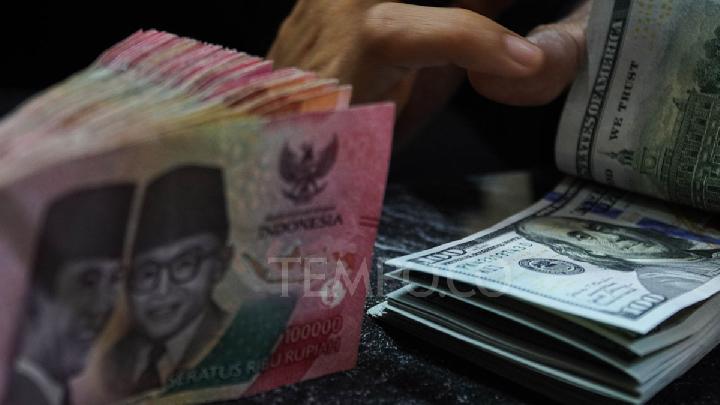
TEMPO.CO, Jakarta – The Chief Economist of Trimegah Sekuritas Indonesia, Fakhrul Fulvian, said that stabilizing rupiah exchange rates requires greater capital inflow or foreign capital inflow. The bond market is considered the most determining factor for the direction of the rupiah because it is the main gateway for foreign portfolio capital flow.
“Foreign investors have indeed begun to buy Indonesian bonds again, but in my opinion, the process is still in its early stages,” Fakhrul said in a written statement quoted on Saturday, July 4, 2026. According to him, to generate sustainable capital flows, the Indonesian bond market needs to offer attractive yield rates compared to the still high global risks.
He continued that Bank Indonesia’s (BI) tightening of liquidity management is the right foundation. For your information, BI has raised the benchmark interest rate three times to 5.75 percent.
However, Fakhrul argued that the success of this stabilization process requires policy consistency from BI and the Ministry of Finance. “The next challenge is no longer to stop the pressure on the rupiah, but to build investor confidence that the normalization process of the bond market will be consistently implemented until Indonesia once again becomes one of the main portfolio investment destinations in the region,” he said.
In the economic team report of Bank Rakyat Indonesia (BRI), foreign investors recorded a capital inflow of Rp 70.39 trillion in June 2026, as the yield of the Bank Indonesia Rupiah Securities (SRBI) increased. Meanwhile, foreign capital inflows through Government Bonds (SBN) reached Rp 21.03 trillion.
Nevertheless, the bid-to-cover ratio of SBN and SRBI in June was recorded below the 2025 historical average. The bid-to-cover of SBN was recorded at 1.82 times, lower than in 2025, which was 3.19 times. Meanwhile, the bid-to-cover of SRBI was recorded at 1.98 times, lower than the 2025 average of 2.80 times. “The simultaneous decrease in bid-to-cover for SBN and SRBI indicates limited aggregate demand from investors for domestic financial assets, ” wrote BRI economists in their study quoted on Saturday, July 4, 2026.
Read: What’s Next for Indonesia’s Financial Markets in H2 2026?
Click here to get the latest news updates from Tempo on Google News