
Published on
July 4, 2026

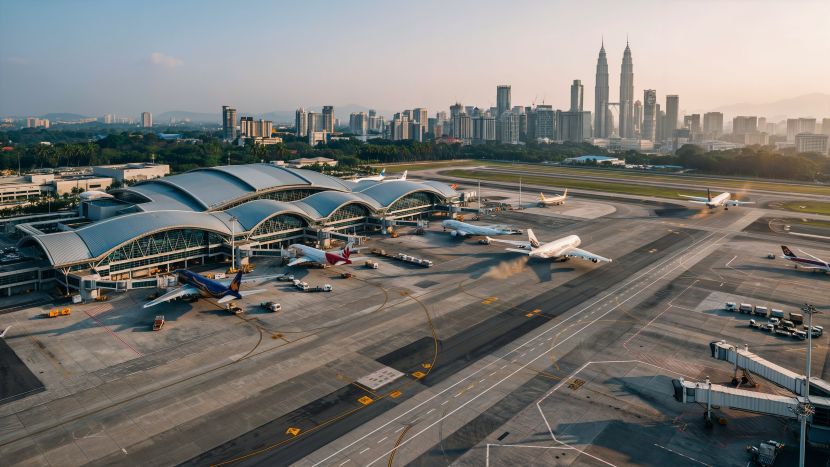
Image generated with Ai
Seamless global mobility is increasingly being shaped through major aviation gateways where transit efficiency and network depth are prioritised. In this context, Kuala Lumpur has been positioned as a significant connector within international travel flows, where seamless connections are enabled across multiple onward routes. A structured travel experience has been associated with the city’s aviation framework, allowing passengers to be transferred efficiently between arriving and departing services without unnecessary disruption or delay in the overall journey chain.
Through this operational design, beyond travel connectivity has been strengthened, and a wider spectrum of destinations has been made accessible via a single transit point. The concept of travel hub integration has been reinforced, where passenger movement is streamlined through coordinated scheduling and airport facilitation systems. As a result, Kuala Lumpur transit experience has been increasingly positioned within global travel networks as a reliable and strategically structured interchange point, enabling extended journey planning with reduced complexity and improved flow across regions.
Kuala Lumpur Positioned as a Strategic Global Aviation Gateway
A significant role within international aviation networks has been attributed to Kuala Lumpur, where geographical advantage and infrastructural capacity have been combined to support long-haul and regional travel coordination. The city has been positioned between major global corridors, allowing efficient redistribution of passenger traffic across Asia-Pacific routes and beyond.
Within this structure, aviation operations have been developed in a manner where high-volume passenger movement is managed through consolidated terminal systems. A consistent flow of international arrivals and departures has been facilitated, ensuring that onward journeys are not only available but also systematically organised. Through this positioning, the city has been increasingly recognised as a key node within global aviation architecture, where transit efficiency is prioritised alongside connectivity expansion.
Advertisement
Advertisement
The strategic role of the airport infrastructure has been strengthened through continuous operational enhancements, allowing passenger transfers to be completed within structured timeframes. As global demand for multi-destination travel continues to grow, Kuala Lumpur has been integrated further into airline routing strategies that prioritise efficiency, network expansion, and intercontinental accessibility.
Expansion of Onward Travel Opportunities Through Kuala Lumpur
A wide range of onward travel opportunities has been made accessible through Kuala Lumpur’s expanding connectivity framework. The concept of beyond travel access has been strengthened, where passengers arriving into the hub are provided with multiple routing options to various international destinations.
Advertisement
Advertisement
This expansion has been driven by increased integration between regional and intercontinental carriers, enabling broader network alignment. As a result, multi-destination itineraries have been facilitated with greater flexibility, allowing passengers to extend their journeys across continents with improved scheduling compatibility.
The availability of diverse onward routes has also supported tourism development, business travel growth, and international exchange. Through this structure, Kuala Lumpur has been positioned not only as a transit point but also as a connector of economic and cultural travel flows.
Additionally, airline network planning has been adapted to support increased connectivity density, ensuring that onward travel routes are efficiently distributed across multiple regions. This has contributed to enhanced accessibility for passengers seeking flexible travel pathways through a single hub.
Global Connectivity Impact Through Kuala Lumpur’s Aviation Network
The influence of Kuala Lumpur within global aviation networks has been expanded through its role as a connector between major international regions. A higher level of global connectivity integration has been achieved, where travel routes have been structured to support efficient intercontinental movement.
Through this framework, passenger access to multiple destinations has been improved, enabling more efficient travel planning and reduced routing complexity. The hub has been increasingly incorporated into global airline strategies that prioritise network reach and operational efficiency.
Furthermore, the connectivity model has supported broader economic and tourism-related outcomes, where improved accessibility has contributed to increased travel demand and international mobility. The role of transit hubs such as Kuala Lumpur has therefore been reinforced within the wider aviation ecosystem.
Advertisement
Advertisement
As global travel continues to evolve, the importance of structured connectivity points has been further highlighted. Kuala Lumpur has been positioned within this system as a key facilitator of movement, enabling passengers to transition across regions with greater efficiency and reliability.
Conclusion
A structured and highly integrated aviation framework has been established around Kuala Lumpur, where seamless connections, travel hub efficiency, and beyond connectivity access have been collectively strengthened. Through coordinated transit systems, enhanced infrastructure, and expanded routing networks, the city has been positioned as a central point within global travel movement.
The overall travel experience has been shaped by operational precision and system-wide integration, ensuring that passenger journeys are maintained with continuity and reduced complexity. As international mobility continues to expand, Kuala Lumpur’s role as a connector within global aviation networks is expected to remain increasingly significant.
[Source:- Borneo Post]
Advertisement
Advertisement
