
Published on
July 1, 2026

Image generated with Ai
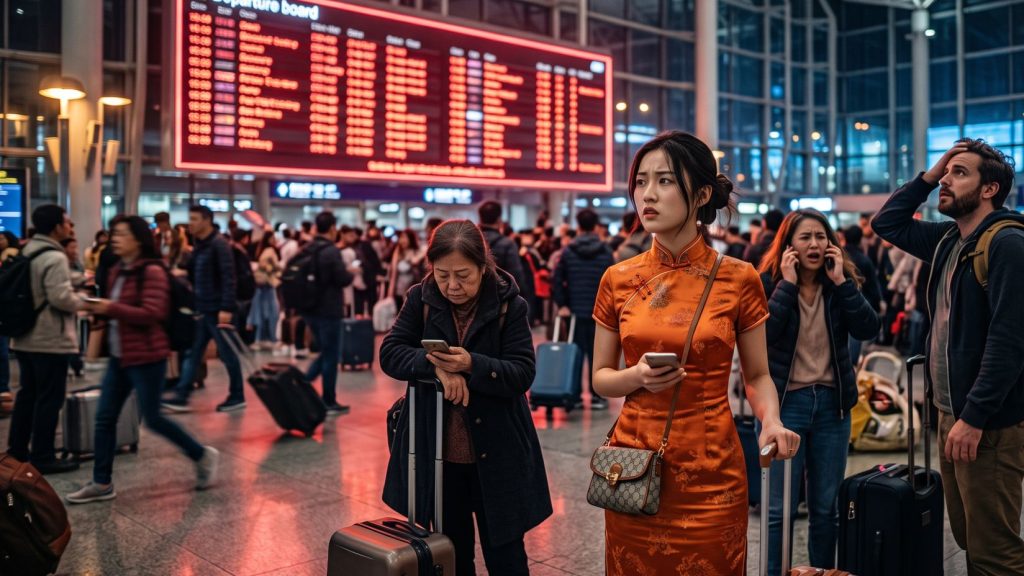
A massive wave of flight disruptions was experienced across China on 30th June, 2026, as major aviation hubs in Beijing, Changsha, Shanghai, Shenzhen, Chongqing, Dalian, Guangzhou, Guilin and Haikou struggled with a combined total of 3,438 delayed services and 123 complete cancellations. The operational crisis sent ripples through the commercial aviation sector, directly impacting premier scheduled carriers including Air China, China Eastern Airlines, XiamenAir, Hainan Airlines and several other regional operators. Millions of itineraries were thrown into disarray as key routes linking critical economic and tourist hubs were severely bottlenecked. Aviation networks throughout China are highly integrated, meaning that a disruption at a major gateway like Beijing or Shanghai invariably causes a cascading logistical backlog across the country. In this particular instance, both domestic trunks and international connection corridors faced extensive queuing, leaving aircraft out of position and flight crews displaced. The scale of yesterday’s operational slowdown highlights the ongoing vulnerabilities faced by massive transit networks when bottlenecks occur at foundational travel hubs.
The operational gridlock was distributed across several key gateways throughout China, with varying degrees of severity reported at each individual airfield. The specific data recorded from yesterday’s flight logs illustrates the extensive scope of the disruptions:
- Beijing Capital International Airport: As one of the primary national gateways in China, this critical facility in Beijing recorded a significant operational deficit, culminating in 28 total cancellations and 437 flight delays.
- Beijing Daxing International Airport: The secondary mega-hub serving Beijing also faced substantial scheduling friction, with 15 total cancellations and 389 delayed services documented by the end of the operating day.
- Changsha Huanghua International Airport: Serving as a crucial transit artery for Hunan province, the airfield in Changsha managed to limit total cancellations to 6, though a noteworthy 155 delays were still logged.
- Shanghai Pudong International Airport: As a primary global shipping and passenger mega-hub in Shanghai, this coastal gateway was heavily impacted, witnessing 23 total cancellations alongside an immense backlog of 651 delayed flights.
- Shenzhen Bao’an International Airport: Located in the southern economic tech corridor of Shenzhen, this high-volume airport suffered 6 total cancellations, whilst an exceptionally high volume of 519 delays frustrated business travellers.
- Chongqing Jiangbei International Airport: The aviation gateway for the massive municipality of Chongqing experienced notable logistical strain, finishing the day with 8 total cancellations and 299 flights running behind schedule.
- Dalian Zhoushuizi International Airport: Situated in the northeastern coastal region, the airport in Dalian recorded 7 total cancellations yesterday, with an additional 110 services failing to meet their scheduled departure times.
- Guangzhou Baiyun International Airport: Ranking as the most heavily delayed facility in China yesterday, this massive hub in Guangzhou reported 11 total cancellations and a staggering 716 flight delays, severely testing terminal capacity.
- Guilin Liangjiang International Airport: Located in the scenic tourism region of Guilin, this regional airport saw 8 total cancellations yesterday, though it managed the lowest delay tally of the affected group with 51 delayed services.
- Haikou Meilan International Airport: The gateway to the southern island province via Haikou was also caught up in the systemic network drag, reporting 11 total cancellations and 111 delayed flights.
When widespread cancellations and delays strike prominent markets across China, the broader travel and hospitality sectors are inevitably forced to absorb the economic aftershocks. Destinations ranging from the political heart of Beijing to the coastal commerce zones of Shanghai and Shenzhen rely heavily on the clockwork precision of commercial airlines. When 3,438 services are delayed in a single day, thousands of missed hotel bookings, truncated tour itineraries and cancelled business conventions are experienced by industry stakeholders.
Furthermore, leisure travel hotbeds such as Guilin, Changsha, Dalian, Haikou, Chongqing and Guangzhou are highly dependent on seamless domestic and international transfers. A breakdown in passenger confidence can often lead to a short-term reduction in forward bookings, as travellers weigh the risk of being stranded. When premium airlines like Air China, China Eastern, XiamenAir and Hainan Airlines suffer concurrent system-wide disruptions, the perceived reliability of the entire regional transport grid is temporarily diminished, forcing tourism boards to work twice as hard to restore consumer trust.
How can flight status updates be obtained quickly during widespread network delays in China? Passengers are strongly advised to monitor official digital channels rather than relying solely on airport departure boards. Real-time updates are regularly published via the official smartphone applications and WeChat mini-programs of the respective airlines, whether travelling with Air China, China Eastern, XiamenAir, or Hainan Airlines.
What entitlements are provided if a flight is cancelled or delayed? Under standard aviation consumer frameworks in China, when flights are cancelled or delayed, passengers are entitled to alternative rebooking options or full refunds for the unutilised portions of their tickets. Depending on the duration of the delay and the underlying cause, duty-of-care provisions—such as complimentary meals, refreshments and hotel accommodation for overnight disruptions—must be arranged by the operating carrier.
Advertisement
Advertisement
Can a ticket be rebooked on a different airline if one carrier is completely bottlenecked? Yes, interline agreements often exist between major domestic airlines. If a service is cancelled in major cities like Beijing, Shanghai, or Guangzhou, customer service agents can sometimes transfer the booking to a cooperating airline to expedite the journey, provided seat inventory is available.
Is travel insurance capable of covering out-of-pocket expenses during a systemic delay? Independent travel insurance policies frequently offer missed-connection and travel-delay benefits. If additional expenses for food, lodging, or alternative transport are incurred while stranded in hubs like Shenzhen, Chongqing, Dalian, Changsha, Guilin, or Haikou, all receipts should be meticulously retained to support a formal insurance claim post-travel.
Advertisement
Advertisement
-The flight information is based on data sourced directly from FlightAware. Please note that airlines frequently adjust schedules and routes to prioritize operational safety. In the event of a change, passengers should remain calm and explore alternative flight options. To ensure a smooth journey, it is highly recommended to monitor real-time flight status, understand your carrier’s rebooking policies and maintain a flexible itinerary.

Advertisement
Advertisement
