
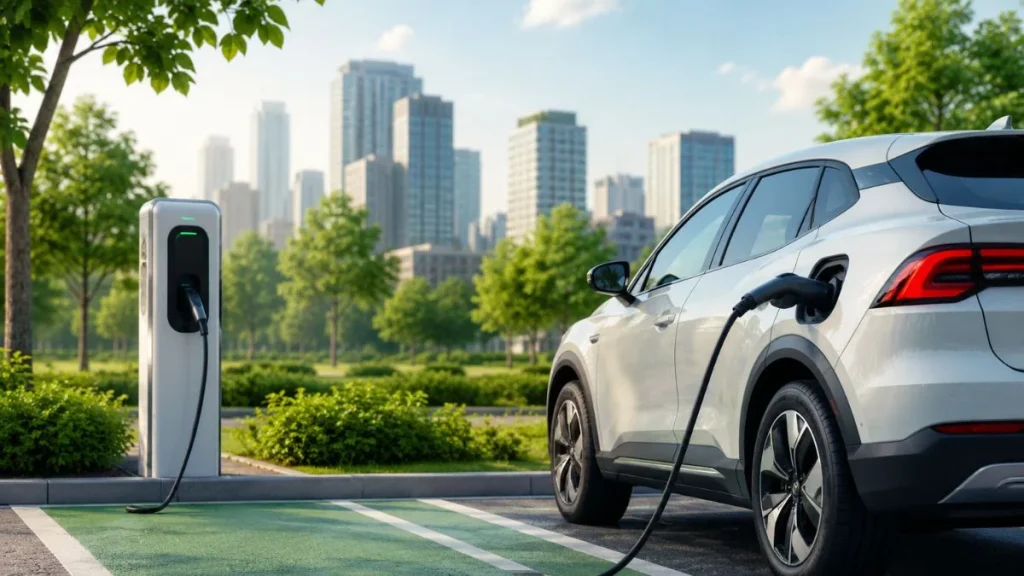
The Delhi government has approved its new Electric Vehicle (EV) Policy with a Rs 15,000 crore budget. The policy is expected to come into effect from July 1, 2026, and will remain valid until March 31, 2030.
The new policy aims to increase the adoption of electric vehicles, reduce pollution and improve charging infrastructure across the city. It also introduces purchase incentives, scrapping benefits and a timeline for shifting several vehicle categories to electric mobility.
Here’s everything you need to know.
Purchase Incentives For EV Buyers
The Delhi government will offer financial incentives to encourage people to switch to electric vehicles.
Buyers of electric two-wheelers will receive Rs 30,000 in the first year, Rs 20,000 in the second year and Rs 10,000 in the third year of the policy.
For electric three-wheelers, the incentive will be Rs 50,000 in the first year, Rs 40,000 in the second year and Rs 30,000 in the third year.
Those purchasing N1 electric commercial trucks will receive a Rs 1 lakh subsidy during the first year.
Also Read: New Toyota Hilux To Launch With Major Updates
Scrapping Benefits For Old Vehicles
The policy also rewards owners who replace older vehicles with electric ones.
Owners scrapping BS-IV or older two-wheelers will receive Rs 10,000, while three-wheeler owners will get Rs 25,000. Owners of N1 commercial trucks will be eligible for Rs 50,000.
A Rs 1 lakh scrapping incentive has also been announced for owners of BS-IV or older four-wheelers who buy a new electric vehicle.
Gramin Seva vehicle owners will receive a Rs 15,000 scrapping incentive.
EV-Only Registration Timeline
The government has announced a phased plan for EV-only registrations in selected vehicle categories.
From January 1, 2027, only electric three-wheelers and N1 commercial trucks will be allowed to register in Delhi.
The deadline for new two-wheelers has been set for April 1, 2028, after which only electric two-wheelers will be registered.
School bus operators will also have to convert at least 10% of their fleet to electric vehicles within two years of the policy coming into effect.
32,000 Charging Points Planned
To support the growing number of EVs, the Delhi government plans to install 32,000 public charging points over the next four years.
The project will be funded through the PM e-Drive scheme along with support from the Delhi government’s budget.
The government will also introduce a dedicated online portal where buyers can apply for EV-related incentives.
No Subsidy For Hybrid Vehicles
The new policy makes it clear that hybrid vehicles will not receive any subsidy. The financial benefits announced under the policy will be available only for fully electric vehicles.
Also Read: 2026 Maruti Brezza Facelift – 5 Big Changes Expected
Focus On Reducing Pollution
According to the Delhi government, commercial goods vehicles, two-wheelers and three-wheelers account for a significant share of the city’s pollution. The new EV policy mainly focuses on replacing these vehicle categories with electric alternatives over the coming years.
With financial incentives, better charging infrastructure and clear registration deadlines, the government hopes to speed up the transition to electric mobility in the national capital.