
Close Menu
Simply Invest Asia
  • Home
  • About us
  • Explore industries/sectors
    • Automobile
    • Aviation
    • Banking
    • Biotechnology
    • Chemical & Fertilizer
    • Entertainment and Media
    • Food Processing
    • Healthcare
    • Iron and Steel
    • Leather
    • Mining
    • Oil and Gas
    • Pharmaceutical
  • Explore by countries
    • China
    • Dubai / UAE
    • Hong Kong
    • India
    • Indonesia
    • Japan
    • Malaysia
  • Explore cities
    • Bangkok
    • Beijing
    • Chongqing
    • Delhi
    • Dubai
    • Guangzhou
    • Jakarta
    • Kuala Lumpur
  • Why Asia
Facebook X (Twitter) Instagram Threads
Trending:
  • Volkswagen Golf R MK8.5 launched in Malaysia – CKD 333 hp hot hatch, RM356k with VAP
  • China has no jurisdiction over Taiwan waters, official says amid EEZ row
  • Expat Families Return to UAE as US-Iran Interim Peace Deal Restores Regional Calm and Confidence
  • HK kicks off Dragon Boat Festival weekend with races, tourism boost
  • Novo Nordisk’s dilemmas and that fine line between science and marketing
  • om Dee Noodles: Egg Noodles and Crispy Pork in Bangkok
  • UK Proposes Basel Trading Rule Adjustments, Confirms 2028 Start
  • eGenesis to Participate at BIO International Convention 2026 Panel on the Future of Xenotransplantation
  • Radial Entertainment and Woodcut Media Team for New True Crime Series ‘World’s Most Evil Women’
  • India pacer added to squad for third ODI against Afghanistan
  • UAE’s Altérra enters Latin America with Peru investment
  • China Sees Inbound Tourism Surge as Dragon Boat Festival Drives More Than Six Hundred Percent Growth in Overseas Bookings Across Guangzhou and Foshan—Here’s Why Global Travellers Are Taking Notice
  • Beyond the outbreak: Child protection strengthened in Delhi’s Kailash Nagar
  • Hong Kong pushes Beijing’s bay area dream as it advances first 5-year plan
  • Why Law Enforcement Matters for Indonesia’s Economic Stability
  • Greater Bay Airlines Plans Chongqing Sep 2026 Launch — AeroRoutes
  • Drones Manna Air Delivery bags SAIL III Operational Authorisation from UK Civil Aviation Authority — Retail Technology Innovation Hub
  • Has China’s 618 shopping festival fallen out of fashion?
Friday, June 19
Facebook X (Twitter) Instagram
Simply Invest Asia
  • Home
  • About us
  • Explore industries/sectors
    • Automobile
    • Aviation
    • Banking
    • Biotechnology
    • Chemical & Fertilizer
    • Entertainment and Media
    • Food Processing
    • Healthcare
    • Iron and Steel
    • Leather
    • Mining
    • Oil and Gas
    • Pharmaceutical
  • Explore by countries
    • China
    • Dubai / UAE
    • Hong Kong
    • India
    • Indonesia
    • Japan
    • Malaysia
  • Explore cities
    • Bangkok
    • Beijing
    • Chongqing
    • Delhi
    • Dubai
    • Guangzhou
    • Jakarta
    • Kuala Lumpur
  • Why Asia
Simply Invest Asia
Home»Explore by countries»China»China’s climate toolkit in search of a strategy
China

China’s climate toolkit in search of a strategy

By IslaJune 15, 20265 Mins Read
Share
Facebook Twitter Pinterest Threads Bluesky Copy Link


China’s April 2026 emissions assessment measures carry the weight of Beijing’s highest institutional authority, giving new force to its carbon neutrality agenda. By allocating targets across ministries and provinces, and strengthening reporting and accounting requirements, Beijing has made its goals binding and auditable. But China’s role in international climate governance depends on more than its domestic policy commitments.

China’s role in global climate politics is shaped by three structural features — its consistently held climate position, its dominance across renewable energy supply chains and its status as the world’s largest commodity importer. The question is why Beijing has not yet consolidated these advantages into a coherent external strategy.

China’s climate position has remained consistent even as other countries have wavered. The contrast with an unpredictable United States — and with advanced economies still struggling to translate net-zero pledges into enforceable policy — is by now familiar. China’s April 2026 measures harden that position domestically, departing from earlier carbon policy.

The measures change the object of control from energy consumption to carbon emissions themselves and, for the first time, include absolute provincial emissions targets in the assessment framework. The requirements are elevated to Party regulation, making provincial Party and government leaders accountable for delivery. The measures also change how targets are set. Instead of being allocated top-down, provinces now propose their own targets, subject to central review, to reconcile national consistency with local conditions.

None of this is cost-free. The new assessment framework creates fresh reporting and statistical challenges. But in a field long defined by the gap between ambition and implementation, Beijing’s move towards hard and auditable institutional targets deserves more credit than it typically receives.

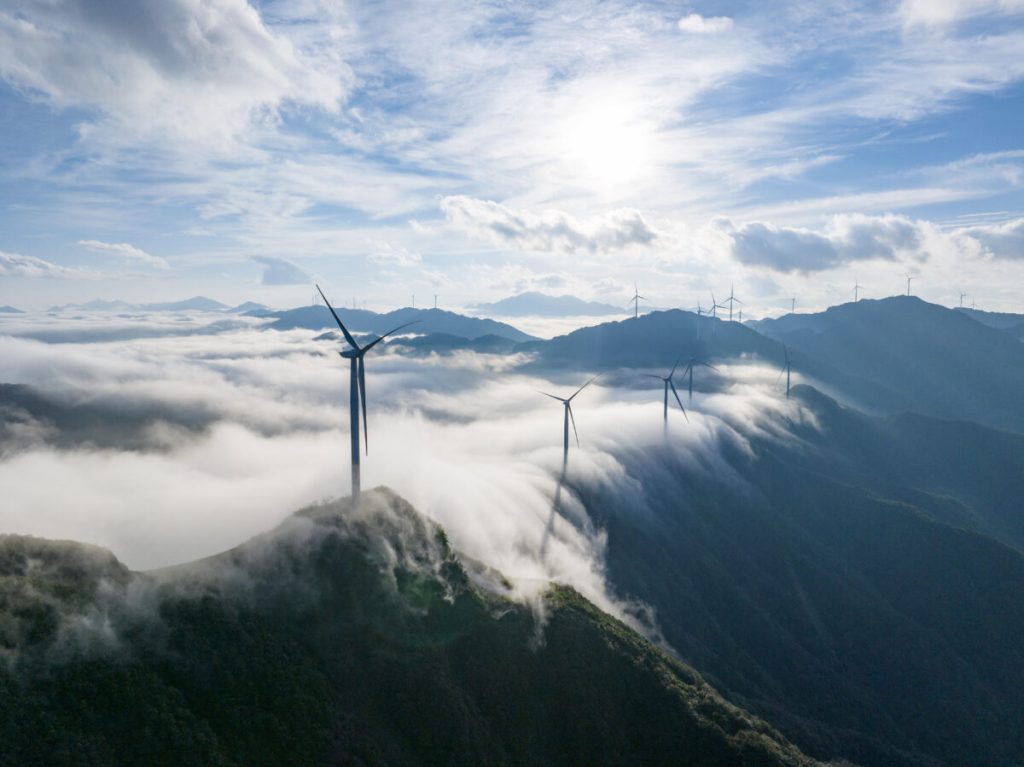
Beyond its policy commitments, China’s structural position in the global economy generates two further forms of climate influence. The first comes from its dominance in renewable energy supply chains, from solar panels, wind turbines and batteries to electric vehicles. Countries moving away from fossil fuels need equipment, and China is the most competitive supplier. Given the scale at which Chinese renewable technology is now being deployed globally, the specifications, technical parameters and standards embedded in that equipment are gradually shaping what may become de facto industry benchmarks.

This standard-setting dynamic is particularly visible in ASEAN. Chinese equipment and capital are embedded in key segments of the region’s energy infrastructure, from transmission grids to hydropower and wind, even as Japan and South Korea remain active investors.

If China moves towards a regional low-carbon architecture, the path of least resistance for ASEAN partners will be to make future projects compatible with the Chinese-built systems already in place. This is the ordinary consequence of first-mover infrastructure provision. China’s response to anxieties about supply chain concentration, such as BYD’s pledge to localise production in Indonesia, is to embed its technology deeper into partner economies through local manufacturing, deflecting protectionist pressure while consolidating its presence.

China’s position as the world’s largest importer and processor of bulk commodities generates an additional, less appreciated form of climate influence. The mechanism resembles the leverage the European Union has begun to exercise through the Carbon Border Adjustment Mechanism, where the import choices of a sufficiently large buyer have reshaped the production incentives of suppliers. Australian mining companies are already reconfiguring operations in anticipation of Chinese demand for lower-emissions iron ore and steel inputs. If Chinese steelmakers face tighter emissions constraints under the April 2026 assessment framework, the cost advantage of green inputs will rise and upstream suppliers will adjust accordingly.

Yet possessing these tools is not the same as wielding them. China’s clean-technology exports increasingly meet political and economic resistance, from the European Union’s tariffs on Chinese electric vehicles to the local content requirements of the United States’ Inflation Reduction Act. This resistance is reinforced by a Western ‘overcapacity’ narrative that, fairly or not, erodes the moral authority on which conventional climate leadership rests.

China’s future economic trajectory increases this friction. As its economy shifts from high-speed to high-quality growth, the fiscal room for climate finance narrows, even as the same transition pushes China to lean more heavily on clean-technology exports to sustain growth. The more it needs to expand outward, the stronger the protectionist reaction it provokes.

Together, these features give China a set of tools for climate governance that no other single actor holds. This is not to say that China’s industrial and market power will replace the West’s moral leadership and political coalitions. China’s own constraints, from a slowing growth model to the resistance its exports provoke, set limits on how far this influence can run.

But the basis of China’s influence is increasingly multi-dimensional. China now has the capacity to shape what other states can build, what equipment they use and which standards they adopt. What Beijing has not yet done is convert this latent capacity into a deliberate strategy by treating its weight in supply chains, its purchasing power and its policy credibility as instruments of a single climate posture.

Whether Beijing chooses to assemble these tools into such a strategy may prove among the most consequential questions in international climate politics — not least because, with conventional leadership in retreat, the space it would be stepping into is unlikely to stay empty for long.

Patrick Xue is Research Scholar at the East Asian Bureau of Economic Research in the Crawford School of Public Policy, The Australian National University.


Source link

Related Posts

China has no jurisdiction over Taiwan waters, official says amid EEZ row

June 19, 2026

Has China’s 618 shopping festival fallen out of fashion?

June 19, 2026

120-million-year-old feathered dinosaur discovered in China

June 19, 2026
Add A Comment
Leave A Reply Cancel Reply

Top Posts

Chinese Wall may stem India tech flows for electronics and automobile

June 1, 2026

Abandoned malls, whispers of nuclear war and young foreigners detained. This is what’s REALLY going on in Dubai… and the chilling warning one taxi driver gave to the Mail’s IAN BIRRELL

April 11, 2026

China Scraps 12,000 Degrees in Biggest Academic Overhaul in Years

June 14, 2026
Don't Miss

Volkswagen Golf R MK8.5 launched in Malaysia – CKD 333 hp hot hatch, RM356k with VAP

By IslaJune 19, 2026

Volkswagen Passenger Cars Malaysia (VPCM) has launched the locally assembled (CKD) Volkswagen Golf R MK8.5,…

China has no jurisdiction over Taiwan waters, official says amid EEZ row

June 19, 2026

Expat Families Return to UAE as US-Iran Interim Peace Deal Restores Regional Calm and Confidence

June 19, 2026

HK kicks off Dragon Boat Festival weekend with races, tourism boost

June 19, 2026
SUBSCRIBE TO OUR NEWSLETTER

Get our latest downloads and information first. Complete the form below to subscribe to our weekly newsletter.


I consent to being contacted via telephone and/or email and I consent to my data being stored in accordance with European GDPR regulations and agree to the terms of use and privacy policy.

Stay In Touch
  • Facebook
  • YouTube
  • TikTok
  • WhatsApp
  • Twitter
  • Instagram
Top Trending

Beyond the outbreak: Child protection strengthened in Delhi’s Kailash Nagar

By IslaJune 19, 2026

Hong Kong pushes Beijing’s bay area dream as it advances first 5-year plan

By IslaJune 19, 2026

Why Law Enforcement Matters for Indonesia’s Economic Stability

By IslaJune 19, 2026
Most Popular

Citigroup (C) Completes Poland Exit And Picks New Asia Pacific Banking Head

June 17, 2026

Why the UK-Indonesia Deal is a High-Value Win for B2B logistics

June 1, 2026

Great Wall of China: Ultimate 2026 Travel Guide

April 29, 2026
Our Picks

“Golden age” touted for UAE food security

April 27, 2026

India’s pharma export engine faces a logistics stress test

June 7, 2026

Two Indian-flagged tankers fired upon in Strait of Hormuz as Iran asserts control over waterway

April 18, 2026
SUBSCRIBE TO OUR NEWSLETTER

Get our latest downloads and information first. Complete the form below to subscribe to our weekly newsletter.


I consent to being contacted via telephone and/or email and I consent to my data being stored in accordance with European GDPR regulations and agree to the terms of use and privacy policy.

© 2026 Simply Invest Asia.
  • Get In Touch
  • Cookie Policy
  • Privacy policy
  • Terms & Conditions

Type above and press Enter to search. Press Esc to cancel.

SUBSCRIBE TO OUR NEWSLETTER

Get our latest downloads and information first.

Complete the form below to subscribe to our weekly newsletter.


I consent to being contacted via telephone and/or email and I consent to my data being stored in accordance with European GDPR regulations and agree to the terms of use and privacy policy.