
Subscribe to our FREE Newsletter, or Telegram and WhatsApp channels for the latest stories and updates.
Malaysia’s Muslim restaurant owners say they have run out of options.
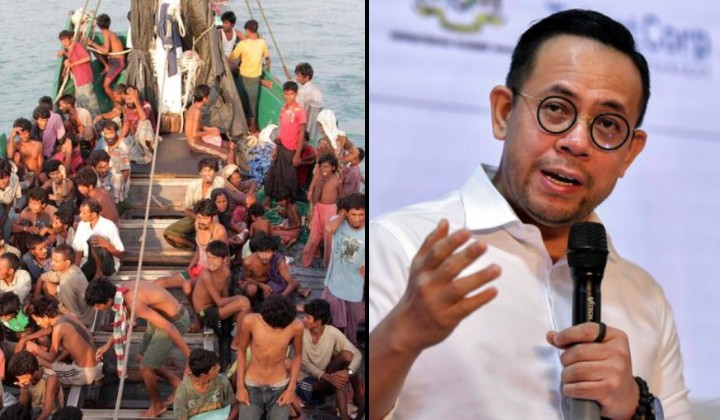
After finding little local interest through official Labour Department channels, Presma proposed hiring Rohingya refugees — a suggestion the association had already raised in late January — but Human Resources Minister Steven Sim deflected again, citing unspecified laws and policies without indicating whether any changes were being considered.
Muslim Restaurant Owners Association Malaysia (Presma) president Datuk Jawahir Ali Taib Khan said the lack of local interest left them with no choice but to appeal to the government for permission to recruit foreign labour — potentially including members of the stateless refugee community already living in Malaysia.
The restaurant sector is currently short of 25,000 workers.
The shortage traces back to November 2024, when Home Minister Datuk Seri Saifuddin Nasution Ismail announced a halt on hiring foreign workers — a freeze that was extended into the first quarter of 2025.
With local hiring yielding little and the freeze limiting foreign worker intake, Presma’s proposal landed in the lap of Human Resources Minister Steven Sim on Sunday.
Presma oversees and advocates for more than 12,000 mamak and nasi kandar outlets.
Compliant with what, exactly?
Sim’s response was measured.
“They can give suggestions, but we need to look at the suitability,” Sim told reporters in Puchong, adding that any proposal must comply with the country’s existing laws and policies.
He did not specify which laws would apply, or whether the government was considering any policy changes that could make such hiring legally possible.
Rohingya refugees in Malaysia currently have no legal right to work.
Independent advocacy groups estimate the total population (including unregistered individuals) seeking refuge in the country to be between 180,000 and 200,000.
For now, 25,000 restaurant jobs remain unfilled — and the industry’s proposed solution remains unanswered.
A Crisis Without A Framework
The proposal sits against a backdrop of deeper institutional failure.
Malaysia has never had a formal refugee management mechanism despite the crisis stretching back to the late 1970s, leaving the government dependent on United Nations High Commissioner for Refugees (UNHCR)-issued cards as its primary identification system — a gap that has since been exploited by syndicates producing counterfeit documents.
“We are the ones at fault; we were negligent,” said Universiti Kebangsaan Malaysia (UKM) international law professor Dr Salawati Mat Basir.
She argues that local authorities lack full access to UNHCR cardholder biometrics, making real-time identity verification during enforcement operations effectively impossible.
On the question of allowing refugees to work legally, Dr Salawati said the idea is not new, but warned it must come with strict controls to avoid worse downstream consequences.
What is needed, she said, is not cosmetic committees or rhetorical statements, but a clear refugee policy framework, rigid law enforcement, and coordinated resettlement efforts with UNHCR and third countries.
@romddullah The question is not why Rohingya are in Malaysia. The question is why Rohingya still cannot return home safely with rights, dignity, and citizenship. Watch until the end. #Rohingya #Malaysia #RefugeeCrisis #HumanRights #EndStatelessness ♬ original sound – Mohammed Dullah
READ MORE: Malaysia’s Anti-Rohingya Petition Surges, Now Civil Society Groups Are Pushing Back
READ MORE: Don’t Blame the People, Fix The System: MCA Man Urges Calm Amid Rohingya Tensions
READ MORE: Rohingya Families Leave Malaysia For USA So Their Kids Can Study
Share your thoughts with us via TRP’s Facebook, Twitter, Instagram, or Threads.