
Want to catch’ em all? You might have to perform biometric identity verification first.
A notice posted by the Pokémon Trading Card Game (TCG) says it is considering introducing an identity verification system using My Number system, Japan’s individual ID card associated with a unique 12-digit national identification number, in order to curb scalping.
Identity verification measures to be introduced will cover presale priority lotteries and sales of select TCG products on the Pokémon Center’s official online merchandise store, as well as participation in official tournaments held in Japan.
It says it plans to “use an external service to read the IC chip on your My Number Card with your smartphone and authenticate your Players Club account. During authentication, we will verify your identity using the ‘User Authentication Electronic Certificate’ and ‘Card Surface Information Input Assistance’ embedded in the card.” The My Number itself will not be stored.
The post does not specify which “external service” the Pokémon Company intends to engage.
That Squirtle’s going to cost you
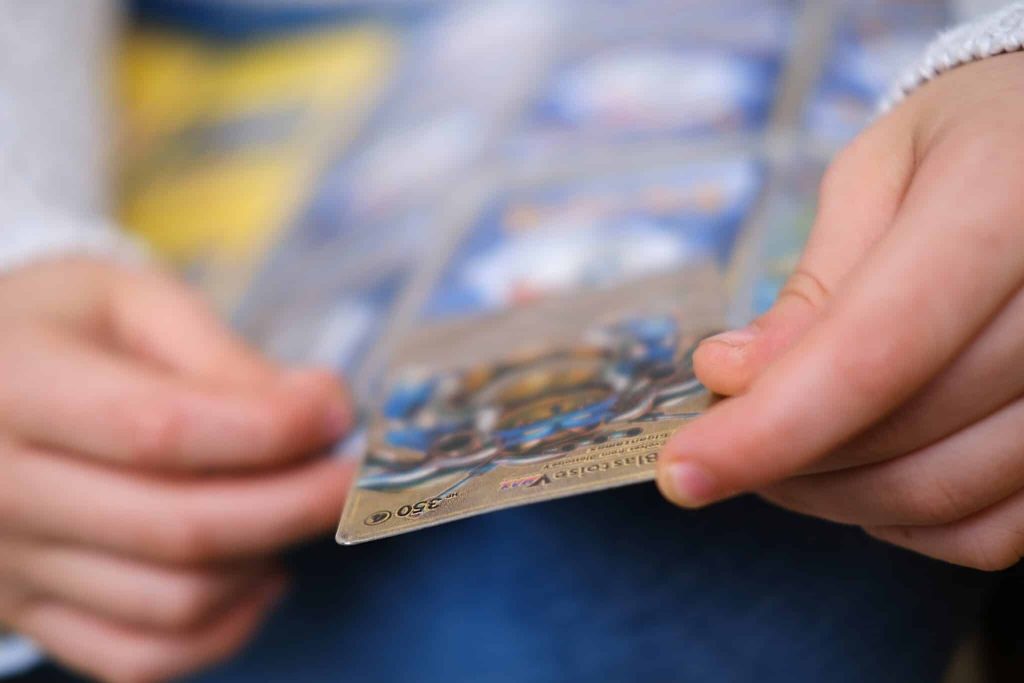
Pokémon cards – game cards featuring lightning-tailed butterball Pikachu and his cohort of cartoon monsters – are valuable collectibles that can fetch more than twice their retail value in resale markets. As in the ticket business, artificial scarcity has led to high resale value – which has led to scalping. Demand from scalpers has prompted confrontations and disruptions at stores and vending machine locations, as collectors empty shelves and wait to pounce on the latest card drop and flip the merchandise for twice the price.
Per a CBC report on the phenomenon from 2025, TCG series 1’s “most coveted card is easily the now-iconic Charizard, which now sells for thousands of dollars on the resale market.” Charizard is a pudgy orange dragon with turquoise wings and a tail tufted in flame.
The problem has gotten worse since the 20230 pandemic lockdowns, which saw a huge uptick in Pokémon TCG popularity, and the subsequent release of the Pokémon Prismatic Evolutions Booster Bundles card sets. And it extends across the TCG fandom, from Japan to the UK to Africa.
For many players globally, rampant scalping is threatening to ruin the game they love. Comments on the game’s community forum complain that “it’s to the point that unless the TCG is your only spend, a normal person can’t really afford to participate,” and suggest that “TCG fandom is looking grim for long term and new fans.”
Others describe violent and uncomfortable confrontations. “Is this why there are always 3-4 sketchy looking people hanging around in the lobby of any grocery store I go to nowadays?” asks one poster on the Video Game Sage forum. “Do they fight to the death whenever the machine is refilled?”
Another has the answer: “I was in the Safeway by me that has a Pokémon vending machine thing today and one of the workers was saying yesterday that a minor was assaulted by some dude because the minor bought the last booster pack or something, and the cops had to be called.”
August 2026 set as ballpark IDV launch date
A report from CNN says that, between March 2024 and 2025, the value of the TCG market has grown by over 145 percent, with buyers spending as much as $450 million on cards in a month.
The Pokémon Company is targeting a launch date of August 2026 for its identity verification measures. Per its notice, it will announce the “specific implementation date, target products and events, authentication methods, and age-based operational rules as soon as the details are finalized.”
Japan’s My Number card has been available since 2016, but uptake has been slow. Asahi News reports that Japan’s ruling LDP party is considering pushing for it to be made a legal requirement.”
Article Topics
biometrics | digital ID | identity verification | Japan | My Number