
Close Menu
Simply Invest Asia
  • Home
  • About us
  • Explore industries/sectors
    • Automobile
    • Aviation
    • Banking
    • Biotechnology
    • Chemical & Fertilizer
    • Entertainment and Media
    • Food Processing
    • Healthcare
    • Iron and Steel
    • Leather
    • Mining
    • Oil and Gas
    • Pharmaceutical
  • Explore by countries
    • China
    • Dubai / UAE
    • Hong Kong
    • India
    • Indonesia
    • Japan
    • Malaysia
  • Explore cities
    • Bangkok
    • Beijing
    • Chongqing
    • Delhi
    • Dubai
    • Guangzhou
    • Jakarta
    • Kuala Lumpur
  • Why Asia
Facebook X (Twitter) Instagram Threads
Trending:
  • Delhi CM to chair meeting on Zone O signboards amid residents’ ‘demolition’ concerns
  • Geodnet (GEOD) – StableHex Japan & Iceland
  • Carbon dioxide can selectively oxidize alkenes
  • Only 21% of UAE Workers Feel More Optimistic After Performance Reviews, Study Finds
  • Gas Malaysia in Tokyo Gas, VTTI energy partnership
  • Khazanah strengthens nation-building push as assets rise to RM156bil
  • Samudera Indonesia Launches Weekly Trade Route via Kuala Tanjung Port
  • Pressure on Jakarta to deliver firm policy guidance
  • Hong Kong police issue warning against betting on World Cup via foreign websites – IAG
  • Emirates Shipping Line Launches CSX2 Service to Boost China–India Trade and Red Sea Transshipment
  • Mountain city of Chongqing launches dazzling nightscape plan to spur tourism, boost consumption
  • Pentagon blacklists China tech firms
  • Lowndes Co. Schools opens food processing center to fight hunger
  • 7 Killed, 9 Injured After Minibus Rams Into Stationary Truck On Dubai’s Emirates Road
  • US says BYD, Baidu and Alibaba and other tech giants are aiding China’s military
  • AXA launches a new HNWI platform as Hong Kong wealth surges past Switzerland
  • Al Subhi set for Thai challenge with Port FC
  • Australia, India warm up for Women’s T20WC with wins | ICC Women’s T20 World Cup, 2026
Monday, June 8
Facebook X (Twitter) Instagram
Simply Invest Asia
  • Home
  • About us
  • Explore industries/sectors
    • Automobile
    • Aviation
    • Banking
    • Biotechnology
    • Chemical & Fertilizer
    • Entertainment and Media
    • Food Processing
    • Healthcare
    • Iron and Steel
    • Leather
    • Mining
    • Oil and Gas
    • Pharmaceutical
  • Explore by countries
    • China
    • Dubai / UAE
    • Hong Kong
    • India
    • Indonesia
    • Japan
    • Malaysia
  • Explore cities
    • Bangkok
    • Beijing
    • Chongqing
    • Delhi
    • Dubai
    • Guangzhou
    • Jakarta
    • Kuala Lumpur
  • Why Asia
Simply Invest Asia
Home»Explore by countries»Indonesia»Two decades of research shows Indonesia’s coral reefs are heat tolerant—but only up to a point
Indonesia

Two decades of research shows Indonesia’s coral reefs are heat tolerant—but only up to a point

By IslaJune 8, 20266 Mins Read
Share
Facebook Twitter Pinterest Threads Bluesky Copy Link


Two decades of research show Indonesia's coral reefs are heat tolerant—but only up to a point
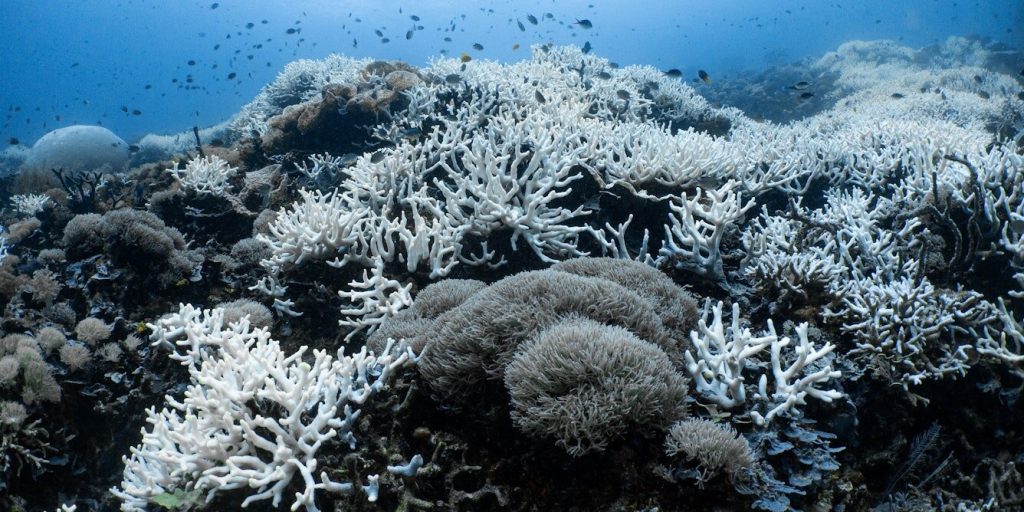
Mass coral bleaching in Raja Ampat, Indonesia, December 2024. Credit: Lauren Sparks/Indo Ocean Project

Indonesia is home to the world’s largest and most biodiverse coral reef system, spanning more than 32,000 square kilometers across the archipelago. Just like what is happening globally, these reefs are now bearing the brunt of a warming ocean.

Our new study, however, found that despite rising sea temperatures, coral cover at most of our Indonesian study sites remained remarkably stable over the long term.

Our study compiled long-term coral monitoring data from across Indonesia. Spanning from 2004 to 2023, the dataset covers 394 permanent reef sites across 32 locations. This massive effort was made possible primarily through data shared by the National Research and Innovation Agency (BRIN), Yayasan Konservasi Alam Nusantara, the Wildlife Conservation Society Indonesia Program, WWF Indonesia and Operation Wallacea.

Out of the 32 locations, 26 showed no significant overall change in hard coral cover, two actually saw an increase and four experienced a decline. Crucially, this stability persisted even as sea surface temperatures rose significantly across every single study location between 1985 and 2023, with the fastest warming occurring in eastern Indonesia.

While this is undoubtedly good news, it comes with a major warning: stability does not mean safety. Once heat stress becomes too frequent or too severe, coral loss can accelerate rapidly.

Two decades of research show Indonesia's coral reefs are heat tolerant—but only up to a point
Sea temperatures around Indonesia have been rising. Data from the study locations show clear temperature spikes in 1998, 2010 and 2016, with consistently warmer conditions since 2020. Credit: Razak et al. 2026

Even the toughest reefs have a tipping point

Much of the stability we observed is based on how reefs responded to earlier major heat events, especially those in 2010 and 2016.

Although these past events triggered bleaching and coral loss in several regions, they may not fully capture the unprecedented heat stress that reefs are now beginning to face.

Our findings, however, should not be interpreted as evidence that Indonesian reefs are safe from climate change. While many reefs have weathered past heat stress, increasingly frequent and intense warming could push these vital ecosystems past the point of recovery.

Marine heat waves are becoming increasingly frequent and intense worldwide. The National Oceanic and Atmospheric Administration (NOAA) confirmed the fourth global coral bleaching event, reporting that bleaching-level heat stress had impacted roughly 84.4% of the world’s coral reefs between January 2023 and September 2025.

Indonesia is no exception to this global trend, with bleaching incidents linked to the 2023–2025 marine heat wave documented across multiple locations, including reefs north of Jakarta, Karimunjawa in Central Java, and Raja Ampat’s Dampier Strait.

Two decades of research show Indonesia's coral reefs are heat tolerant—but only up to a point
Coral bleaching in Pieh Marine Park, Aceh, Indonesia, May 2024. Credit: Muhammad Abrar/BRIN

When we compared changes in coral cover with accumulated thermal stress, we found that coral cover remained stable under low-to-moderate heat but dropped sharply once that stress crossed a critical threshold of around 12 degree-heating weeks (DHW).

DHW is a metric that combines both how much hotter the water is than usual and how long that heat persists. Think of it as a cumulative “heat dose” for coral reefs. For instance, 12 DHW could mean 12 weeks of water temperatures sitting 1°C above the usual summer maximum—or six weeks at 2°C above it.

In our study, coral loss became significantly more likely once temperatures surpassed 12 DHW. In other words, many Indonesian reefs appear capable of absorbing moderate heat stress—but only up to a point.

It is worth noting that “stable” here refers to total live hard coral cover, the only metric consistently tracked across Indonesia’s various monitoring programs. However, coral cover alone does not tell the whole story. A reef can maintain stable overall cover even as it loses many branching corals or large, old coral colonies, becomes dominated by just a few resilient species, or suffers a loss in structural complexity.

Discover the latest in science, tech, and space with over 100,000 subscribers who rely on Phys.org for daily insights.
Sign up for our free newsletter and get updates on breakthroughs,
innovations, and research that matter—daily or weekly.

Protection cannot stop bleaching, but it can help recovery

Indonesia’s reefs do not all respond to heat stress in the same way. While some coral communities can recover quickly after bleaching, others struggle—particularly where pollution, sedimentation, destructive fishing and coastal development sap their capacity to bounce back.

Our study highlights that even reefs within marine protected areas (MPAs) cannot escape bleaching when ocean temperatures soar. Protected status cannot stop the ocean from warming, but it can significantly improve recovery prospects by alleviating local pressures.

In Aceh, reefs around Weh Island were ransacked by the 2010 bleaching event. Remarkably, some managed to rebound to pre-bleaching levels of coral cover within roughly six years, a recovery likely aided by long-term protection.

In contrast, in Lombok, particularly around Sekotong Bay, recurrent and intense heat stress has triggered substantial coral loss, including a major decline following the severe 2016 bleaching event. Compounding the problem, these reefs have also been battered by multiple localized human pressures, which have likely impeded their ability to bounce back.

These examples illustrate why climate change and local reef management cannot be treated in isolation. While reducing localized pressures will not prevent bleaching during extreme heat waves, it can give reefs a much-needed fighting chance to survive and recover in their wake.

Why long-term monitoring matters

Our study is the first national-scale analysis to link long-term changes in coral cover in Indonesia with thermal stress across such a large number of monitored reefs.

Without long-term monitoring, we cannot tell which reefs are coping with heat stress, recovering after bleaching or slowly declining.

If Indonesia is to protect its reefs effectively, it needs a stronger and more coordinated national strategy for monitoring coral condition and bleaching impacts. This framework must look beyond mere coral cover to track bleaching severity, mortality rates, recovery trajectories, juvenile recruitment, community composition and structural changes over time.

As the ocean continues to warm, the future of Indonesia’s reefs will depend not only on their natural tolerance but also on our ability to safeguard the very conditions that allow them to heal.

Provided by
The Conversation


Who’s behind this story?


Lisa Lock

Lisa Lock

BA art history, MA material culture. Former museum editor, paramedic, and transplant coordinator. Editing for Science X since 2021.

Full profile →


Andrew Zinin

Andrew Zinin

Master’s in physics with research experience. Long-time science news enthusiast. Plays key role in Science X’s editorial success.

Full profile →

This article is republished from The Conversation under a Creative Commons license. Read the original article.The Conversation

Citation:
Two decades of research shows Indonesia’s coral reefs are heat tolerant—but only up to a point (2026, June 8)
retrieved 8 June 2026
from https://phys.org/news/2026-06-decades-indonesia-coral-reefs-tolerant.html

This document is subject to copyright. Apart from any fair dealing for the purpose of private study or research, no
part may be reproduced without the written permission. The content is provided for information purposes only.


Source link

Related Posts

Samudera Indonesia Launches Weekly Trade Route via Kuala Tanjung Port

June 8, 2026

Danantara prepares low-yield rupiah bond sale amid weakening investor confidence

June 8, 2026

Indonesia weighs export rule exemptions for commodity traders

June 8, 2026
Add A Comment
Leave A Reply Cancel Reply

Top Posts

Chinese Wall may stem India tech flows for electronics and automobile

June 1, 2026

Abandoned malls, whispers of nuclear war and young foreigners detained. This is what’s REALLY going on in Dubai… and the chilling warning one taxi driver gave to the Mail’s IAN BIRRELL

April 11, 2026

Von der Leyen warned about China. Europe didn’t listen. Will it now?

June 6, 2026
Don't Miss

Delhi CM to chair meeting on Zone O signboards amid residents’ ‘demolition’ concerns

By IslaJune 8, 2026

Amid concerns among residents over the installation of fresh signboards marking Delhi’s environmentally sensitive Zone…

Geodnet (GEOD) – StableHex Japan & Iceland

June 8, 2026

Carbon dioxide can selectively oxidize alkenes

June 8, 2026

Only 21% of UAE Workers Feel More Optimistic After Performance Reviews, Study Finds

June 8, 2026
SUBSCRIBE TO OUR NEWSLETTER

Get our latest downloads and information first. Complete the form below to subscribe to our weekly newsletter.


I consent to being contacted via telephone and/or email and I consent to my data being stored in accordance with European GDPR regulations and agree to the terms of use and privacy policy.

Stay In Touch
  • Facebook
  • YouTube
  • TikTok
  • WhatsApp
  • Twitter
  • Instagram
Top Trending

Lowndes Co. Schools opens food processing center to fight hunger

By IslaJune 8, 2026

7 Killed, 9 Injured After Minibus Rams Into Stationary Truck On Dubai’s Emirates Road

By IslaJune 8, 2026

US says BYD, Baidu and Alibaba and other tech giants are aiding China’s military

By IslaJune 8, 2026
Most Popular

Farm Bill moves ahead without pesticide provider protections

May 2, 2026

K3 Corruption Accused Admits Bribe Funds Used by Ida Fauziah Nyaleg

May 7, 2026

bolttech appoints new General Manager

April 23, 2026
Our Picks

Celebrating 40 years of the Hongkong and Shanghai Bank Headquarters

April 20, 2026

Chinese companies are increasingly taking on foreign governments. It’s not just the Port of Darwin

May 4, 2026

German state eyes deeper China cooperation in energy, innovation: state minister president-Xinhua

May 2, 2026
SUBSCRIBE TO OUR NEWSLETTER

Get our latest downloads and information first. Complete the form below to subscribe to our weekly newsletter.


I consent to being contacted via telephone and/or email and I consent to my data being stored in accordance with European GDPR regulations and agree to the terms of use and privacy policy.

© 2026 Simply Invest Asia.
  • Get In Touch
  • Cookie Policy
  • Privacy policy
  • Terms & Conditions

Type above and press Enter to search. Press Esc to cancel.

SUBSCRIBE TO OUR NEWSLETTER

Get our latest downloads and information first.

Complete the form below to subscribe to our weekly newsletter.


I consent to being contacted via telephone and/or email and I consent to my data being stored in accordance with European GDPR regulations and agree to the terms of use and privacy policy.