
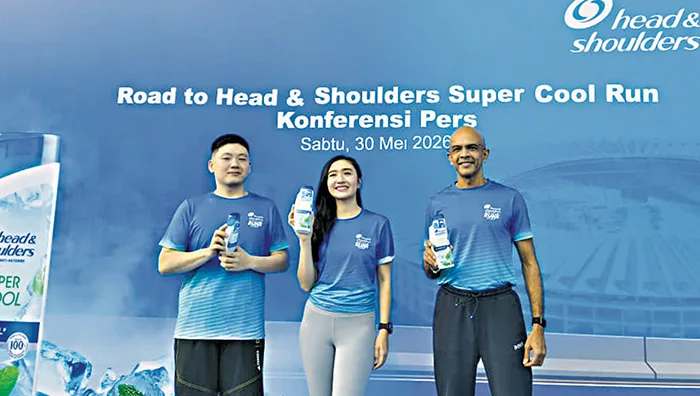
Jakarta, IO – Head & Shoulders Indonesia premieres its first-ever running event, the “Head & Shoulders Super Cool Run 2026”, on July 26, 2026, at the East Parking Plaza of Gelora Bung Karno (GBK), Jakarta. Featuring 5K and 10K race categories, the event reflects Head & Shoulders’ commitment to supporting active lifestyles across Indonesia.
The running event will also introduce Head & Shoulders’ latest innovation, Head & Shoulders Super Cool, a new shampoo variant specially designed for a refreshing cooling sensation on the scalp – while protecting against dandruff, even in hot weather.
As running continues to be more popular among Indonesians, with 60.6 percent of people now considering it their favorite sport, outdoor exercise has become an important part of everyday life. However, Indonesia’s tropical climate also brings along heat, humidity, and sweat, making the scalp uncomfortable and causing itchiness and dandruff, resulting to discomfort during workouts.
As a running enthusiast, Sarana than Ramaswamy, President Director of P&G Indonesia, has witnessed the growing passion for active living among Indonesians over the past few years. Today’s active consumers are looking for more than just athletic performance; they also value comfort during outdoor activities.
“We recognize that comfort has become important part of the exercise experience, including scalp comfort in hot weather and outdoor environments,” said Saranathan Ramaswamy. “That is why Head & Shoulders Indonesia continues to innovate the needs of modern consumers. Our latest Head & Shoulders Super Cool variant provides a scalp care solution that helps people stay comfortable and confident while staying active. This same spirit inspired us to create the Head & Shoulders Super Cool Run 2026.”
More than just a race, the Head & Shoulders Super Cool Run 2026 intends to provide a refreshing running experience, one that helps participants stay active and confident despite the heat. The event is targeting 2,500 runners across the 5K and 10K categories.
Visitors and the public can also enjoy the Head & Shoulders Race Village at the GBK East Parking Plaza, which will feature interactive activities, including scalp check experiences, live entertainment, and relaxation zones for runners and visitors alike.
For active consumers, Head & Shoulders Super Cool comes with a 2X Menthol formula that delivers an extra cooling sensation on the scalp. It also contains Piroctone Olamine, an active ingredient that helps keep the scalp dandruff-free for days, even on days with no shampoo.
“This combination helps keep the head cool, fresh, and comfortable throughout daily routines, allowing people to stay focused and confident even when exercising under the hot sun,” said Mikhael Hintono, Brand Director Hair Care, P&G Indonesia.
Head & Shoulders Indonesia has partnered with actress and public figure Febby Rastanty, who is currently preparing for the Head & Shoulders Super Cool Run 2026. She also recently joined the “Run with Pacer” session as part of the Road to Super Cool Run 2026 campaign.
“With my busy schedule and preparation for the Head & Shoulders Super Cool Run 2026, I spend a lot of time outdoors and regularly train for running, making my scalp feel hot and sweaty,” said Febby Rastanty. “During this morning’s Run with Pacer session, Head & Shoulders Super Cool helped keep my head feeling cool and comfortable throughout the run. I can stay focused and confident. I’m excited to keep using it as I prepare for race day.”
Head & Shoulders Indonesia hopes to become part of Indonesians’ active lifestyle journey, by helping them stay comfortable, confident, and focused, even while taking on outdoor activities in the heat. (des/ast)