
China has only one formal defence treaty, and that is with North Korea.
So Beijing is unlikely to welcome a scenario where Russia becomes the dominant influence in Pyongyang. A more confident, less dependent Kim would mean reduced Chinese leverage.
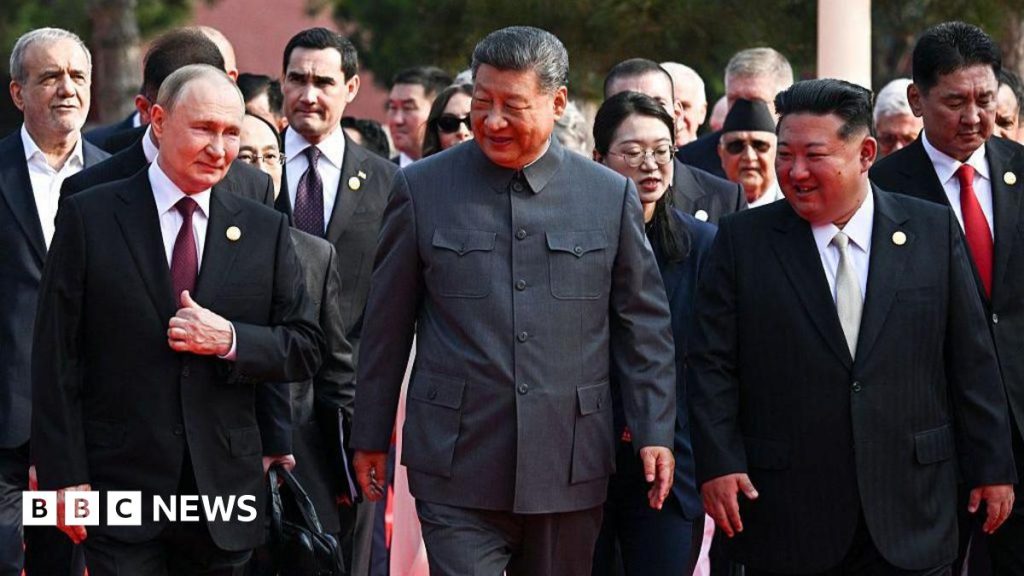
Beijing has responded by trying to reset the relationship. Late last year, Xi invited Kim to a military parade in Beijing, keeping him prominently by his side alongside Putin.
It was their first formal summit in six years. Xi praised the two as “good neighbours, good friends and good comrades bound by a shared destiny”, and called for closer strategic coordination. Notably absent from the public statements was any mention of North Korea’s nuclear arsenal.
Beijing has “mixed feelings” about the growing partnership between Pyongyang and Moscow, says Lee Seong-hyon, a visiting scholar at the Harvard University Asia Center.
On one hand, the partnership “distracts Washington and complicates US strategy in multiple theaters, which indirectly benefits China”, Lee says.
But, he adds, expanding military cooperation between Russia and North Korea could spark a stronger trilateral military response from the US, Japan and South Korea, which would worry Beijing.
That is also why China is not endorsing Pyongyang’s nuclear programme – because that would increase US involvement in the region and its alliances here.
But neither is China confronting the issue head on. In 2022, China and Russia vetoed a US-led United Nations resolution to impose new sanctions over North Korea’s missile tests.
If China takes a strong stance against Pyongyang’s nuclear programme, “this would only push North Korea more into the arms of Putin”, says Victor Cha, president of the foreign policy department at the Center for Strategic and International Studies.