
Close Menu
Simply Invest Asia
  • Home
  • About us
  • Explore industries/sectors
    • Automobile
    • Aviation
    • Banking
    • Biotechnology
    • Chemical & Fertilizer
    • Entertainment and Media
    • Food Processing
    • Healthcare
    • Iron and Steel
    • Leather
    • Mining
    • Oil and Gas
    • Pharmaceutical
  • Explore by countries
    • China
    • Dubai / UAE
    • Hong Kong
    • India
    • Indonesia
    • Japan
    • Malaysia
  • Explore cities
    • Bangkok
    • Beijing
    • Chongqing
    • Delhi
    • Dubai
    • Guangzhou
    • Jakarta
    • Kuala Lumpur
  • Why Asia
Facebook X (Twitter) Instagram Threads
Trending:
  • KL Education Dept to take legal action over viral student brawl
  • ADNOC approves $6.2-billion FID for Umm Shaif Gas Cap development offshore UAE
  • India Awards First 100 MWh Vanadium Flow Battery Project
  • Hong Kong court rejects water heiress appeal over $1.8 billion
  • DMU Dubai awards GCC Impact Scholarships to five students impacted by the regional situation
  • Moody’s Warns Indonesia Risks Grow Despite 2.85% Deficit Target
  • FlyArystan Launches First Almaty to Chongqing Direct Flights, Expanding Kazakhstan China Air Connectivity with Twice-Weekly International Services from September 2026
  • “One corner can change your entire Tour de France” – UAE boss wary of crash risk for Tadej Pogacar and addresses boos amid unrivalled dominance
  • Why the West Fails to See China’s Strategic Horizon
  • Africa’s Mining Boom Has a New Financier: Domestic Capital
  • Japan Upper House to Begin Secondary Capital Bill Debate Wed.
  • Wallace Chan’s iridescent masterpieces shine in Venice, Shanghai
  • India’s MTR Foods Unveils Plant Protein Dosas & Poha in New Breakfast Range
  • Bangkok Post – New UK PM announces energy tax cut on first day
  • Revolut Continues Expansion With Australian Banking License
  • Agios Pharmaceuticals (AGIO) Sees 13% Drop Following Trial Resul
  • Opinion | Europe’s incoherent ‘China threat’ posture is a threat to itself
  • Ultragenyx Pharmaceutical Stock Slides 20% With A 9-Day Losing Spree – Trefis
Tuesday, July 21
Facebook X (Twitter) Instagram
Simply Invest Asia
  • Home
  • About us
  • Explore industries/sectors
    • Automobile
    • Aviation
    • Banking
    • Biotechnology
    • Chemical & Fertilizer
    • Entertainment and Media
    • Food Processing
    • Healthcare
    • Iron and Steel
    • Leather
    • Mining
    • Oil and Gas
    • Pharmaceutical
  • Explore by countries
    • China
    • Dubai / UAE
    • Hong Kong
    • India
    • Indonesia
    • Japan
    • Malaysia
  • Explore cities
    • Bangkok
    • Beijing
    • Chongqing
    • Delhi
    • Dubai
    • Guangzhou
    • Jakarta
    • Kuala Lumpur
  • Why Asia
Simply Invest Asia
Home»Explore industries/sectors»Chemical & Fertilizer»Fortun and Tebbe: Garden Grove’s GKN Chemical Disaster, A Teachable Moment? 
Chemical & Fertilizer

Fortun and Tebbe: Garden Grove’s GKN Chemical Disaster, A Teachable Moment? 

By IslaJune 5, 20267 Mins Read
Share
Facebook Twitter Pinterest Threads Bluesky Copy Link


The GKN chemical disaster in Garden Grove is already falling out of the news, but follow-up is critical. What unfolded in Garden Grove reveals an urgent need for better chemical disaster regulation and education. There are chemical disasters in the United States nearly every day, yet both the public and public officials are often unaware, hindering efforts to reduce risks. This incongruity motivates both our research and teaching as social scientists focused on environmental and disaster governance. 

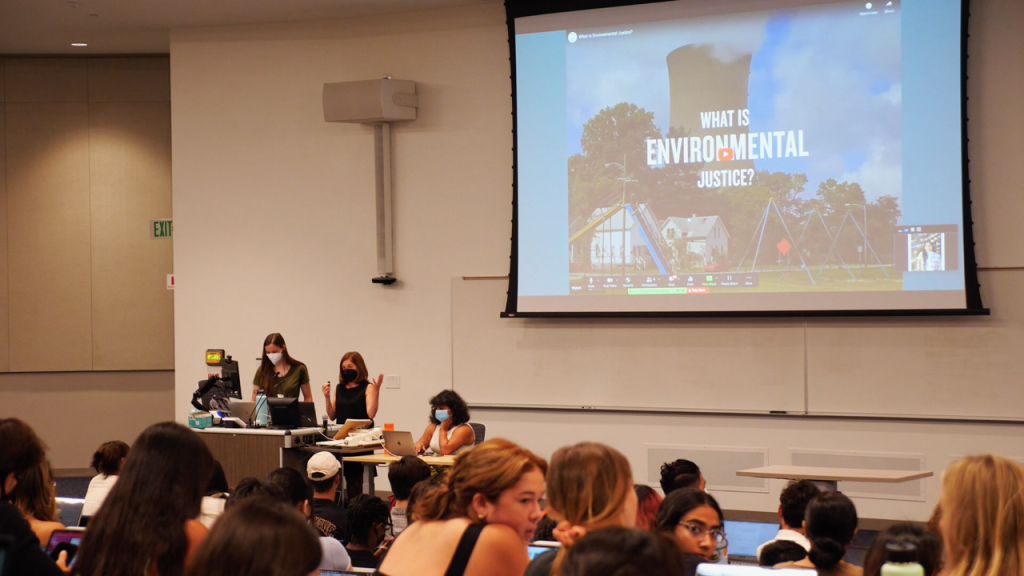
In a large anthropology course at the University of California, Irvine, we teach students how to analyze environmental injustice and governance failures in communities across California. A central task is identifying disaster risks, which we group into three categories: fast (requiring emergency response), slow (routine pollution), and combo, where multiple risks are exacerbated by extreme weather, war or terrorism. Despite their drama, fast disasters are typically the hardest for students to handle. Most communities have risks, but have not had an actual disaster—and disasters that might happen don’t generate news coverage or discussion. When disasters do happen—as in Garden Grove—they cycle out of the news quickly. Even “famous” cases like the 1984 Union Carbide disaster in Bhopal, India, which killed thousands and remains the world’s worst industrial disaster, have largely been forgotten.

Students in UCI Anthro 25A (from many different majors) learn how to find data to understand chemical disaster risks. Credit: Tim Schütz

Making noise where it matters.

You’ve read article. Keep cranking up the volume on what’s happening behind the scenes in Orange County with the Morning Report newsletter.

The problems our students face trying to characterize fast disaster risks are similar to those the public—in Garden Grove and beyond—faced as the GKN disaster unfolded. These problems have become much worse because of the Trump administration’s regulatory roll-backs and elimination of crucial programs. 

Did you catch that?

From local politics to the people and policies shaping our daily lives—it’s all in The Morning Report. Don’t miss out on this free daily email.

In the United States, facilities with the potential for catastrophic off-site consequences (an explosion or gas cloud) are regulated by the US Environmental Protection Agency (EPA) Risk Management Program (RMP), created in direct response to the Bhopal disaster. It was only in 2014, however, in the wake of a catastrophic chemical disaster in West, Texas, that the extent and inequity of chemical disaster risks in the United States were well-mapped — by non-government organizations. Kids in Danger Zones found that one in three children in the United States live within the vulnerability zone of at least one RMP facility, with many children living in the sweet spot of a venn-diagram of many facilities. A separate report, Who’s in Danger? Race, Poverty, and Chemical Disasters, showed that Black, Latino/a and low-income communities are disproportionately located in vulnerability zones. In the subsequent decades, little progress has been made reducing these risks—and associated inequities. Quite the contrary. 

In the map of the greater Houston, Texas area above – from the Kids in Danger Zones report – blue flags are schools, black dots are RMP facilities, and the red circles are the chemical disaster vulnerability zones around each facility. Many schools are within multiple, overlapping vulnerability zones. Credit: Center for Effective Government

In the last 18 months, many tools for characterizing chemical disaster risks in the U.S. have been decommissioned. EPA’s EJScreen, which allowed users to compare their community’s proximity to RMP facilities with the rest of the country, has been taken down (although Public Data Partners, a non-government coalition, hosts an unofficial mirror). The EPA’s RMP Public Data Tool, which provided information on specific facilities, has also been taken down, and the Chemical Safety Board, which analyzes why particular chemical disasters occurred, is at risk of being defunded. 

In California, the Accidental Release Prevention (CalARP) program regulates more facilities by including more chemicals and lower thresholds. Still, local knowledge about chemical disaster risks is limited. The ’s (CalEPA) Regulated Site Portal, for example, integrates data from many regulatory agencies and databases—but does not provide a simple way to determine whether a facility is regulated by RMP or CalARP. 

To help our students work around these data gaps, we submitted a Public Records Act request for the names and locations of the more than 2,000 CalARP facilities. The map we built has important limits—it assumes a one-mile vulnerability zone due to a lack of information on chemicals and volumes at each facility, for example. It is just one step toward better chemical disaster education. 

But missing or hard-to-find information is only the tip of the iceberg. The lists of chemicals regulated by RMP/CalARP do not include methyl methacrylate (MMA), the chemical of concern in Garden Grove. Nor do they include ammonium nitrate, the fertilizer that blew up the Port of Beirut in 2020, West, Texas in 2013, and Texas City, Texas in 1947. Adding chemicals to regulatory lists is a politically and scientifically fraught process that can take decades. Our students learn about this, too. 

They also learn that regulators analyze facilities individually, one chemical at a time, without considering how risks compound. On our map, we can see that the GKN facility is on the edge of an industrial corridor, with three CalARP facilities within a mile. How an explosion would have impacted these facilities was never addressed.

Our Exploring Fast Disasters map shows the GKN facility and evacuation zone, which overlap with the vulnerability zones of many CalARP facilities. Margaret Tebbe

There is also what we call “data divergence.” CalEPA’s Regulated Site Portal says that the maximum amount of liquid MMA that should be stored at GKN’s Garden Grove facility is 600-1199 gallons. Official reports, however, repeatedly described the failing tank as holding 7,000 gallons of MMA, with other tanks of MMA nearby. What explains this discrepancy? We want our students to be ready to ask these kinds of questions. 

The point we want to emphasize here is that more chemical disaster education is urgently needed—and it must do more than teach people how to respond when alarms go off and evacuation orders are issued. We need our students—and the wider public—to understand and advocate for fundamentally new approaches to chemical disaster risk characterization, reduction and response. 

Want to learn more? Sign up for our virtual seminar and dialogues here.

Kim Fortun is Professor of Anthropology and Director of EcoGovLab at the University of California, Irvine (UCI), and the author of Advocacy After Bhopal. Margaret Tebbe is an Anthropology PhD candidate and EcoGovLab researcher at UCI, and the author of Protecting Students From Our Changing Climate.

Opinions expressed in community opinion pieces belong to the authors and not Voice of OC.

Voice of OC is interested in hearing different perspectives and voices. If you want to weigh in on this issue or others please email opinions@voiceofoc.org.

This is what accountability looks like.

For 16 years, Voice of OC has been Orange County’s trusted source for fearless, non-partisan coverage.

We’ve tracked the big shakeups, the quiet deals, and the decisions that hit you where it counts— your wallet, your home, your community.

From corruption investigations to housing shortages, from environmental challenges to the local economy, we follow the facts so you can follow what’s really happening in your backyard.

No ads. No paywalls. No spin. Just the truth.

And none of it happens without you.

If you believe Orange County deserves this kind of coverage, join us by making a tax-deductible contribution today.

Related


Source link

Related Posts

Odisha cements its position as a chemical and petrochemical investment hotspot, ETChemicals

July 21, 2026

Pair of Kentucky chemical plants exempted from EPA rule meant to reduce harmful emissions

July 20, 2026

How Brain Chemistry Changes What We Taste

July 20, 2026
Add A Comment
Leave A Reply Cancel Reply

Top Posts

China Scraps 12,000 Degrees in Biggest Academic Overhaul in Years

June 14, 2026

Chinese Wall may stem India tech flows for electronics and automobile

June 1, 2026

Abandoned malls, whispers of nuclear war and young foreigners detained. This is what’s REALLY going on in Dubai… and the chilling warning one taxi driver gave to the Mail’s IAN BIRRELL

April 11, 2026
Don't Miss

KL Education Dept to take legal action over viral student brawl

By IslaJuly 21, 2026

PETALING JAYA: Legal action will be taken following a fight involving students which occurred outside…

ADNOC approves $6.2-billion FID for Umm Shaif Gas Cap development offshore UAE

July 21, 2026

India Awards First 100 MWh Vanadium Flow Battery Project

July 21, 2026

Hong Kong court rejects water heiress appeal over $1.8 billion

July 21, 2026
SUBSCRIBE TO OUR NEWSLETTER

Get our latest downloads and information first. Complete the form below to subscribe to our weekly newsletter.


I consent to being contacted via telephone and/or email and I consent to my data being stored in accordance with European GDPR regulations and agree to the terms of use and privacy policy.

Stay In Touch
  • Facebook
  • YouTube
  • TikTok
  • WhatsApp
  • Twitter
  • Instagram
Top Trending

India’s MTR Foods Unveils Plant Protein Dosas & Poha in New Breakfast Range

By IslaJuly 21, 2026

Bangkok Post – New UK PM announces energy tax cut on first day

By IslaJuly 21, 2026

Revolut Continues Expansion With Australian Banking License

By IslaJuly 21, 2026
Most Popular

Guangzhou exchange said to study night trading for platinum

May 28, 2026

Steel Mill Wins Union Pacific Rail Contract After Legal Dispute | 2026 – News and Statistics

April 18, 2026

Chongqing airport expansion: How the massive new ZHA-designed terminal is transforming China’s aviation hub

July 5, 2026
Our Picks

Bulgaria’s ‘overregulated’ pharma market set for comprehensive reveiew

June 16, 2026

Responsible AI is UAE’s next competitive advantage 

July 20, 2026

India bristles as Pakistan has its diplomatic moment

April 22, 2026
SUBSCRIBE TO OUR NEWSLETTER

Get our latest downloads and information first. Complete the form below to subscribe to our weekly newsletter.


I consent to being contacted via telephone and/or email and I consent to my data being stored in accordance with European GDPR regulations and agree to the terms of use and privacy policy.

© 2026 Simply Invest Asia.
  • Get In Touch
  • Cookie Policy
  • Privacy policy
  • Terms & Conditions

Type above and press Enter to search. Press Esc to cancel.

SUBSCRIBE TO OUR NEWSLETTER

Get our latest downloads and information first.

Complete the form below to subscribe to our weekly newsletter.


I consent to being contacted via telephone and/or email and I consent to my data being stored in accordance with European GDPR regulations and agree to the terms of use and privacy policy.